

Theme verse: โWe hear them declaring the wonders of God in our own tongues!โ โ Acts 2:11
Picture this: youโre at a massive global festival โ music blasting, people in colorful outfits, food stalls with smells from every country. You hear bits of conversation all around you โ French, Korean, Shona, Spanish โ but none of it really lands with you because itโs not your language. Then suddenly, over the noise, you hear someone speaking your exact dialect โ telling a story that feels like it was written for you. Instantly, you feel seen, understood, and connected.
Thatโs what happened on the Day of Pentecost in Acts 2. The Holy Spirit didnโt just drop a universal language from the sky, He gave the disciples the ability to speak the heart languages of everyone there. It was the first miraculous translation of the Gospel, and it set the tone for how Godโs Word would travel through history: personal, accessible, and in every language under heaven.
Here are 7 Bible verses showing how God values every language โ and why translation is still His heartbeat today.
1. Acts 2:4 โ “All of them were filled with the Holy Spirit and began to speak in other tongues as the Spirit enabled them.”
This moment wasnโt about showing off supernatural skills; it was about connection. Imagine a livestream where the subtitles instantly appear in every viewerโs language without a glitch. Thatโs the Pentecost miracle. God could have picked one โholyโ language and told the world to learn it, but instead, He said, โIโll come to you where you are.โ He knew that the fastest way to someoneโs heart is to speak in words theyโve known since childhood โ the ones their grandmother used when telling bedtime stories, the ones they use when they cry or pray.
2. Acts 2:11 โ “We hear them declaring the wonders of God in our own tongues!”
The crowd didnโt just hear โreligious talk.โ They heard the wonders of God โ in words they didnโt have to translate in their heads. Itโs the difference between watching a movie dubbed in your language versus struggling through with broken subtitles. When the message comes in your mother tongue, it feels like it was crafted for you. That day, God wasnโt just talking to people โ He was talking with them, in the very vocabulary that shaped their identity.
3. Revelation 7:9 โ *”โฆfrom every nation, tribe, people and language, standing before the throneโฆ” *
Heaven will not be a one-language zone. It will be the most diverse, colorful gathering ever โ every accent, every rhythm, every dialect praising the same God. Translation work today is like a sneak preview of that day. Every time a new Bible translation is completed, itโs another rehearsal for the heavenly choir, making sure every voice can join in without needing someone else to interpret for them.
4. Genesis 11:9 โ “That is why it was called Babel โ because there the Lord confused the language of the whole world.”
At Babel, language differences pushed people apart. But at Pentecost, God flipped the script โ languages became bridges, not barriers. Translation work continues that miracle. It takes something that could divide us and turns it into a point of connection. If Babel was the scattering, Pentecost โ and every Bible translation today โ is the gathering.
5. Romans 10:14 โ “How can they believe in the one of whom they have not heard?”
You canโt believe a message youโve never understood. Thatโs why translation is more than a technical process, itโs a lifeline. Itโs like getting urgent news in a language you actually comprehend, instead of in one that leaves you guessing. Faith grows when the Gospel comes to you without a language barrier blocking the way.
6. 1 Corinthians 14:9 โ “Unless you speak intelligible wordsโฆ how will anyone know what you are saying?”
Ever been in a group chat where everyone is using inside jokes or slang you donโt know? You feel left out, even if the conversation is meant to include you. Godโs Word is too important to be โlost in translation.โ Thatโs why He makes sure itโs not just available, but understandable, so that no one has to scroll past the greatest message ever told because it feels out of reach.
7. Matthew 28:19โ20 โ *”Go and make disciples of all nationsโฆ” *
โAll nationsโ isnโt just geography ,itโs culture, itโs language, itโs the way people think and express themselves. The Great Commission is, at its core, a Great Translation Mission. Jesusโ final command is an open invitation to take His words into every linguistic space.
Final Challenge
God is not a distant voice speaking in a code you have to crack. Heโs the one who speaks your slang, your memes, your mother tongue, your unfiltered prayers. This World Translation Day, remember: God doesnโt wait for you to learn His language, He comes speaking yours. And when you share His Word, youโre joining that same mission, making sure no one misses the message because they couldnโt understand it.

You smile for the selfie. Post the TikTok. Say, โIโm good.โ
But inside, you feel hollow.
Tired, but not just physically.
Stuck, but the world keeps moving.
For Gen Y and Gen Z, the pressure is real โ and so is depression.
We’re the generations most connected digitally, but often feel most alone emotionally. Whether itโs social media comparison, academic pressure, broken family dynamics, heartbreak, trauma, or just the heavy fog that appears for โno reasonโ โ depression is a shadow many walk through silently.
But here’s the truth the darkness tries to hide:
God sees you. God is not afraid of your sadness. God steps into it.
Letโs walk through 7 honest, real Scriptures that speak directly to the soul when depression hits hardest.
1. โGod, are You even near?โ
Verse: Psalm 34:18 (RSV)
โThe Lord is near to the brokenhearted, and saves the crushed in spirit.โ
Depression often feels like abandonment. Like everyone left โ including God.
But this verse flips that feeling: when your heart is shattered, God is closest. Not when you’re strong. Not when you’re posting your best. But when you’re too weak to get out of bed, too numb to cry, too tired to try again.
He’s there. In the silence. In the breakdown. With you.
2. โWhy am I like this?โ
Verse: Psalm 42:11 (RSV)
โWhy are you cast down, O my soul, and why are you disquieted within me? Hope in God; for I shall again praise him, my help and my God.โ
Even biblical authors wrestled with emotional lows. David, a king and worshipper, had seasons of despair.
He didnโt hide it โ he journaled it. Sung it. Prayed it. And reminded himself that darkness isnโt the end.
You donโt have to be okay all the time โ but you can still anchor your soul in hope, even when it trembles.
3. โI canโt control my thoughts.โ
Verse: 2 Corinthians 10:5 (RSV)
โWe destroy arguments and every proud obstacle to the knowledge of God, and take every thought captive to obey Christ.โ
Depression can distort reality. You hear voices like: โYouโre worthless. Youโll always feel like this.โ
God doesnโt shame you for those thoughts โ but He equips you to fight them. With truth.
Taking thoughts captive doesnโt mean they instantly disappear โ it means you challenge them with the identity God gave you, not the lies depression whispers.
4. โIโm tired of pretending.โ
Verse: Matthew 11:28 (RSV)
โCome to me, all who labor and are heavy laden, and I will give you rest.โ
You donโt have to fake it with God. He already knows.
And instead of demanding you do more, be more, or say the right prayers, Jesus simply says:
โCome.โ
Not when youโve fixed it. Not when the anxiety is gone. Right now โ with the heavy burden.
And Heโll carry it with you. No filters. No judgment.
5. โI feel numb.โ
Verse: Romans 8:26 (RSV)
โLikewise the Spirit helps us in our weakness; for we do not know how to pray as we ought, but the Spirit himself intercedes for us with sighs too deep for words.โ
Sometimes depression steals your words.
You want to pray, but nothing comes out. Just a sighโฆ or silence.
And thatโs okay. The Holy Spirit prays for you. Intercedes with groans deeper than language.
Your silence is not emptiness to God. Itโs a sacred space where He is already speaking on your behalf.
6. โEveryone has moved on but me.โ
Verse: Isaiah 41:10 (RSV)
โFear not, for I am with you, be not dismayed, for I am your God; I will strengthen you, I will help you, I will uphold you with my victorious right hand.โ
People may forget. Friends may fade. But God says: โI am still here.โ
He doesnโt minimize your pain or rush you through it.
He simply promises:
- Strength when yours is gone
- Help when itโs hard to explain whatโs wrong
- Presence that never backs away
7. โWill this darkness ever lift?โ
Verse: Lamentations 3:22โ23 (RSV)
โThe steadfast love of the Lord never ceases, his mercies never come to an end; they are new every morning; great is your faithfulness.โ
When youโre depressed, it feels like nothing will change. But Godโs mercy renews daily.
That means each morning is a small miracle.
Youโre still here. Still breathing. That alone is grace.
The pain may not vanish overnight โ but new mercies show up in unexpected ways:
- a song lyric that moves you
- a kind message from a friend
- a moment where you feel peace again
Final Words:
If youโre in a dark place โ you are not broken. You are human. And God is not disappointed in you.
Even Jesus wept. Even prophets doubted. Even heroes of faith cried out from the pit.
So bring your sadness. Bring your silence.
And remember:
You are seen. You are safe. You are still held.

The season of harvest is a time of gratitude, reflection, and abundance. For farmers, it signifies the end of a season of hard work, when crops are gathered, and the fruits of labor are celebrated. Spiritually, it reminds us of God’s faithfulness and the importance of sowing seeds of righteousness in our lives. The Bible speaks of harvest not just as an agricultural event but as a symbol of spiritual growth, provision, and God’s blessings.
Here are seven Bible verses that reflect the beauty, meaning, and significance of harvest time:
1. Galatians 6:9
“Let us not become weary in doing good, for at the proper time we will reap a harvest if we do not give up.”
Just as the harvest comes after a season of hard labor, our spiritual harvest will come if we remain steadfast in our efforts to live righteously. God’s timing is perfect, and we must trust that our diligence will bear fruit.
2. Matthew 9:37-38
“Then he said to his disciples, ‘The harvest is plentiful but the workers are few. Ask the Lord of the harvest, therefore, to send out workers into his harvest field.’โ
Here, Jesus calls on us to be workers in this field, sharing the good news of salvation and helping to bring others into the kingdom of God. Harvest time is not just about receiving but also giving โ sharing Godโs love with the world.
3. Psalm 126:5-6
“Those who sow with tears will reap with songs of joy. Those who go out weeping, carrying seed to sow, will return with songs of joy, carrying sheaves with them.”
We may endure seasons of sorrow, but God promises that those who faithfully sow, even through hardship, will one day reap a harvest of joy. There is hope in the midst of trials, and the harvest will be a time of celebration.
4. Proverbs 10:5
“He who gathers crops in summer is a prudent son, but he who sleeps during harvest is a disgraceful son.”
Just as a farmer must be attentive during the harvest to gather his crops, we must be alert and ready to seize the spiritual opportunities that God places before us. Laziness and neglect lead to missed blessings, but diligence ensures that we reap the benefits of our labor.
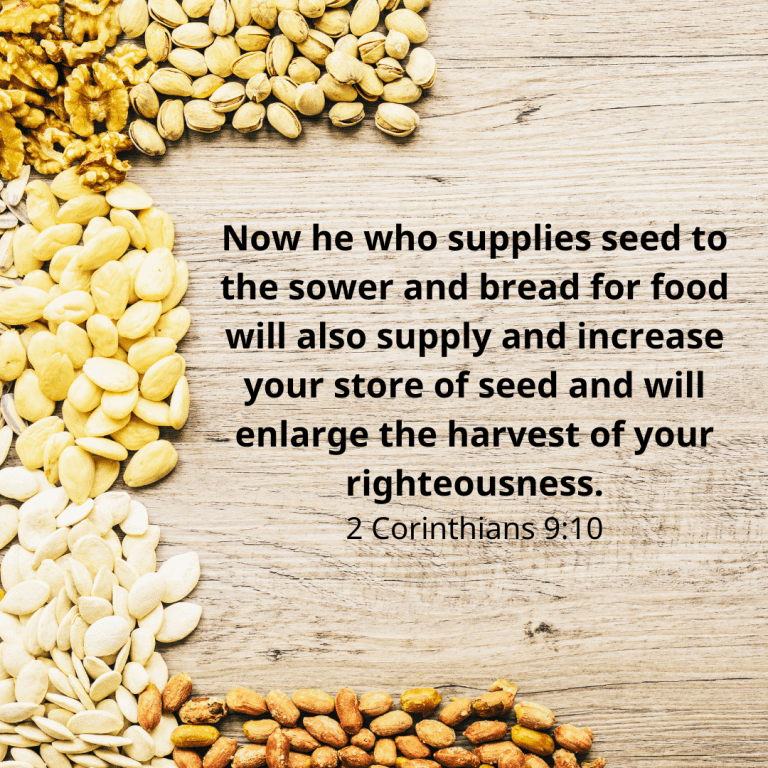
5. 2 Corinthians 9:10
“Now he who supplies seed to the sower and bread for food will also supply and increase your store of seed and will enlarge the harvest of your righteousness.”
God is the provider of all things, and He ensures that those who sow will have what they need to reap a harvest. Not only does He provide materially, but He also increases the harvest of righteousness in our lives, enabling us to grow in character, faith, and good works. Our trust in Godโs provision is important to experiencing His abundance.
6. James 3:18
“Peacemakers who sow in peace reap a harvest of righteousness.”
When we sow seeds of peace and righteousness, we reap a harvest of goodness and integrity. Just as the farmer carefully chooses what to plant, we must be mindful of the seeds we sow in our relationships and daily actions.
7. John 4:35
“Don’t you have a saying, โIt’s still four months until harvestโ? I tell you, open your eyes and look at the fields! They are ripe for harvest.”
The time for action is now, not later. The fields are ripe, and God is calling us to step into His work, sharing His love and truth with those who are ready to receive it. There is an urgency in the harvest, and we are called to respond.
Conclusion
Harvest time is a powerful reminder of God’s faithfulness and the spiritual principles of sowing and reaping. Whether we are harvesting crops or gathering the fruits of our spiritual labor, we are called to trust in Godโs provision and timing. As we reflect on these Bible verses, may we be inspired to continue sowing seeds of righteousness, peace, and faithfulness, knowing that in due season, we will reap a bountiful harvest.

Individuals working together can achieve far more than they could alone. Here are seven powerful Bible verses that emphasize the strength found in numbers and the divine wisdom behind collective effort.
1. Ecclesiastes 4:9
“Two are better than one, because they have a good return for their labor.
Having others by our side multiplies our capacity to endure and succeed. Unity provides resilience and strength.
2. Proverbs 27:17
“As iron sharpens iron, so one person sharpens another.”
Just as iron sharpens iron, people improve and refine each other through interaction, support, and sometimes even constructive criticism. There is necessity of community for personal growth and strength.
3. Matthew 18:20
“For where two or three gather in my name, there am I with them.”
Jesus reassures His followers that His presence is magnified when they come together in His name. This promise of divine presence reinforces the idea that gathering as a community not only strengthens human bonds but also invites God’s active participation and blessing.
4. 1 Corinthians 12:12
“Just as a body, though one, has many parts, but all its many parts form one body, so it is with Christ.
Each member within a community has a unique role, and together they form a complete, functioning whole. This interdependence ensures that the community is stronger and more effective than any single member could be alone.
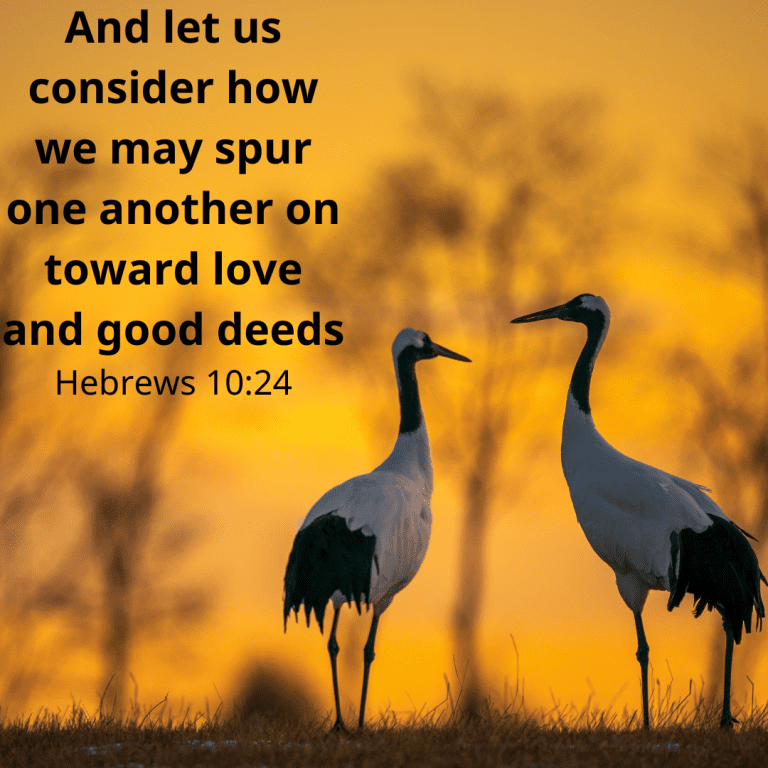
5. Hebrews 10:24
“And let us consider how we may spur one another on toward love and good deeds,
In a world that often promotes individualism, this call to gather and support one another remains profoundly powerful.
6. Acts 2:44
All the believers were together and had everything in common.
The early churchโs shared life, mutual support, and communal worship were sources of strength and growth. This highlights the power of collective living and the positive impact it has on both the community and its outreach.
7. Ephesians 4:11
“So Christ himself gave the apostles, the prophets, the evangelists, the pastors and teachers.
The diversity of gifts within the church play a role to build up the community towards unity and maturity in faith. Each role is crucial, and together, they contribute to the growth and strength of the entire body of Christ.

Here are a couple of reminders for you about loving one another. Be inspired to go out and spread love to those around you.
- 1 Corinthians 16:14 Let all that you do be done in love.
Love is at the very core of our faith. We shouldnโt love only at certain times. Everything we do should be done in love.
- John 13:34 A new commandment I give to you, that you love one another: just as I have loved you, you also are to love one another.
Jesus sets the example for us. He loves us, despite our flaws and shortcomings. We are also called to love one another.
- Romans 12:10 Love one another with brotherly affection. Outdo one another in showing honor.
Christians are brothers and sisters as adopted children of God. Therefore, we are to love one another like we love our family.
- Hebrews 10:24 And let us consider how to stir up one another to love and good works
You can set an example to people around you, by showing love. Inspire others to love and do good.
- Matthew 5:43-44 “You have heard that it was said, ‘You shall love your neighbor and hate your enemy.’ But I say to you, Love your enemies and pray for those who persecute you
Jesus tells us that we should not limit our love to those who love us, but even those who persecute us. To love and pray for our enemy or persecutor is a challenge in loving one another.
- Luke 6:31 And as you wish that others would do to you, do so to them.
Donโt wait for others to do good and show love. Express your love by doing good first.
- Matthew 22:39 And a second is like it: You shall love your neighbor as yourself.
The greatest commandment is to love God with all your heart and with all your soul and with all your mind. Jesus says that all the law and the prophets depend on these two.

Addictions come in many shapes and forms, whether itโs lust, alcohol, substances, gambling, gaming, or even excessive use of your mobile phone and social media. There is professional help to get as well as counselling from your priest or pastor.
Also, read the Bible and lay your addiction before God in prayer. Here are some passages from the Word of God to reflect upon.
- James 1:14-15 But each person is tempted when he is lured and enticed by his own desire. Then desire when it has conceived gives birth to sin, and sin when it is fully grown brings forth death.
We all have weaknesses within us that can make us fall and lead to an addiction. Acknowledging this, and admitting that you struggle with addiction is an important step to be free from it.
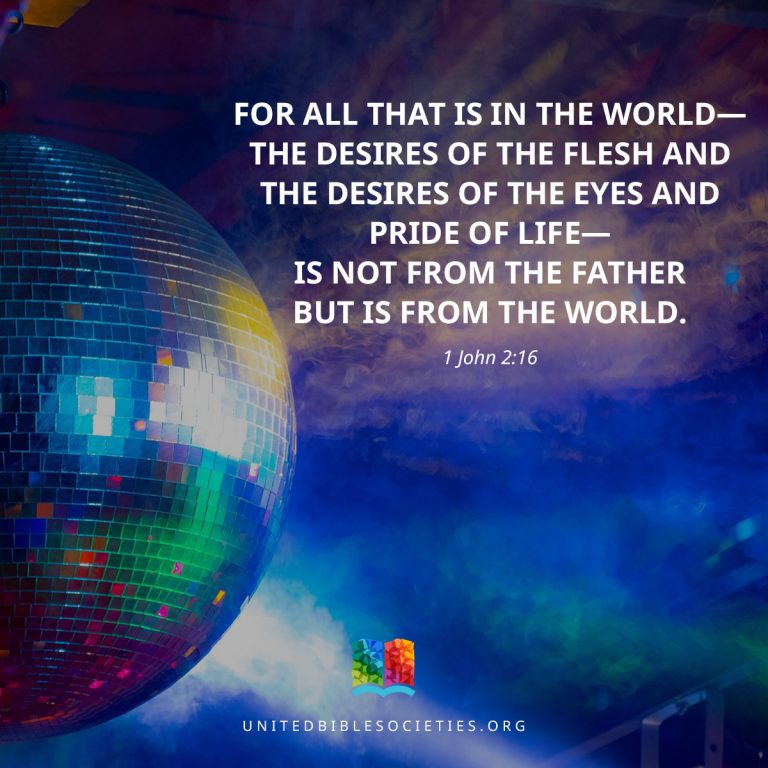
- 1 John 2:16 For all that is in the worldโthe desires of the flesh and the desires of the eyes and pride of lifeโis not from the Father but is from the world.
Addictions donโt come from God, but from the world and our desires, lusts and pride. We can rely on God wanting us to be free from any addiction.
- 1 Corinthians 10:13 No temptation has overtaken you that is not common to man. God is faithful, and he will not let you be tempted beyond your ability, but with the temptation he will also provide the way of escape, that you may be able to endure it.
You may feel that you canโt break your addiction. But the Bible tells us that God can. God will provide the way of escape. Turn to God, turn from your addiction. Let God fill you with his presence.
- 1 Corinthians 6:12 โAll things are lawful for me,โ but not all things are helpful. โAll things are lawful for me,โ but I will not be dominated by anything.
Addiction is many times when something takes control over you. Those things that are not helpful in your life and dominate your thoughts and desires you may need to cut out of your life.
- 1 Peter 2:11 Beloved, I urge you as sojourners and exiles to abstain from the passions of the flesh, which wage war against your soul.
Addictions come from this world and not from God. In the end, addictions replace God as the number one in our lives. Itโs not just about addictions, but also about our souls.
- Matthew 6:13 And lead us not into temptation, but deliver us from evil.
Lay your struggles before God. Ask for Godโs protection and deliverance.
- John 8:36 So if the Son sets you free, you will be free indeed.
This is the promise of Jesus Christ, that when he sets us free, it is real freedom.
This article is not intended as a replacement for medical or therapeutic help or treatment for addiction, but a complement and inspiration to those who battle addiction.

Get ready to mark your calendars with colorful crayons because April 2nd isn’t just any ordinary day โ it’s International Children’s Book Day! This day is all about diving into the charming world of children’s literature. It’s like a giant hug for books and a high-five for reading, inspiring kids everywhere to embark on grand adventures through the pages of their favorite stories. This special day aims to promote children’s books and reading, as well as to inspire a love of literature among children worldwide. So grab your favorite cozy spot, your trusty bookmark, and let’s journey together through the wonderful land of books!
As you celebrate International Children’s Book Day, it’s an opportune moment to reflect on the profound impact of Bible stories in the lives of your little ones. The Bible itself is a rich source of storytelling, filled with narratives that have captivated hearts and minds for generations. The stories within the Bible speak to the core of human experience and offer guidance for living a life of faith and virtue.
Bible Story books hold significant importance as books for children for several reasons:
- Guidance on what is right and wrong: The Bible contains timeless stories that teach important moral and ethical lessons, such as kindness, compassion, honesty, and forgiveness. These stories provide children with a foundation for understanding right from wrong and help shape their character and values. An example is the story of The Good Samaritan (Luke 10 v 25-37).
- Spiritual and Religious Education: The Bible serves as a fundamental tool for teaching children about faith, spirituality, and the principles of Christianity. It helps children develop a sense of connection God and understand their place within their respective communities. An example is the story of Daniel in the lionsโ den (Daniel 6).
- Value in literature: Many stories in the Bible are beautifully crafted narratives with rich imagery, symbolism, and poetic language. Introducing children to these stories can foster an appreciation for literature and storytelling, enhancing their language skills and imagination. An example is the Creation story (Genesis 1 -2).
- Source of Comfort and Guidance: The Bible offers comfort and reassurance to children during difficult times. Its stories of hope, perseverance, and divine love can provide comfort and guidance when children face challenges or uncertainties in their lives. The story of Jairusโ daughter (Mark 5 v 21-43).
- Family and Community Bonding: Reading and discussing Bible stories together as a family or within a religious community can strengthen familial bonds and create a sense of belonging and shared identity. It provides opportunities for meaningful conversations and connections between generations. Story of Joseph and his brothers (Genesis 37-50).
- Critical Thinking and Reflection: Encouraging children to engage critically with the stories and teachings of the Bible fosters their ability to think analytically, ask questions, and reflect on their own beliefs and values. This critical thinking skill is essential for their intellectual and spiritual development. The Parable of the Talents (Matthew 25:14-30)
It is very important that you take part in this celebration (Established by the International Board on Books for Young People (IBBY)) by making Bible story books a priority in your children’s reading materials, educational settings, and households. You must focus not only on developing their intellect but also on shaping their character, preparing them to face life’s trials with integrity and determination. Let’s unite in embracing the wisdom found in these stories, planting the seeds for a future marked by compassion and enlightenment for all.

Once upon a time in the city of Harare, a group of young friends (Tanaka, Itai and Chido) gathered in the cozy living room of Tanakaโs house. They were determined to make a difference in their community during the upcoming season of giving. As they brainstormed ideas, they stumbled upon the concept of almsgivingโa practice rooted in the Bible that encourages selfless acts of charity.
Excitement filled the room as they envisioned a unique way to spread kindness. They decided to create the “Generosity Game,” a challenge that involved performing secret acts of kindness and giving, all inspired by the teachings of the Bible.
The friends drew inspiration from the Gospel of Matthew, where Jesus instructs his followers:
Matthew 6:3-4 (NIV): “But when you give to the needy, do not let your left hand know what your right hand is doing, so that your giving may be in secret. Then your Father, who sees what is done in secret, will reward you.”
The rules of the Generosity Game were simple: each friend would pick a random act of kindness to perform without revealing their identity. The game would last throughout the Lenten season, creating a ripple effect of generosity in their community.
The friends eagerly embraced the challenge, finding creative ways to give. Itai, inspired by the story of the Good Samaritan, anonymously left a care package on a neighbor’s doorstep where an old aged granny lived. Inside were basic toiletry items and a heartfelt note expressing care and compassion.
Luke 10:33-34 (NIV): “But a Samaritan, as he traveled, came where the man was; and when he saw him, he took pity on him. He went to him and bandaged his wounds, pouring on oil and wine. Then he put the man on his own donkey, brought him to an inn, and took care of him.”
Chido, recalling the miracle of the loaves and fishes, organized a food drive at her school, encouraging her classmates to contribute some food items to a local food bank and which were later distributed to the children living on the streets.
John 6:12 (NIV): “When they had all had enough to eat, he said to his disciples, ‘Gather the pieces that are left over. Let nothing be wasted.'”
As the days passed, the Generosity Game unfolded beautifully. The recipients of the acts of kindness were touched by the selfless gestures, and a spirit of community and compassion blossomed among the young friends.
On Easter Sunday, the friends gathered once more, reflecting on their experiences. Tanaka shared a Bible verse that had become their guiding light throughout the Generosity Game:
Proverbs 11:25 (NIV): “A generous person will prosper; whoever refreshes others will be refreshed.”
The Generosity Game not only impacted their community but also transformed the hearts of these young friends. They realised that almsgiving, inspired by the teachings of the Bible, was a powerful way to make a positive difference in the lives of others and to experience the true joy of giving.
Do you also want to be refreshed during this season? How about trying this Generosity Game by almsgiving whether by yourself or as a group.

Introduction
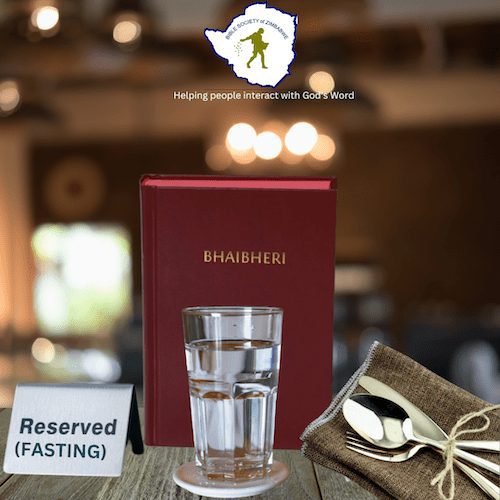
Have you ever wondered what’s the buzz about fasting? The Lenten season is here and fasting takes centre stage in conversations. It’s the talk of the town during these days of reflection and spiritual dedication. Lent provides a 40-day period for fasting and prayer (Sundays are excluded), in imitation of Jesus Christโs fasting in the wilderness before he began his public ministry.
Fasting might sound like a complicated idea, but let’s break it down in simple terms and see how this ancient practice can be relevant and meaningful for you today.
Understanding Biblical Fasting
What exactly is fasting? Well, it’s not about giving up your favourite snacks or skipping meals for the sake of a diet. In the Bible, fasting is a spiritual discipline where people would voluntarily abstain from certain foods or activities for a specific period. It’s not just about going without; it’s about seeking a deeper connection with God through prayer and meditation.
Examples from the Bible
If you’re curious about how people in the Bible practiced fasting, let’s take a look at a couple of examples. Remember the story of Jesus spending 40 days and nights in the desert (Matthew 4 v 1-11)? That’s a form of fasting! Another example is found in the book of Daniel 10 v 2-3, where he chose to eat only vegetables and drink water for a set period, the Ninevah fast (Jonah 3 v 5-9) and Estherโs fast (Esther 4).
Benefits of Fasting
Why would anyone willingly give up food or certain activities? Well, there are a few reasons. Fasting allows you to:
- Draw Closer to God: By setting aside time for prayer and reflection, fasting helps strengthen your spiritual connection with God.
- Develop Self-Discipline: Fasting requires self-control and discipline. It’s a great way to practice saying ‘no’ to immediate desires for a greater purpose.
- Seek Guidance: In times of confusion or decision-making, fasting can be a way to seek God’s guidance and wisdom.
- Express Repentance: Fasting can also be a way to express sorrow for mistakes and seek forgiveness.
Now, how can you, incorporate fasting into your life in a practical way?
- Start Small: Instead of jumping into a lengthy fast, begin with a shorter period and gradually increase as you become more comfortable.
- Digital Detox: In a world where screens dominate our attention, a digital fast can be equally transformative. Dedicate a specific time each day or week to disconnect from technology and focus on prayer, meditation, or reading Scripture.
- Choose Wisely: Decide what you want to fast from โ it could be a particular type of food, social media, or any activity that distracts you from having a quiet time with God.
- Set Goals: Clearly define your goals for fasting. Whether it’s seeking guidance, deepening your relationship with God, or developing self-discipline, having a purpose will make the experience more meaningful.
- Stay Connected: Engage in prayer and spend quality time meditating on the Word of God.
- Corporate Fasting: Engage in fasting as a community. Whether it’s a family, church group, or online community, coming together in a shared fast can enhance the experience and foster a sense of unity.
Conclusion
Fasting is not a one-size-fits-all practice. It’s a personal journey that allows you to grow spiritually, develop self-discipline, and seek God’s guidance. So, if you’re curious about building up your faith in a new way, consider giving fasting a try. It might just be the key to unlocking a deeper connection with God.
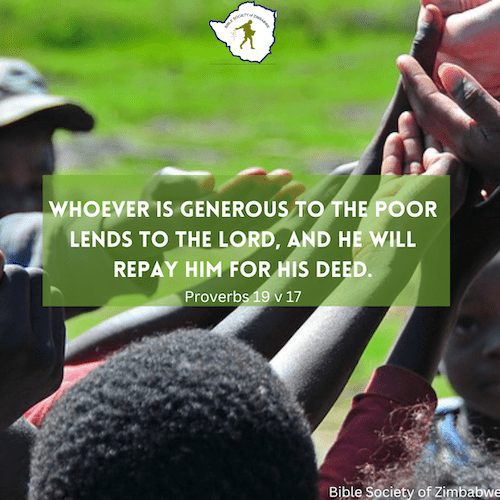
In a world that often values splendour and abundance, the Bible reminds us that even the smallest gifts can have a profound impact. God’s kingdom operates differently from the world’s standards, showing us that it is not the size of the gift that matters, but the heart behind it. Here are seven Bible verses that illustrate the transformative power of small yet significant acts of giving.
1. The Widowโs Offering
“Truly I tell you, this poor widow has put more into the treasury than all the others. They all gave out of their wealth; but she, out of her poverty, put in everythingโall she had to live on.” (Mark 12:43-44)
The widowโs two small coins seemed insignificant compared to the large sums others gave, yet Jesus celebrated her gift because it came from her heart and her trust in God. Despite her poverty, she gave all she had, demonstrating an unwavering faith in Godโs provision. This story teaches us that the value of a gift is not measured by its size but by the sacrifice and faith it represents. Her act challenges us to consider what weโre willing to give, even when it feels like we have little to offer.
2. The Boy with Loaves and Fish
“Here is a boy with five small barley loaves and two small fish, but how far will they go among so many?” (John 6:9)
A young boy offered his small and inadequate lunch to Jesus, and it became the catalyst for one of the greatest miracles, feeding over five thousand people. His offering was small and ordinary, yet in Jesusโ hands, it became extraordinary. This story reminds us that God can take what little we have and multiply it beyond our imagination when we give with an open heart. The boyโs willingness to share what he had shows us the importance of trusting God to use our contributions for His glory.
3. A Cup of Water
“And if anyone gives even a cup of cold water to one of these little ones who is my disciple, truly I tell you, that person will certainly not lose their reward.” (Matthew 10:42)
A simple act of kindness, like offering water, does not go unnoticed in Godโs eyes. Jesus emphasizes that even the smallest gesture, done with love and for His sake, carries eternal significance. Small gestures of kindness can make a significant difference in someoneโs life and are cherished by God. This verse inspires us to recognize the value of everyday acts of kindness and how they reflect Godโs love to those around us.
4. Faith as Small as a Mustard Seed
“If you have faith as small as a mustard seed, you can say to this mountain, โMove from here to there,โ and it will move. Nothing will be impossible for you.” (Matthew 17:20)
This verse reminds us that even the smallest contributions, when paired with faith, can achieve monumental results. Just as a mustard seed grows into a mighty tree, small acts of giving can create ripples of change. Itโs not about the magnitude of what we bring, but the faith with which we bring it. When we trust God, even the smallest step can lead to extraordinary outcomes.
5. The Generosity of the Macedonians
“Out of the most severe trial, their overflowing joy and their extreme poverty welled up in rich generosity.” (2 Corinthians 8:2)
The Macedonian believers gave generously despite their poverty, demonstrating that generosity is not about wealth but about a willing heart. Their joy in giving came not from abundance but from their love for God and others. They saw giving as a privilege rather than a burden. Their example encourages us to give cheerfully, no matter our circumstances, trusting that our contributions, however small, can make a meaningful difference.
6. The Woman Who Anointed Jesus
“She did what she could. She poured perfume on my body beforehand to prepare for my burial.” (Mark 14:8)
The woman who anointed Jesus with perfume gave what she had, and her act of devotion was celebrated by Jesus. Though her gift may have seemed small in the worldโs eyes, it carried eternal significance. Her act of love and sacrifice demonstrates that giving is not always about meeting physical needs but can also be an expression of worship and honor. This story challenges us to consider how our gifts reflect our love for Christ.
7. The Power of Partnership
“For I testify that they gave as much as they were able, and even beyond their ability. Entirely on their own, they urgently pleaded with us for the privilege of sharing in this service to the Lordโs people.” (2 Corinthians 8:3-4)
This verse highlights the collective power of small contributions. The Macedonians gave beyond their ability, showing that sacrificial giving often comes from a deep desire to serve. When we come together to give, even small gifts can combine to create a big impact, supporting Godโs work in powerful ways. Their story reminds us that generosity is not limited by our resources but by the willingness of our hearts.
Conclusion
The Bible teaches us that small gifts, when given with a pure heart and faith, can have a big impact. Whether itโs a widowโs coins, a boyโs lunch, or a cup of water, God sees and honors every act of generosity. These stories remind us that in Godโs hands, no gift is too small. This Christmas, letโs be inspired to give what we haveโno matter how smallโand trust that God will use it for His glory and the good of others. Even the smallest gift can be a seed for miracles in Godโs hands.
Small Gifts, Big Impact
In a world that often values splendour and abundance, the Bible reminds us that even the smallest gifts can have a profound impact. God's kingdom operates differently from the world's standards, showing us that it is not the size of the gift that matters, but the heart behind it. Here are seven Bible verses that illustrate the transformative power of small yet significant acts of giving.