

How Families Can Receive Returnees From South Africa with Love
Returning home after being forced to leave South Africa can be an emotional and difficult experience. For some returnees, coming home may bring relief because they are reunited with family. For others, it may bring embarrassment, disappointment, financial pressure and uncertainty about what comes next.
This is where family matters.
The first few days and weeks after returning can shape how a person begins to rebuild. Families can either make the returnee feel like a failure, or remind them that home is still a place where they are loved, valued and accepted.
The Bible gives us principles that can guide families in creating that kind of welcome.
1. Welcome Them Before You Question Them
When someone returns, the natural reaction may be to ask:
“What happened?”
“Why were you sent back?”
“Where is the money you made?”
“What happened to your belongings?”
But sometimes, the person first needs to hear:
“Welcome home. We are glad you are here.”
The story can come later.
Jesus’ story of the prodigal son gives us a powerful picture of a father who saw his son returning and ran to welcome him.
“So he got up and went to his father. But while he was still a long way off, his father saw him and was filled with compassion for him; he ran to his son, threw his arms around him and kissed him.” — Luke 15:20 (NIV)
The father did not begin by interrogating his son.
He welcomed him.
Families can learn from this. Before asking what happened in South Africa, make sure the returnee knows that they are wanted at home.
2. Listen Without Turning Their Story Into a Courtroom
Some returnees may want to talk immediately. Others may need time.
Their experiences may involve difficult memories, loss, discrimination, unemployment, separation from loved ones or the sudden disruption of their lives.
Don’t force them to explain everything.
Instead, create an environment where they know:
“When you are ready to talk, I am here to listen.”
“Everyone should be quick to listen, slow to speak and slow to become angry.” — James 1:19 (NIV)
Listening does not mean agreeing with everything they say.
It means giving them enough space to tell their story without immediately judging, correcting or blaming them.
Sometimes what a returnee needs most is not advice, they simply need someone who will listen.
3. Don’t Make Them Feel Like They Failed
One of the most painful things for a returnee may be feeling that they have disappointed their family.
Perhaps they left expecting to send money home. Perhaps relatives expected them to return with a car, build a house or start a business.
Instead, they have returned with very little.
This can create enormous shame.
Families should resist statements such as:
“You were in South Africa all those years and came back with nothing?”
Instead, ask:
“What can we do to help you start again?”
“Carry each other’s burdens, and in this way you will fulfill the law of Christ.” — Galatians 6:2 (NIV)
A family should not add to someone’s burden.
4. Give Them a Safe Place to Rebuild
Coming home does not automatically mean that everything is okay.
A returnee may be wondering:
- Where will I work?
- How will I support my children?
- What can I do now?
- Will people respect me?
- Can I start a business?
- What will my friends say?
- Have I lost everything I worked for?
Family can become the safe environment from which the person begins rebuilding.
“Therefore encourage one another and build each other up, just as in fact you are doing.” — 1 Thessalonians 5:11 (NIV)
Encouragement is not pretending that everything is fine, it is helping someone believe that their current situation is not the end of their story.
5. Don’t Turn Their Return Into Family Gossip
A returnee’s story belongs to them.
Before sharing their situation with neighbours, church members, friends or extended family, consider how that might affect them.
Imagine returning home already feeling embarrassed, only to discover that everyone in the community knows what happened to you.
Families should protect the dignity of their returning loved ones.
“Love each other deeply, because love covers over a multitude of sins.” — 1 Peter 4:8 (NIV)
Love does not expose someone’s vulnerability for entertainment.
Love protects. Instead of discussing the returnee behind their back, create a culture where their dignity is respected.
6. Don’t Only Give Them Food—Help Them Find Their Future
Practical support is important.
A family may provide food, accommodation, clothing or transport. But long-term support also means helping the returnee think about what comes next.
Ask:
“What skills did you gain?”
“What kind of work would you like to do?”
“What can we help you start?”
“Who can we connect you with?”
The returnee may have skills and experiences that can be valuable back home.
“Each of you should use whatever gift you have received to serve others, as faithful stewards of God’s grace in its various forms.” — 1 Peter 4:10 (NIV)
Their journey may have been difficult, but it may also have given them skills, resilience and experience. Help them see what they still have, not only what they have lost.
7. Remind Them: They Still Belong
Perhaps the most important message a family can communicate is:
“You are still one of us.”
Circumstances may have changed.
Their finances may have changed.
Their plans may have changed.
But their value has not.
The Bible reminds us that our identity and worth ultimately come from God.
“See what great love the Father has lavished on us, that we should be called children of God!” — 1 John 3:1 (NIV)
A returnee should not be defined by deportation, unemployment, financial loss or what happened in South Africa. They are more than what happened to them. They are a person with dignity, gifts, relationships, dreams and a future.
A Final Word to Families
If someone you love has returned from South Africa, don’t make their homecoming another source of pain.
They may already be grieving a lost job, lost possessions, lost opportunities or a dream that did not work out as planned.
Let home be different.
Let it be the place where they can breathe.
Let it be the place where they are heard without judgment, supported without shame and encouraged to begin again.
They may have returned without everything they hoped for, but they have not returned without hope.
And sometimes, the first step toward rebuilding someone’s life is simply making sure they know:
“You are home. You are loved. You still belong.”
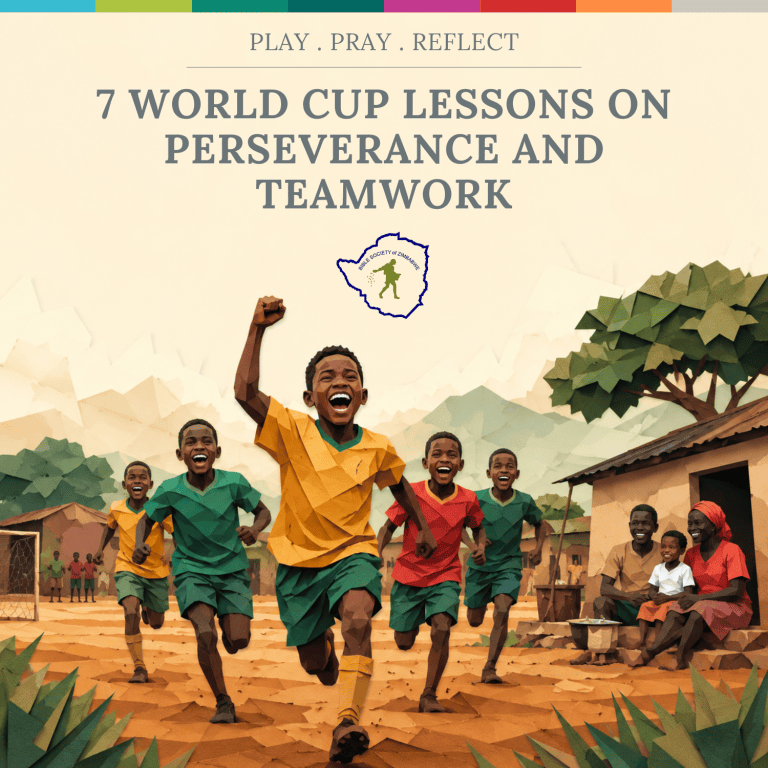
The knockout stage is win or go home, and faith has its own knockout moments. This World Cup devotional uses football’s setbacks, comebacks, and teamwork to teach seven lessons on persevering under trial, carrying one another, and keeping our eyes fixed on Christ.
1. No One Wins Without Setbacks
Monday 6 July
Few teams reach the final without first falling behind, and the greatest champions are not those who never stumble but those who refuse to stay down. God uses every trial to deepen our faith and strengthen our endurance.
James 1:12 “Blessed is the one who perseveres under trial because, having stood the test, that person will receive the crown of life that the Lord has promised to those who love him.”
Whatever knocked you down, get up, because defeat is never final with God.
2. Coming Back From Behind
Tuesday 7 July
Some of the greatest matches are won by teams that were trailing at half-time, when what looked like defeat became the setup for a famous comeback. God can turn our hardest seasons into the very thing that builds our character.
Romans 5:3-4 “We also glory in our sufferings, because we know that suffering produces perseverance; perseverance, character; and character, hope.”
Your current struggle may be setting up your greatest comeback.
3. Play Through the Pain
Wednesday 8 July
Champions keep running when their legs are burning, fixing their minds on the finish rather than the fatigue. Faith calls for that same endurance, pressing on when our own strength runs low.
Hebrews 12:1 “Let us run with perseverance the race marked out for us.”
Lay aside what slows you down and keep running today.
4. Pass the Ball
Thursday 9 July
No striker scores alone, and the best goals come from a teammate willing to give the ball away for the good of the team. Faith grows when we carry one another rather than playing only for ourselves.
Galatians 6:2 “Carry each other’s burdens, and in this way you will fulfill the law of Christ.”
Look around today and pass strength to someone who is struggling.
5. Great Teams Play for Something Bigger
Friday 10 July
The strongest teams are never just a collection of talented individuals, but a group bound by a shared purpose. Faith was never meant to be a solo journey either, because every believer belongs to God’s family.
1 Corinthians 12:27 “Now you are the body of Christ, and each one of you is a part of it.”
Find your place on the team, because the body needs the part only you can play.
6. The Crowd Cannot Play for You
Saturday 11 July
The crowd can cheer and roar its support, but it cannot step onto the field, for eventually the player must play. Others can point us toward God, yet no one can know Him on our behalf, because faith is personal.
Romans 14:12 “Each of us will give an account of ourselves to God.”
Make your faith your own today, because no one can run your race for you.
7. Keep Your Eyes on the Captain
Sunday 12 July
When the pressure rises, players look to their captain to steady the team and set the standard. Believers have the greatest Captain of all, and we run best when our eyes stay fixed on Jesus.
Hebrews 12:2 “Fixing our eyes on Jesus, the pioneer and perfecter of faith.”
This Sunday, lift your eyes off the pressure and onto Christ.
Conclusion
The knockout rounds test everything, and so does the life of faith. This week we rose from setbacks, ran through the pain, carried one another, and kept our eyes on our Captain. Strengthened together, we press on toward the final.
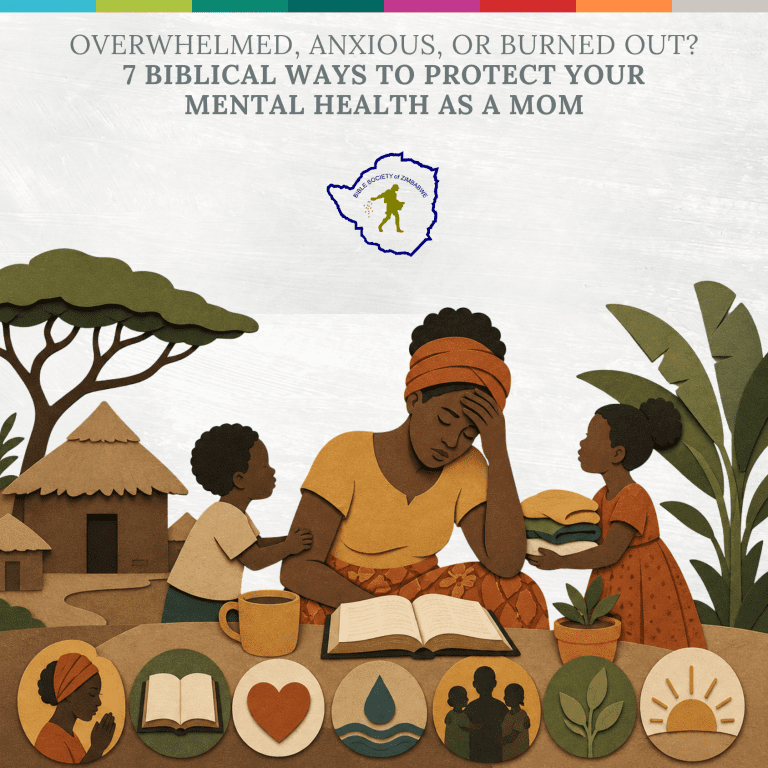
Motherhood is amazing, but let’s be real: it’s also hard. You love your kids, but sometimes it feels like the weight of the world is on your shoulders. Sleepless nights, endless to-do lists, constant worries about whether you’re doing enough… it can all start to crush your spirit.
If you’re feeling overwhelmed, anxious, or even burned out, you are not alone. Millions of moms just like you experience these struggles, and God sees it all. The good news? His Word offers guidance, peace, and practical ways to care for your mental and emotional health while navigating the chaos of motherhood.
Here’s how you can protect your mental health, reclaim your peace, and find strength in God without feeling guilty for needing help.
1. Let God Be Your Strength
Verse: “I can do all this through him who gives me strength.” — Philippians 4:13
You don’t have to be superhuman. God’s strength is bigger than your to-do list, bigger than your worries about the future, and bigger than any “perfect mom” standard on Instagram. Every time you feel drained, pause and let Him refill your energy.
Practical Tip: Start your day with a short prayer asking for patience and clarity. Even 2 minutes of focused breathing and prayer can shift your mindset.
2. Rest Isn’t Optional
Verse: “Come to me, all you who are weary and burdened, and I will give you rest.” — Matthew 11:28
You might feel guilty for taking a break, but rest is part of God’s plan. Sleep, a quiet cup of tea, or even scrolling through a devotional for 10 minutes is not laziness. Your mental health depends on it.
Practical Tip: Schedule “mini-rests” daily. Your children will benefit from a mom who’s recharged.
3. Replace Worry With Prayer
Verse: “Do not be anxious about anything, but in every situation, by prayer and petition, with thanksgiving, present your requests to God.” — Philippians 4:6
When your mind starts racing with “what ifs,” stop and talk to God. Writing your worries down and praying over them can help you regain control of your thoughts.
Practical Tip: Keep a small journal. List your anxieties, and end each entry with a prayer of release.
4. Celebrate Your Small Wins
Verse: “Her children arise and call her blessed; her husband also, and he praises her.” — Proverbs 31:28
Your life may feel like a series of endless tasks, but each act of care matters. That snack you made, that bedtime story, that hug when your child was upset, God sees it.
Practical Tip: Reflect each night on 3 things you did well. Give yourself credit for the little victories.
5. Don’t Do Life Alone
Verse: “Carry each other’s burdens, and in this way you will fulfill the law of Christ.” — Galatians 6:2
Isolation can fuel anxiety. You’re allowed to lean on friends, family, or a church community. Talking openly about your struggles isn’t weakness, it’s strength.
Practical Tip: Join a moms’ group online or locally. Even sharing memes with other moms can be therapeutic!
6. Cast Your Anxiety on God
Verse: “Cast all your anxiety on him because he cares for you.” — 1 Peter 5:7
God wants you to give Him your worries, guilt, and stress. When you surrender these burdens, you free up space to enjoy your family, rest, and connect spiritually.
Practical Tip: Before bed, say a short prayer casting your stress onto God. Try: “God, I give You today’s worries. Help me rest in Your care.”
7. Focus on Hope and Purpose
Verse: “For I know the plans I have for you,” declares the Lord, “plans to prosper you and not to harm you, plans to give you hope and a future.” — Jeremiah 29:11
Even when it feels like motherhood is endless work, God has a purpose for your journey. He’s shaping your character, your children, and your legacy.
Practical Tip: Make a vision board with your goals and prayers for your family. Seeing God’s promises visually can be incredibly motivating.
Final Thoughts
Being a mom doesn’t mean doing everything alone or perfectly. It means leaning on God, caring for your mental health, and accepting that you are human, and wonderfully so.
When you take moments to pray, rest, reflect, and reach out, you’re not just surviving motherhood, you’re thriving in it. And the best part? God is walking every step of the journey with you.

Is the goal of life to be comfortable, or to make a difference?
“Soft life” is everywhere.
It is the dream of financial freedom, nice experiences, travelling, having a good job, living in a beautiful home, taking care of yourself and not constantly struggling.
And honestly, there is nothing wrong with wanting a better life.
After all, who doesn’t want to pay their bills without stress, have a decent home, enjoy a holiday, support their family and have some peace of mind?
But here’s the question we need to ask this day: Are we chasing comfort, or are we chasing purpose?
Because sometimes the life God calls us to may not always be the easiest or most comfortable one.
Jesus put it this way:
“Whoever wants to be my disciple must deny themselves and take up their cross and follow me. For whoever wants to save their life will lose it, but whoever loses their life for me will find it. What good will it be for someone to gain the whole world, yet forfeit their soul?”
Matthew 16:24–26 (NIV)
Jesus wasn’t saying that His followers must live miserable lives. He was challenging us to ask what we are willing to sacrifice for something greater than ourselves.
1. Wanting a Good Life Isn’t the Problem
There is nothing wrong with wanting financial stability, a successful career or a comfortable life.
The problem comes when comfort becomes the goal instead of the reward.
You can want nice things and still love God.
You can build a successful business and still serve others.
You can pursue a great career and still live with purpose.
The question isn’t, “Do I want a soft life?”
The better question is:
“What am I willing to do with the life God gives me?”
“But remember the Lord your God, for it is he who gives you the ability to produce wealth.” — Deuteronomy 8:18 (NIV)
Success is not simply about what you can accumulate. It is also about what you can contribute.
2. Hustle Culture Can Make You Forget to Live
Young people are constantly being told to hustle harder. Wake up early. Start a side hustle. Build a brand. Make money. Learn a skill. Invest. Network. Grind.
There is value in hard work, but constant hustle can also leave you exhausted.
You were not created to spend your entire life chasing money.
Jesus Himself recognised the importance of rest:
“Then, because so many people were coming and going that they did not even have a chance to eat, he said to them, ‘Come with me by yourselves to a quiet place and get some rest.'” — Mark 6:31 (NIV)
Purpose doesn’t mean being busy every minute.
Sometimes rest is part of the assignment.
Don’t glorify burnout and call it ambition.
3. Purpose Will Sometimes Require Sacrifice
Here’s the uncomfortable part, purpose isn’t always convenient. Sometimes you have to say no to something you want because you are committed to something bigger.
You may have to study when your friends are partying.
Save money when everyone else is spending.
Walk away from a relationship that is taking you away from God.
Start small when you want instant success.
Serve others when nobody is paying you.
Jesus said:
“Whoever wants to be my disciple must deny themselves and take up their cross and follow me.” — Matthew 16:24 (NIV)
Following Jesus involves sacrifice.
But sacrifice doesn’t mean your life has no joy. It means you are willing to exchange temporary comfort for a lasting purpose.
4. Don’t Let Social Media Define Your Version of Success
Someone is posting from Dubai.
Someone just bought a car.
Someone is getting married.
Someone has launched a business.
Someone has 100,000 followers.
And suddenly your own life feels like a failure.
But remember: you are comparing your behind-the-scenes to someone else’s highlight reel.
The Bible says:
“Each one should test their own actions. Then they can take pride in themselves alone, without comparing themselves to someone else.” — Galatians 6:4 (NIV)
Your journey doesn’t have to look like somebody else’s.
Maybe your purpose is still developing.
Maybe your season is about preparation rather than public success.
Don’t rush your journey because someone else’s life looks better on Instagram.
5. Purpose Is Bigger Than Getting a Job
For many young people, the dream is simply to get a job.
And that’s understandable, but your purpose is bigger than your payslip.
You can fulfil purpose through your profession, business, ministry, creativity, community work, family and relationships.
Paul reminds us:
“Whatever you do, work at it with all your heart, as working for the Lord, not for human masters.” — Colossians 3:23 (NIV)
Whether you’re a teacher, entrepreneur, farmer, doctor, designer, student, mechanic, content creator or job seeker, ask:
“How can I use what God has given me to make someone’s life better?”
That’s where purpose begins.
6. You Don’t Have to Choose Between Ambition and Faith
Some young Christians feel guilty for wanting success.
But God gave you gifts, creativity, intelligence and ambition for a reason.
The issue isn’t ambition, the issue is what your ambition is serving.
Are you chasing money simply to prove that you’re better than everyone else?
Or are you building something that can provide for your family, create jobs and bless your community?
Are you pursuing influence so people can worship you?
Or so you can influence people for good?
Jesus asked:
“What good is it for someone to gain the whole world, yet forfeit their soul?” — Mark 8:36 (NIV)
Don’t lose your soul while building your dream.
7. Choose a Life That Means Something
At the end of the day, the question isn’t whether you lived a “soft” or “hard” life.
The question is:
Did your life matter?
Did you use your gifts?
Did you help someone?
Did you make your community better?
Did you honour God?
Did you leave something behind that continues to bless others?
Jesus tells us:
“Whoever wants to save their life will lose it, but whoever loses their life for me will find it.” — Matthew 16:25 (NIV)
A purpose-driven life isn’t necessarily an uncomfortable life, it is a life where comfort doesn’t control you.
You can enjoy your blessings without worshipping them.
You can pursue success without making success your god.
You can enjoy the “soft life” while still living a purposeful life.
So, Soft Life or Purpose Life?
Maybe the answer isn’t one or the other.
Enjoy the soft life, but don’t let it become your purpose.
Work hard, but rest.
Build wealth, but remain generous.
Pursue success, but remain humble.
Dream big, but remember God.
Enjoy life, but don’t forget why you are here.

Avoiding stress during exams is essential for maintaining focus, performing well, and staying healthy. Here’s a biblical, practical, and actionable guide to managing stress effectively during exam time:
1. Start with Prayer and Trust in God
- Philippians 4:6-7 – “Do not be anxious about anything, but in every situation, by prayer and petition, with thanksgiving, present your requests to God.”
Tip: Whenever you feel overwhelmed, pause and pray. Surrender your worries to God.
Action:
- Start and end your study sessions with a short prayer.
- Keep a prayer journal where you express your concerns and ask God for peace.
2. Stay Organized with a Study Plan
- 1 Corinthians 14:40 – “But everything should be done in a fitting and orderly way.”
Tip: A well-organized study schedule prevents last-minute cramming and reduces stress.
Action:
- Break your syllabus into manageable chunks, covering a little every day.
- Use tools like a study timetable or to-do list to track progress.
3. Take Care of Your Body
- 1 Corinthians 6:19-20 – “Your body is a temple of the Holy Spirit… Therefore, honor God with your bodies.”
Tip: Eating well, exercising, and sleeping enough will help your brain function better.
Action:
- Exercise: Take short walks or do light stretches between study sessions.
- Sleep: Aim for 7-8 hours of sleep per night to improve concentration.
- Eat Nutritious Foods: Include fruits, vegetables, and water to keep your energy up.
4. Take Breaks and Rest
- Exodus 20:8-10 – “Remember the Sabbath day by keeping it holy…”
Tip: Rest is essential to recharge your brain and avoid burnout.
Action:
- Take 10-15 minute breaks every hour to relax your mind.
- Set aside one day a week to rest and engage in something you enjoy.
5. Avoid Comparison with Others
- Galatians 6:4 – “Each one should test their own actions… without comparing themselves to someone else.”
Tip: Comparing yourself with classmates can lead to unnecessary anxiety. Focus on your progress and efforts.
Action:
- Remind yourself that your journey is unique, and God has a plan for you.
- Celebrate small achievements along the way, like completing a topic or practice test.
6. Practice Deep Breathing and Relaxation Techniques
- Psalm 46:10 – “Be still, and know that I am God.”
Tip: When stress creeps in, breathe deeply and meditate on God’s presence.
Action:
- Deep Breathing: Inhale for 4 seconds, hold for 4 seconds, and exhale for 4 seconds. Repeat several times.
- Play soft, relaxing worship music while you study or during breaks.
7. Stay Positive and Speak Life Over Yourself
- Proverbs 18:21 – “The tongue has the power of life and death…”
Tip: Replace negative thoughts with positive affirmations rooted in Scripture.
Action:
- Speak aloud Scriptures like: “I can do all things through Christ who strengthens me” (Philippians 4:13).
- Avoid saying things like “I will fail” or “This is too hard.” Instead, say, “I am prepared, and God is with me.”
8. Engage in Fellowship with Others
- Ecclesiastes 4:9-10 – “Two are better than one… If one falls down, the other can help him up.”
Tip: Talk to family, friends, or mentors when you feel overwhelmed.
Action:
- Join a study group for encouragement.
- Share your concerns with someone who can pray with you and provide guidance.
9. Limit Distractions and Focus on the Present
- Matthew 6:34 – “Do not worry about tomorrow, for tomorrow will worry about itself.”
Tip: Avoid worrying about the future or dwelling on past mistakes. Stay focused on what you can do today.
Action:
- Set specific times to study without distractions from social media or phone notifications.
- Tackle one subject or task at a time to avoid overwhelm.
10. Trust God with the Outcome
- Proverbs 3:5-6 – “Trust in the Lord with all your heart and lean not on your own understanding…”
Tip: After you’ve done your best, trust God to handle the rest.
Action:
- After each exam, pray and thank God for the strength to finish.
- Avoid overanalyzing your performance, trust that God’s plan is perfect.
Conclusion
Managing stress during exams is about trusting God, planning wisely, taking care of yourself, and staying focused on the present. Remember that success is not just about grades—it’s about learning, growing, and relying on God’s strength. Following this guide will help you stay calm, focused, and productive throughout the exam season. You’ve got this! God is with you every step of the way.

Feeling “behind” in life is a feeling, not a fact, manufactured almost entirely by comparison. The Bible reframes the whole question: you are not late, you are not defective, and you cannot fall behind a plan you did not write. These seven truths replace comparison anxiety with God’s timing, your God-given worth, and the freedom to run your own race.
Everyone seems to be ahead of you. The promotions, the weddings, the houses, the highlight reels. Scroll long enough and you start to believe the lie that you missed your moment. You didn’t. Here are seven truths that pull the plug on that feeling for good.
1. Your Pace Is Not Your Problem
Everyone seems to be ahead of you. Married, promoted, settled, thriving. The feed never stops reminding you. But “behind” is a feeling, not a fact, and comparison is where it is born.
Galatians 6:4-5 (NIV)
“Each one should test their own actions. Then they can take pride in themselves alone, without comparing themselves to someone else, for each one should carry their own load.”
Close the app. Measure today against your own yesterday, not against a stranger’s curated best. Your load is yours to carry, and yours alone to be proud of.
2. Your Timing Isn’t Broken
You are not late. You are not early. You are exactly where a season placed you. The pressure to catch up assumes there is one universal schedule. There isn’t.
Ecclesiastes 3:1 (NIV)
“There is a time for everything, and a season for every activity under the heavens.”
Winter is not a failed summer. If this is your waiting season, wait well. The harvest has its own calendar, and rushing it only ruins the crop.
3. The Highlight Reel Is Lying to You
Envy whispers that everyone else has it figured out. They don’t. You are comparing your raw footage to their final cut, and it is quietly eating you alive.
Proverbs 14:30 (NIV)
“A heart at peace gives life to the body, but envy rots the bones.”
Notice the cost. Envy does not only steal your joy; it corrodes your health. Trade the scroll for gratitude and watch your shoulders drop.
4. You Were Made on Purpose
Feeling behind assumes you are a defective version of someone better. You are not a rough draft. You were authored with intention, detail, and delight.
Psalm 139:14 (NIV)
“I praise you because I am fearfully and wonderfully made; your works are wonderful, I know that full well.”
Your worth was never tied to your milestones. Before the achievements, before the applause, you were already wonderfully made. Start there.
5. Your Future Is Already Mapped
The fear underneath “behind” is simple. What if I miss it? What if the good life passes me by? Scripture answers with a promise, not a panic.
Jeremiah 29:11 (NIV)
“‘For I know the plans I have for you,’ declares the Lord, ‘plans to prosper you and not to harm you, plans to give you hope and a future.’”
You cannot fall behind a plan you did not write. The same God who set the seasons is holding your future. Walk forward with open hands.
6. Contentment Is a Skill, Not a Mood
Contentment is not something you stumble into when life finally cooperates. Paul learned it in a prison cell. It is a muscle, trained in the gap between what you have and what you want.
Philippians 4:11 (NIV)
“I am not saying this because I am in need, for I have learned to be content whatever the circumstances.”
Practice it small today. Thank God for what is unfinished, for what is still in motion, for what has not arrived yet. Contentment grows where comparison used to live.
7. Run Your Own Race
Stop watching the lanes beside you. Runners who look sideways lose speed and lose heart. Your finish line is your own, and it is still ahead of you.
Hebrews 12:1 (NIV)
“Therefore, since we are surrounded by such a great cloud of witnesses, let us throw off everything that hinders and the sin that so easily entangles. And let us run with perseverance the race marked out for us.”
Drop the weight of comparison. Fix your eyes forward. Perseverance, not pace, is what carries you home.
You Were Never Behind. You Were Comparing.
You were never behind. You were comparing your story to a stranger’s edit, your winter to someone else’s summer, your raw draft to their highlight reel. Timing is not your enemy. Envy is. Lay it down. Run your own race, at your own pace, held by a God who already knows how it ends. You are not late. You are right on time.

Our phones are practically an extension of our hands. TikTok, Instagram, YouTube — we scroll, we double tap, we post. But here’s a thought: what if every swipe, every story, every share could make a difference? What if your online presence could actually change someone’s day… or even their life?
The Bible doesn’t mention TikTok or trending hashtags, but it does give us timeless wisdom on how to live — and yes, that includes how we show up online.
Here’s how 7 powerful Bible verses can guide us from just scrolling to actually serving:
1. 1 Timothy 4:12 – “Don’t let anyone look down on you because you are young, but set an example for the believers in speech, in conduct, in love, in faith and in purity.”
Some people think you have to “grow up” to make an impact. Not true. Your voice matters now. The way you comment, the memes you post, the language you use in your captions — it all sets an example. Be the one who brings encouragement, not just more noise.
2. Ephesians 4:29 – “Do not let any unwholesome talk come out of your mouths, but only what is helpful for building others up.”
It’s so easy to roast someone online, join a cancel trend, or drop a “clap back” comment. But every word we post has power. What if we flipped it? What if your comments built people up instead of tearing them down? You might be the only kind word someone sees that day.
3. Matthew 5:14 – “You are the light of the world. A town built on a hill cannot be hidden.”
Social media can feel dark sometimes — cyberbullying, negativity, toxic trends. But light always wins over darkness. Your faith-filled posts, uplifting reels, and hopeful stories can shine like a beacon. Don’t hide your light. Someone out there needs to see it.
4. Proverbs 18:21 – “The tongue has the power of life and death.”
Think of your posts as seeds. Are you planting seeds of life or seeds of hurt? A single encouraging DM, a prayer shared in your stories, or a Scripture on your feed can breathe life into someone’s weary heart. Use your words to heal, not harm.
5. Colossians 3:17 – “And whatever you do, whether in word or deed, do it all in the name of the Lord Jesus.”
Yes — this even includes your TikToks. That trend you’re doing? That tweet you’re drafting? That bio on your profile? Everything online reflects who you are. Ask yourself: Does this honor God? Would I post this if Jesus followed me?(Spoiler: He does.)
6. Philippians 2:4 – “Not looking to your own interests but each of you to the interests of the others.”
It’s easy to post just for likes, clout, or validation. But what if you used your platform to notice others? Sharing a friend’s art, posting about a cause you care about, or raising awareness for someone in need — that’s serving with your feed.
7. Galatians 6:9 – “Let us not become weary in doing good, for at the proper time we will reap a harvest if we do not give up.”
Sometimes, you’ll post encouragement and it’ll feel like no one cares. You’ll share positive content and only get a few likes. But don’t quit. Your words, prayers, and kindness are making ripples you can’t see. Keep sowing good — God promises a harvest.
So… What Now?
Your online presence is powerful. It can tear down or build up, spread drama or share hope, fuel chaos or bring peace. Every post is a choice.
This month, try asking yourself before you hit “share”:
– Will this bring light?
– Will this lift someone up?
– Will this reflect the love of Jesus?
Because when we move from scrolling to serving, social media stops being just entertainment — it becomes ministry.

Discipline. It’s a word that can sound rigid or intimidating, yet it’s the secret ingredient to achieving your goals and living a purposeful life. As we step into this new year, let’s explore how biblical wisdom can shape our understanding of discipline and help us thrive in every area of life. Here are seven powerful Bible verses that can guide you to embrace discipline and build a life worth living.
1. Hebrews 12:11
“No discipline seems pleasant at the time, but painful. Later on, however, it produces a harvest of righteousness and peace for those who have been trained by it.”
Discipline isn’t easy, and let’s be real, most of us would rather binge-watch our favorite shows than stick to a workout plan or study for exams. But think of discipline as planting seeds. The effort you put in now even when it feels tough will lead to a life full of peace, stability, and purpose. Start by asking yourself, What seeds am I planting today?
2. Proverbs 25:28
“Like a city whose walls are broken through is a person who lacks self-control.”
Imagine a city without walls, completely vulnerable to attacks. That’s what life feels like without discipline. Self-control acts as a shield, protecting your mind, time, and energy from distractions and harmful influences. This year, rebuild those walls by setting boundaries, whether it’s limiting screen time, managing your finances, or saying “no” to toxic habits.
3. 1 Corinthians 9:25
“Everyone who competes in the games goes into strict training. They do it to get a crown that will not last, but we do it to get a crown that will last forever.”
Athletes don’t just show up on game day and hope for the best; they train hard every single day. Think of your goals as your personal championship. Whether it’s excelling in your career, strengthening your faith, or building relationships, discipline is the training ground that prepares you for success. What’s your eternal crown, and how are you working toward it?
4. Proverbs 12:1
“Whoever loves discipline loves knowledge, but whoever hates correction is stupid.”
Harsh? Maybe. True? Absolutely. Learning from mistakes and being open to correction is essential for growth. When a mentor, teacher, or friend offers constructive criticism, don’t dismiss it. Instead, use it as an opportunity to refine yourself. This year, adopt a growth mindset that embraces learning, even when it’s uncomfortable.
5. 2 Timothy 1:7
“For the Spirit God gave us does not make us timid, but gives us power, love, and self-discipline.”
Discipline isn’t something you have to muster up on your own; it’s a gift from God. Through His Spirit, you have the power to conquer procrastination, overcome fear, and stick to your commitments. When you feel overwhelmed or tempted to quit, tap into the strength God has already placed within you.
6. Galatians 6:9
“Let us not become weary in doing good, for at the proper time we will reap a harvest if we do not give up.”
Ever feel like your efforts are pointless? Maybe you’ve been working hard, but the results aren’t visible yet. Don’t lose heart. Discipline is about consistency, not instant gratification. Whether it’s staying faithful in prayer, working on your side hustle, or investing in relationships, your perseverance will pay off. Keep going; your harvest is coming.
7. Psalm 119:105
“Your word is a lamp for my feet, a light on my path.”
Discipline is easier when you have a clear direction. Let God’s Word be your guide this year. Start a habit of reading the Bible daily, even if it’s just a verse or two. Allow Scripture to shape your choices and priorities, illuminating the path toward your purpose.
Bringing It All Together
Discipline isn’t about being perfect; it’s about being intentional. It’s about taking small, consistent steps that lead to big changes over time. Whether you’re setting fitness goals, working on your faith, or pursuing career dreams, these verses remind us that discipline is both a gift and a responsibility.
This year, challenge yourself to embrace discipline as an act of worship and a step toward becoming the person God created you to be. Your future self will thank you.
The season of harvest is a time of gratitude, reflection, and abundance. For farmers, it signifies the end of a season of hard work, when crops are gathered, and the fruits of labor are celebrated. Spiritually, it reminds us of God’s faithfulness and the importance of sowing seeds of righteousness in our lives. The Bible speaks of harvest not just as an agricultural event but as a symbol of spiritual growth, provision, and God’s blessings.
Here are seven Bible verses that reflect the beauty, meaning, and significance of harvest time:
1. Galatians 6:9
“Let us not become weary in doing good, for at the proper time we will reap a harvest if we do not give up.”
Just as the harvest comes after a season of hard labor, our spiritual harvest will come if we remain steadfast in our efforts to live righteously. God’s timing is perfect, and we must trust that our diligence will bear fruit.
2. Matthew 9:37-38
“Then he said to his disciples, ‘The harvest is plentiful but the workers are few. Ask the Lord of the harvest, therefore, to send out workers into his harvest field.’”
Here, Jesus calls on us to be workers in this field, sharing the good news of salvation and helping to bring others into the kingdom of God. Harvest time is not just about receiving but also giving — sharing God’s love with the world.
3. Psalm 126:5-6
“Those who sow with tears will reap with songs of joy. Those who go out weeping, carrying seed to sow, will return with songs of joy, carrying sheaves with them.”
We may endure seasons of sorrow, but God promises that those who faithfully sow, even through hardship, will one day reap a harvest of joy. There is hope in the midst of trials, and the harvest will be a time of celebration.
4. Proverbs 10:5
“He who gathers crops in summer is a prudent son, but he who sleeps during harvest is a disgraceful son.”
Just as a farmer must be attentive during the harvest to gather his crops, we must be alert and ready to seize the spiritual opportunities that God places before us. Laziness and neglect lead to missed blessings, but diligence ensures that we reap the benefits of our labor.
5. 2 Corinthians 9:10
“Now he who supplies seed to the sower and bread for food will also supply and increase your store of seed and will enlarge the harvest of your righteousness.”
God is the provider of all things, and He ensures that those who sow will have what they need to reap a harvest. Not only does He provide materially, but He also increases the harvest of righteousness in our lives, enabling us to grow in character, faith, and good works. Our trust in God’s provision is important to experiencing His abundance.
6. James 3:18
“Peacemakers who sow in peace reap a harvest of righteousness.”
When we sow seeds of peace and righteousness, we reap a harvest of goodness and integrity. Just as the farmer carefully chooses what to plant, we must be mindful of the seeds we sow in our relationships and daily actions.
7. John 4:35
“Don’t you have a saying, ‘It’s still four months until harvest’? I tell you, open your eyes and look at the fields! They are ripe for harvest.”
The time for action is now, not later. The fields are ripe, and God is calling us to step into His work, sharing His love and truth with those who are ready to receive it. There is an urgency in the harvest, and we are called to respond.
Conclusion
Harvest time is a powerful reminder of God’s faithfulness and the spiritual principles of sowing and reaping. Whether we are harvesting crops or gathering the fruits of our spiritual labor, we are called to trust in God’s provision and timing. As we reflect on these Bible verses, may we be inspired to continue sowing seeds of righteousness, peace, and faithfulness, knowing that in due season, we will reap a bountiful harvest.
Navigating the complexities of life can be challenging, especially for young people who are still finding their way. The Bible offers timeless wisdom and guidance that can help shape a fulfilling and purposeful life. Here are some key Biblical tips for young people:
1. Seek Wisdom and Understanding
Proverbs 4:7 – “The beginning of wisdom is this: Get wisdom. Though it cost all you have, get understanding.”
The pursuit of wisdom is highly valued in the Bible. Wisdom helps in making informed decisions, understanding the world better, and living a life that is pleasing to God. Young people are encouraged to seek wisdom and understanding, not only through formal education but also through life experiences and learning from others.
2. Honor Your Parents
Ephesians 6:1-3 – “Children, obey your parents in the Lord, for this is right. ‘Honor your father and mother’—which is the first commandment with a promise—’so that it may go well with you and that you may enjoy long life on the earth.'”
Respecting and honoring parents is a fundamental principle in the Bible. It fosters healthy family relationships and sets a foundation for a respectful attitude towards authority and elders.
3. Guard Your Heart
Proverbs 4:23 – “Above all else, guard your heart, for everything you do flows from it.”
The heart, in Biblical terms, is the center of one’s being, encompassing emotions, desires, and thoughts. Guarding your heart means being mindful of what influences you—your thoughts, feelings, and actions. It involves being cautious about the company you keep, the content you consume, and the activities you engage in.
4. Flee from Temptation
1 Corinthians 10:13 – “No temptation has overtaken you except what is common to mankind. And God is faithful; he will not let you be tempted beyond what you can bear. But when you are tempted, he will also provide a way out so that you can endure it.”
Temptations are a part of life, but the Bible reassures that there is always a way to overcome them. Young people are encouraged to recognize their weaknesses, seek God’s strength, and make conscious efforts to avoid situations that might lead to sin.
5. Develop a Prayerful Life
Philippians 4:6 – “Do not be anxious about anything, but in every situation, by prayer and petition, with thanksgiving, present your requests to God.”
Prayer is a powerful tool for maintaining a close relationship with God. It helps in finding peace, gaining strength, and seeking guidance. A prayerful life enables young people to stay connected to their faith and find solace in difficult times.
6. Cultivate Good Friendships
Proverbs 13:20 – “Walk with the wise and become wise, for a companion of fools suffers harm.”
The company you keep significantly influences your character and decisions. The Bible encourages surrounding yourself with wise and good-hearted individuals who uplift and encourage you to grow in faith and virtue.
7. Serve Others
Galatians 5:13 – “You, my brothers and sisters, were called to be free. But do not use your freedom to indulge the flesh; rather, serve one another humbly in love.”
Service to others is a core principle in Christianity. It teaches humility, compassion, and selflessness. Young people are encouraged to look beyond their own needs and contribute positively to the lives of others.
Conclusion
The Bible offers invaluable guidance for young people striving to live meaningful and virtuous lives. By seeking wisdom, honoring parents, guarding their hearts, fleeing from temptation, developing a prayerful life, cultivating good friendships, serving others, living with integrity, trusting in God’s plan, and staying humble, young people can navigate the complexities of life with faith and purpose.
Welcome Home
Learn how families can welcome returnees from South Africa with love, protect their dignity, offer support, and help them rebuild with hope and faith.
7 World Cup Lessons on Perseverance and Teamwork
Seven daily lessons from the World Cup's knockout rounds, on persevering through setbacks, carrying one another, and keeping our eyes fixed on Christ.
“Overwhelmed, Anxious, or Burned Out? 7 Biblical Ways to Protect Your Mental Health as a Mom”
Motherhood Can Be Beautiful and Exhausting At the Same Time. Discover 7 Biblical Ways to Protect Your Mental Health As a Mom, Find Peace In God’s Word, and Care for Yourself Without Guilt.
Learn how families can welcome returnees from South Africa with love, protect their dignity, offer support, and help them rebuild with hope and faith.
Seven daily lessons from the World Cup's knockout rounds, on persevering through setbacks, carrying one another, and keeping our eyes fixed on Christ.
Motherhood Can Be Beautiful and Exhausting At the Same Time. Discover 7 Biblical Ways to Protect Your Mental Health As a Mom, Find Peace In God’s Word, and Care for Yourself Without Guilt.
Soft Life or Purpose Life? 7 Biblical Lessons for Young People This Youth Month
A comfortable life is not necessarily a meaningful life. These 7 biblical lessons challenge young people to pursue success, rest and financial stability without losing faith, purpose or their calling to serve others.
Tips to avoid stress during exams
Managing stress during exams is about trusting God, planning wisely, taking care of yourself, and staying focused on the present. Remember that success is not just about grades—it’s about learning, growing, and relying on God's strength. Following this guide will help you stay calm, focused, and productive throughout the exam season. You've got this! God is with you every step of the way.
A comfortable life is not necessarily a meaningful life. These 7 biblical lessons challenge young people to pursue success, rest and financial stability without losing faith, purpose or their calling to serve others.
Managing stress during exams is about trusting God, planning wisely, taking care of yourself, and staying focused on the present. Remember that success is not just about grades—it’s about learning, growing, and relying on God's strength. Following this guide will help you stay calm, focused, and productive throughout the exam season. You've got this! God is with you every step of the way.
From Scrolling to Serving: 7 Powerful Ways to Use Your Online Presence for Kingdom Impact
Our phones are practically an extension of our hands. TikTok, Instagram, YouTube — we scroll, we double tap, we post. But here’s a thought: what if every swipe, every story, every share could make a difference? What if your online presence could actually change someone’s day… or even their life?
Discipline Unlocked: 7 Bible Verses to Transform Your Year
Discipline isn’t about being perfect; it’s about being intentional. It’s about taking small, consistent steps that lead to big changes over time. Whether you’re setting fitness goals, working on your faith, or pursuing career dreams, these verses remind us that discipline is both a gift and a responsibility.
Embracing the Season of Harvest: 7 Bible Verses for Reflection
Harvest time is a powerful reminder of God's faithfulness and the spiritual principles of sowing and reaping. Whether we are harvesting crops or gathering the fruits of our spiritual labor, we are called to trust in God’s provision and timing. As we reflect on these Bible verses, may we be inspired to continue sowing seeds of righteousness, peace, and faithfulness, knowing that in due season, we will reap a bountiful harvest.
Our phones are practically an extension of our hands. TikTok, Instagram, YouTube — we scroll, we double tap, we post. But here’s a thought: what if every swipe, every story, every share could make a difference? What if your online presence could actually change someone’s day… or even their life?
Discipline isn’t about being perfect; it’s about being intentional. It’s about taking small, consistent steps that lead to big changes over time. Whether you’re setting fitness goals, working on your faith, or pursuing career dreams, these verses remind us that discipline is both a gift and a responsibility.
Harvest time is a powerful reminder of God's faithfulness and the spiritual principles of sowing and reaping. Whether we are harvesting crops or gathering the fruits of our spiritual labor, we are called to trust in God’s provision and timing. As we reflect on these Bible verses, may we be inspired to continue sowing seeds of righteousness, peace, and faithfulness, knowing that in due season, we will reap a bountiful harvest.