
Who Wrote the Book of Judges?
After the conquest of Canaan, Israel had no king — only judges. But who recorded their stories? Was it a single author, reforming scribes, or exilic compilers? The authorship of Judges is one of the Bible’s most contested questions.
Who Wrote the Bible? — Series 5
David and Goliath. The Ark of the Covenant. Bathsheba. This is where the Bible’s most iconic stories live — and the authorship question is actually the most interesting one yet.
What’s in 1 & 2 Samuel?
Quick note first: in the original Hebrew Bible, these are one book. They were split into two later — probably for practical reasons, like scrolls having a size limit. Together they cover one of the most dramatic periods in Israelite history: the shift from the era of judges to a full monarchy, from around the 11th century BC to the 970s BC.
If you’ve ever heard any of these stories, they’re from Samuel:
| David vs. Goliath | Shepherd boy takes down a giant. The ultimate underdog story. |
| Saul’s decline | Israel’s first king unravels psychologically — in real time. |
| David & Bathsheba | Power, desire, murder, and devastating consequences. |
| The Ark arrives | David brings the Ark of the Covenant to Jerusalem. |
Three theories, three eras
Tradition names three authors: Samuel the prophet, and court prophets Nathan and Gad — all of whom were active during the events described. But as with every book in this series, tradition isn’t the only voice in the room. There are two other serious theories, each pointing to a completely different era. Here’s the evidence for all three (click the + to expand):
~11th–10th century BC
- 1 Chronicles 29:29 literally names all three as authors — the kind of court record-keeping that was standard in the ancient Near East.
- The psychological detail in Saul’s decline reads like an eyewitness account, not a reconstruction from centuries later.
- Linguistic analysis suggests portions of the text use early Hebrew — consistent with the 11th–10th century BC.
~7th century BC
- King Josiah was aggressively reforming Judah — and Samuel’s emphasis on covenant faithfulness over ritual fits that agenda almost too perfectly.
- The text has a Judah-centred perspective that makes more sense during the divided kingdom era than in the unified early monarchy.
- The repeated phrase “evil in the eyes of the LORD” matches how the books of Kings — definitely from this era — evaluate Israel’s kings.
~6th century BC
- After Jerusalem fell, the question on everyone’s mind was: how did we end up here? Samuel provides the answer — the rot started with Saul, and even David wasn’t perfect.
- The flow from Samuel into Kings makes narrative sense if both were compiled and shaped by the same exilic community.
- “To this day” language scattered through the text suggests someone writing well after the events, looking back across history.
Here’s the twist — you don’t have to pick one
This is where 1 & 2 Samuel gets genuinely interesting. Unlike some of the earlier books in this series, the evidence here actually supports a layered model that most scholars can agree on:
| 11th–10th century BC | Samuel, Nathan, and Gad write from within the events — court records, prophetic accounts, firsthand observations. |
| 7th century BC | Editors during Josiah’s reign shape the material with a theological lens — emphasising obedience, covenant, and the consequences of disobedience. |
| 6th century BC | Exilic compilers bring it all together into the text we have today — using it to explain how a chosen nation ended up in the Babylonian penalty box for 70 years. |
The most likely answer
Samuel, Nathan and Gad wrote the raw material. Josiah’s scribes edited it for their moment. Babylonian exiles compiled it into its final form. Three hands, three eras, one book.
Why does this matter?
Because 1 & 2 Samuel isn’t just ancient history. It’s one of the most honest portraits of leadership in any text ever written — a king described as “a man after God’s own heart” who also commits adultery and effectively arranges a murder. If this was propaganda, they did a terrible job of it. The raw humanity of these accounts is part of what makes them credible.
Whether written by eyewitnesses, reformed by scribes, or compiled in exile — someone wanted this story told in full. The mess included.
One author or three eras?
Does the layered model make sense to you — or do you think it was written by one hand at one time?
More from this series
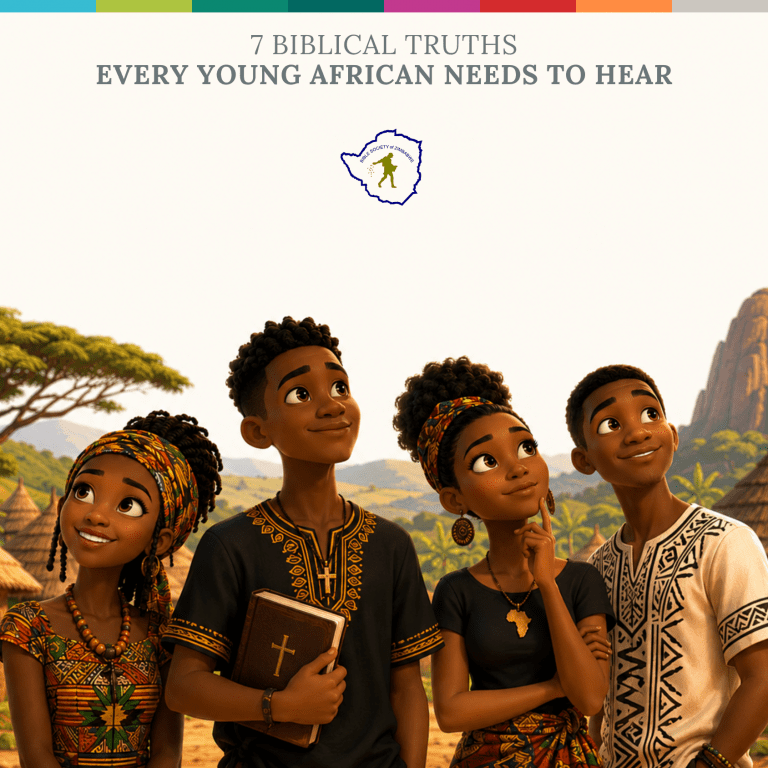
Can You Follow Christ Without Losing Your African Identity?
If you are a young African today, especially Gen Z, you may sometimes feel pulled between faith and culture.
You love God.
You respect your heritage.
You value your language, family systems, music, and traditions.
But maybe you have wondered:
“Do I have to become someone else to truly follow Christ?”
Some voices online suggest Christianity belongs to a certain culture or lifestyle. Others make African identity feel incompatible with faith.
But here is the truth:
Following Jesus Christ does not require you to stop being African. God never asks you to erase who He created you to be, He transforms it for His purpose.
Long before modern history shaped how Christianity was presented in many places, God was already working among nations, languages, and cultures across Africa and beyond.
Let’s walk through 7 Bible truths speaking directly to you, your identity, your struggles, and your future.
1. You Were Created With Purpose — Including Your Culture
Genesis 1:27
“So God created mankind in his own image, in the image of God he created them; male and female he created them.”
You were not randomly born into your culture.
Your skin.
Your language.
Your family systems.
Your storytelling traditions.
God saw all of it before you were born.
If God created humanity in His image, then your identity matters to Him.
You don’t have to imitate another culture to be accepted by God.
When you follow Christ, you are not becoming less African, you are becoming more aligned with God’s design.
2. God Wants You to Hear Him in Your Own Language
Acts 2:6
“When they heard this sound, a crowd came together in bewilderment, because each one heard their own language being spoken.”
On the day of Pentecost, God could have chosen one “holy language.”
He didn’t.
People heard the message of God in their own tongues.
Imagine that moment.
No translation confusion.
No cultural superiority.
God met people where they were.
If you speak Shona, Sesotho, Madinka, Swahili, or any African language, God honours that.
You do not need to abandon your voice or accent for God to speak to you.
3. God Looks at Your Heart — Not Your Appearance
1 Samuel 16:7
“But the Lord said to Samuel, ‘Do not consider his appearance or his height, for I have rejected him. The Lord does not look at the things people look at. People look at the outward appearance, but the Lord looks at the heart.’”
Social media pressures you to look a certain way.
Dress a certain way.
Speak a certain way.
Even worship a certain way.
But God evaluates differently.
He is not impressed by imitation.
He is moved by sincerity.
African worship expressions, singing loudly, dancing, storytelling, joyful praise, can deeply honour God when they come from the heart.
Authentic faith is not copying trends. It is loving God honestly.
4. Your Community Values Reflect God’s Wisdom
Ecclesiastes 4:9–10
“Two are better than one, because they have a good return for their labour: If either of them falls down, one can help the other up. But pity anyone who falls and has no one to help them up.”
Many African cultures emphasise community.
Family helps family.
Neighbours support neighbours.
Extended relatives matter.
Sometimes modern culture calls this “old-fashioned.”
But Scripture calls it wisdom.
God never designed you to struggle alone.
Supporting each other is not weakness, it is biblical strength.
5. You Can Honour Tradition Without Following Everything
Exodus 20:12
“Honour your father and your mother, so that you may live long in the land the Lord your God is giving you.”
You may face moments where faith and certain expectations clash.
Maybe family traditions conflict with your beliefs.
God commands honour, not blind obedience.
Honour means respect, kindness, and humility.
But following Christ may sometimes mean choosing what is right even when it is difficult.
You can respect your elders and still walk faithfully with God.
6. God Cares About Nations — Including Yours
Psalm 33:12
“Blessed is the nation whose God is the Lord, the people he chose for his inheritance.”
Your country matters to God.
Your community matters.
Africa’s history includes resilience, creativity, and hope.
Many young Africans today are:
- entrepreneurs,
- creatives,
- digital evangelists,
- innovators.
Your faith can shape your workplace, your neighbourhood, and your nation.
Christianity is not an escape from Africa.
It is a calling to transform it.
7. Heaven Celebrates Diversity — Forever
Revelation 7:9
“After this I looked, and there before me was a great multitude that no one could count, from every nation, tribe, people and language, standing before the throne and before the Lamb. They were wearing white robes and were holding palm branches in their hands.”
Look carefully at heaven.
Not one tribe.
Not one culture.
Every nation.
Every language.
God’s final vision is unity without erasing identity.
That includes you.
Your language.
Your heritage.
Your story.
You were never asked to become someone else to belong to God’s family.
A Message Directly to You
You don’t have to choose between loving Christ and loving your African identity.
Follow Christ fully.
Let Him challenge harmful practices.
Let Him heal broken traditions.
Let Him refine culture with truth and love.
But never believe the lie that faith requires you to abandon who you are.
God knew exactly where you would be born.
And He still called you.
Today’s generation is often told they’re too young, too inexperienced, or too distracted to make a lasting impact. But Scripture shows us that many of God’s greatest movements started with young people who were willing to believe big and obey fully. These 7 youths didn’t just follow culture, they shaped history. And you can too.
1. David – The Fearless Giant Slayer
“Don’t let anyone lose heart… your servant will go and fight him.” – 1 Samuel 17:32 (NIV)
David wasn’t even old enough to serve in the army, yet he stood before a giant that made trained soldiers tremble. While others saw his youth as a limitation, David saw it as a reason to trust God even more. He ran toward the battle, not away from it.
You may not have the platform, followers, or credentials others have, but your faith can still move mountains. Whether it’s speaking out against injustice, starting a project in your school, or defending your beliefs online, you don’t need permission to be brave. God is looking for hearts like David’s, humble, bold, and full of faith.
2. Esther – The Brave Advocate
“And who knows but that you have come to your royal position for such a time as this?” – Esther 4:14 (NIV)
Esther was a young woman placed in a high position at a critical time. She could have remained silent to protect herself, but she risked everything to save her people. Her courage sparked national change.
Many young people feel overwhelmed by the problems in the world, climate, mental health, inequality. But what if you were born for this exact moment? Like Esther, you’re not where you are by accident. Your voice, story, and influence have power. Advocacy starts with one brave step—are you willing to take it?
3. Joseph – The Dreamer Who Stayed Faithful
“Until the time came to fulfill his dreams, the Lord tested Joseph’s character.” – Psalm 105:19 (NLT)
Betrayed by his brothers, thrown into slavery, falsely accused, and forgotten in prison, Joseph’s journey wasn’t easy. But through it all, he clung to his dreams and his faith. In the end, he rose to power and saved an entire region from famine.
Waiting seasons are hard. Maybe you’re working hard but feel unseen, or you have dreams that seem delayed. Joseph teaches us that faithfulness in the quiet places prepares us for impact in public places. Don’t quit during the test, God is building something world-changing through you.
4. Daniel – The Teen Who Stood His Ground
“But Daniel resolved not to defile himself…” – Daniel 1:8 (NIV)
Daniel was likely a teenager when he was taken to Babylon. There, he was given a new name, culture, and education, but he refused to compromise his faith. Even when threatened with death, Daniel stood firm. God honored him with wisdom and favor.
In a world that constantly tries to redefine your identity, will you stand for what matters? Daniel didn’t shout or rebel ,he resolved. His quiet strength changed a nation. Whether it’s choosing purity, rejecting peer pressure, or refusing to bow to trends, your integrity will outshine any trend.
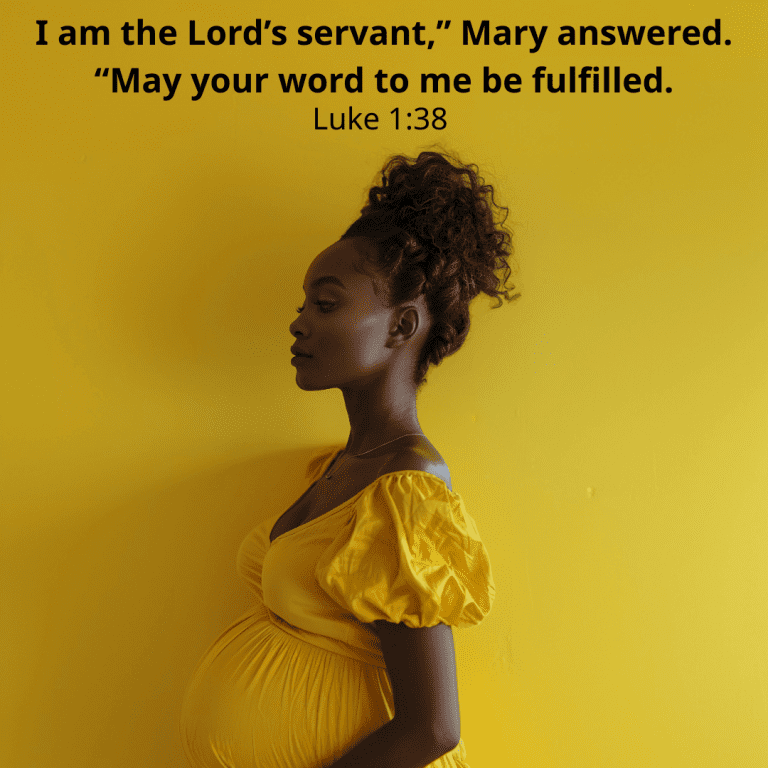
5. Mary – The Young Woman Who Carried Purpose
“I am the Lord’s servant,” Mary answered. “May your word to me be fulfilled.” – Luke 1:38 (NIV)
Mary was probably a teenager when the angel told her she would give birth to the Messiah. She had every reason to be afraid—shame, gossip, rejection. But she said yes to God’s plan.
God isn’t looking for the most qualified, He’s looking for the most surrendered. Mary reminds us that saying “yes” to God may be risky, but it’s always worth it. You might not know where it will lead, but faith begins with a simple yes.
6. Timothy – The Young Church Leader
“Don’t let anyone look down on you because you are young, but set an example…” – 1 Timothy 4:12 (NIV)
Timothy was a young pastor leading churches filled with people older and more experienced than him. Paul mentored him and reminded him that age doesn’t disqualify leadership, character does.
You may be the youngest in the room, but don’t shrink back. Your lifestyle, love, and example speak louder than your age. Lead boldly on your team, in your youth group, at your university. The kingdom needs young leaders with spiritual backbone.
7. Josiah – The Teen Who Sparked Revival
“Josiah was eight years old when he became king… He did what was right in the eyes of the Lord.” – 2 Kings 22:1–2 (NIV)
By the time he was in his teens, King Josiah led a reformation. He restored true worship, tore down idols, and brought the people back to the Word of God. His obedience led to revival.
Revival doesn’t start in big buildings, it starts in surrendered hearts. You don’t need to wait to get older to bring your generation back to God. You can be the one who starts the Bible study, invites friends to church, or posts truth online. Josiah didn’t wait, neither should you.
Final Word: You Were Born for This
Just like these young people, you have everything you need to change your world. Not by being perfect, but by being willing. Whether it’s in your group chat, class, church, or city, stand firm, speak truth, and live boldly. The world has enough influencers. It’s time for impact-makers.
Heroes’ Day is an occasion to honor and celebrate the courage, sacrifice, and impact of heroes who have shaped our lives and communities. In the Bible, we find many stories about men and women whose lives reflect profound faith and steadfastness. These biblical heroes serve as timeless examples of virtues we can aspire to in our own lives.
Abraham: The Father of Faith
Abraham, often referred to as the “father of faith,” is a towering figure in the Bible. His story is one of unwavering trust in God. When God called Abraham to leave his homeland and go to a place he would be shown, Abraham obeyed without hesitation (Genesis 12:1-4). His willingness to sacrifice his son Isaac, trusting in God’s promise, is a testament to his profound faith (Genesis 22:1-18).
Moses: The Deliverer
Moses is celebrated as the deliverer of Israel from slavery in Egypt. His life is marked by acts of extraordinary bravery and faith. Despite his initial reluctance, Moses answered God’s call to lead the Israelites out of bondage, facing Pharaoh’s wrath and the perils of the wilderness (Exodus 3-14). His leadership and unwavering reliance on God highlight the importance of faith and perseverance.
Esther: The Courageous Queen
Esther, a Jewish queen in Persia, displayed remarkable courage and wisdom. When her people faced destruction, Esther risked her life by approaching King Xerxes uninvited to plead for their salvation. Her famous declaration, “If I perish, I perish,” (Esther 4:16) shows her bravery and selflessness in the face of great danger.
David: The Shepherd King
David, the shepherd boy who became king, is renowned for his faith and courage. His defeat of the giant Goliath with a sling and a stone is a powerful example of trusting in God’s strength rather than human might (1 Samuel 17). David’s life, though marked by imperfections, is a testament to God’s grace and the power of repentance.
Daniel: The Uncompromising Prophet
Daniel’s story is one of steadfast faith in a foreign land. Despite the threat of death, he refused to give up on his faith, continuing to pray to God even when it was not allowed. His survival in the lions’ den (Daniel 6) is a powerful reminder of God’s protection over those who remain faithful to Him.
Mary: The Obedient Servant
Mary, the mother of Jesus, exemplifies obedience and humility. When the angel Gabriel announced that she would bear the Son of God, Mary’s response was one of submission to God’s will: “I am the Lord’s servant. May your word to me be fulfilled” (Luke 1:38). Her faith and willingness to accept God’s plan played a crucial role in the story of salvation.
Paul: The Zealous Apostle
Paul, once a persecutor of Christians, became one of the most zealous apostles of Christ. His missionary journeys, tireless preaching, and numerous epistles have profoundly shaped Christian theology and practice. Paul’s transformation and dedication to spreading the gospel, despite immense suffering and persecution, are inspiring examples of redemption and commitment (Acts 9, 2 Corinthians 11:23-28).
Conclusion
As we celebrate Heroes’ Day, these biblical figures remind us that true heroism is rooted in faith, obedience, and a willingness to serve God’s purpose, even at great personal cost. Their stories encourage us to cultivate these virtues in our own lives, trusting that God can use ordinary people to accomplish extraordinary things.
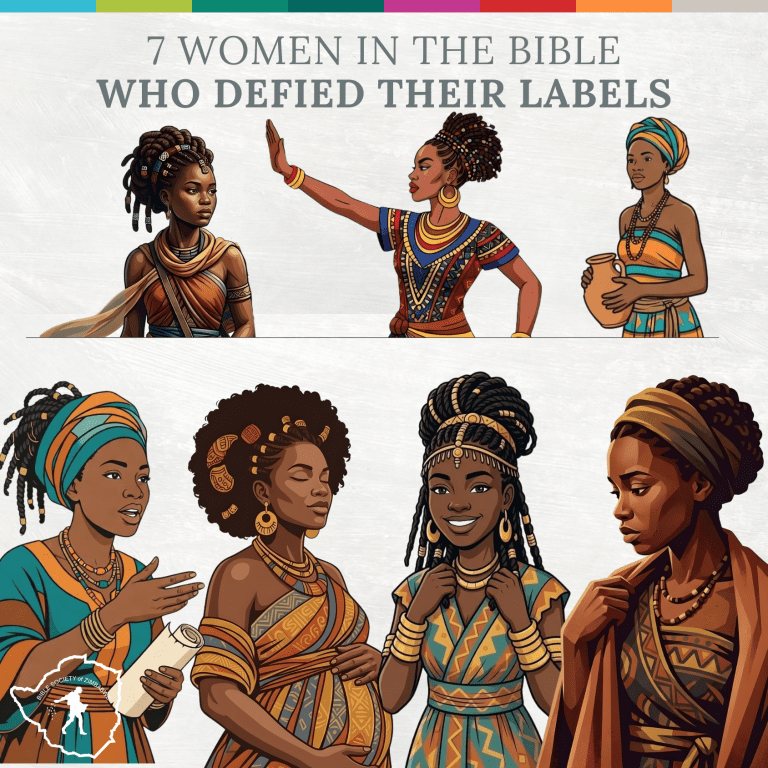
Labels are everywhere.
“Too emotional.”
“Too loud.”
“Too broken.”
“Single mother.”
“Divorced.”
“Uneducated.”
“Unwanted.”
For most young women, labels often come through social media comments, relationship expectations, workplace pressure, or cultural stereotypes. One viral moment can define how people see you forever.
But the Bible tells a different story.
Throughout Scripture, women were often defined by society’s harshest labels, yet God rewrote their identities. He didn’t see them as failures, outsiders, or problems.
He saw purpose.
If you have ever felt reduced to your mistakes or circumstances, these seven Bible moments reveal a powerful truth:
You are more than the title people gave you.
1. Rahab — From Harlot to Hero of Faith
Bible Verse — Joshua 2:11
“The Lord your God is God in heaven above and on the earth below.”
Rahab was known by one title: prostitute.
In her society, that label defined everything about her reputation and future. People would have dismissed her as morally unworthy.
Yet when Israelite spies entered Jericho, Rahab chose courage over fear. She protected them because she believed in God before many Israelites themselves showed faith.
God didn’t erase her past, He redeemed it.
She later became part of the lineage of Jesus.
Key takeaway: Your worst chapter does not cancel your future chapters.
2. Leah — The Woman Who Felt Invisible
Bible Verse — Genesis 29:31 (NIV)
“When the Lord saw that Leah was not loved, he enabled her to conceive.”
Leah lived with one painful label: unwanted.
Chosen through deception, she entered marriage knowing her husband loved someone else.
In today’s terms, Leah might have struggled with comparison culture, constantly measuring herself against someone prettier, more loved, or more successful.
But God noticed what people ignored.
Through Leah came Judah, the tribe from which Jesus would come.
Key takeaway: God sees you even when people overlook you.
3. The Woman with the Issue of Blood — From “Unclean” to Restored
Bible Verse — Mark 5:34
“Daughter, your faith has healed you. Go in peace.”
For twelve years, Woman with the Issue of Blood lived under a devastating label: unclean.
She couldn’t freely worship or socialize.
Imagine being cancelled for twelve straight years.
No invitations. No hugs. No community.
Yet she broke social rules to reach Jesus.
Instead of rebuke, Jesus gave her a new title: Daughter.
God replaced exclusion with belonging.
Lesson: Healing sometimes begins when you stop waiting for permission to approach God.
4. Mary Magdalene — From Broken Past to First Witness
Bible Verse — Luke 8:2
“Mary called Magdalene… from whom seven demons had come out.”
Many people remember Mary Magdalene only through rumours or misconceptions.
Her history included spiritual torment.
But Jesus restored her dignity.
At the resurrection, she became the first witness to the risen Christ, trusted with history’s greatest announcement.
Lesson: Your healing story can become someone else’s hope story.
5. The Samaritan Woman — From Scandal to Evangelist
Bible Verse — John 4:29
“Come, see a man who told me everything I ever did.”
Samaritan woman at the well carried multiple labels:
- Divorced repeatedly.
- Social outsider.
- Ethnic minority.
She fetched water at noon, alone and avoiding judgmental eyes.
Yet Jesus chose her for one of the longest recorded conversations in the Gospels.
She became the first evangelist to her town.
The woman everyone avoided became the woman everyone listened to.
Lesson for today: God can use the person society scrolls past.
6. Hannah — From “Barren” to Bold Prayer Warrior
Bible Verse — 1 Samuel 1:27
“I prayed for this child, and the Lord has granted me what I asked of him.”
In ancient culture, infertility defined a woman’s worth.
Hannah endured mockery and emotional pain because she could not have children.
People saw failure.
God saw faith.
Her honest prayers birthed Samuel, one of Israel’s greatest prophets.
Reminder: Delays are not denials.
7. Esther — From Orphan to Nation Saver
Bible Verse — Esther 4:14
“And who knows but that you have come to your royal position for such a time as this?”
Esther began life with another label: orphan.
No privilege. No protection.
Yet God positioned her as queen during a national crisis.
Her courage saved an entire people.
Sometimes your story’s hardest beginning prepares you for your greatest influence.
Truth: Purpose often hides inside uncomfortable seasons.
Interactive Reflection — What Labels Have You Been Given?
Maybe yours sound like:
- Failure.
- Too old.
- Too young.
- Single.
- Emotional.
- Poor.
- Not educated enough.
Now ask yourself:
What does God call you instead?
Scripture says:
- Chosen.
- Loved.
- Redeemed.
- Daughter.
- Strong.
- Called.
The Bible consistently shows that God specializes in rewriting identities.
Final Thought — God Renames Stories
If history teaches us anything, it is this:
God does not consult public opinion before calling someone.
Rahab was not only a prostitute.
Leah was not only unloved.
The bleeding woman was not only unclean.
They were daughters, leaders, witnesses, and history-makers.
And so are you.
Because in God’s story, You are always more than a title.
1: The Strength of a Mother
- Reading: Proverbs 31:25-31 She watches over the affairs of her household and does not eat the bread of idleness.
The Bible honors mothers who are strong, wise, and diligent. A Proverbs 31 woman is described as clothed with strength and dignity, speaking with wisdom, and watching over her household with care. Her children rise to call her blessed, and her works bring her praise. This passage celebrates the nurturing spirit and resilience that define motherhood.
- Reflection:
How can you embody strength and dignity in your journey as a mother or as a mentor to others? Pray for wisdom and grace to impact your family positively.
2: A Mother’s Faith
- Reading: 2 Timothy 1:3-7 I am reminded of your sincere faith, which first lived in your grandmother Lois and in your mother Eunice and, I am persuaded, now lives in you also.
Timothy’s strong faith was nurtured by two remarkable women—his mother, Eunice, and his grandmother, Lois. Their sincere belief shaped his spiritual foundation, enabling him to become a respected leader. This story reminds us of the powerful influence that a mother’s faith can have on her children, passing down a legacy of devotion and integrity.
- Reflection:
Think about the spiritual heritage you are creating for your children. Pray for your faith to be steadfast and inspiring, impacting future generations.
3: God’s Comfort Like a Mother’s Love
- Reading: Isaiah 66:13 As a mother comforts her child, so will I comfort you; and you will be comforted over Jerusalem.
In a beautiful comparison, God promises to comfort His people just as a mother comforts her child. This image conveys warmth, safety, and reassurance. When life brings hardships, God’s nurturing presence surrounds us, reminding us that we are never alone. Mothers often reflect this aspect of God’s character, offering solace and encouragement through life’s challenges.
- Reflection:
Have you experienced God’s comforting presence recently? Take a moment to thank Him for His unwavering love and pray for the ability to extend that same comfort to your family.
4: A Mother’s Prayer
- Reading: 1 Samuel 1:9-20 And she made a vow, saying, “Lord Almighty, if you will only look on your servant’s misery and remember me, and not forget your servant but give her a son, then I will give him to the Lord for all the days of his life, and no razor will ever be used on his head.
Hannah’s story is a powerful reminder of the importance of prayer and surrender. Despite her years of childlessness and ridicule, she poured out her heart to God. When God blessed her with Samuel, she faithfully kept her vow and dedicated him to the Lord’s service. Hannah’s faith teaches us that persistent prayer and trust can turn sorrow into joy.
- Reflection:
What are you earnestly praying for as a mother? Bring your deepest desires to God, trusting Him to work in ways that surpass your understanding.
5: Waiting on God for a Child
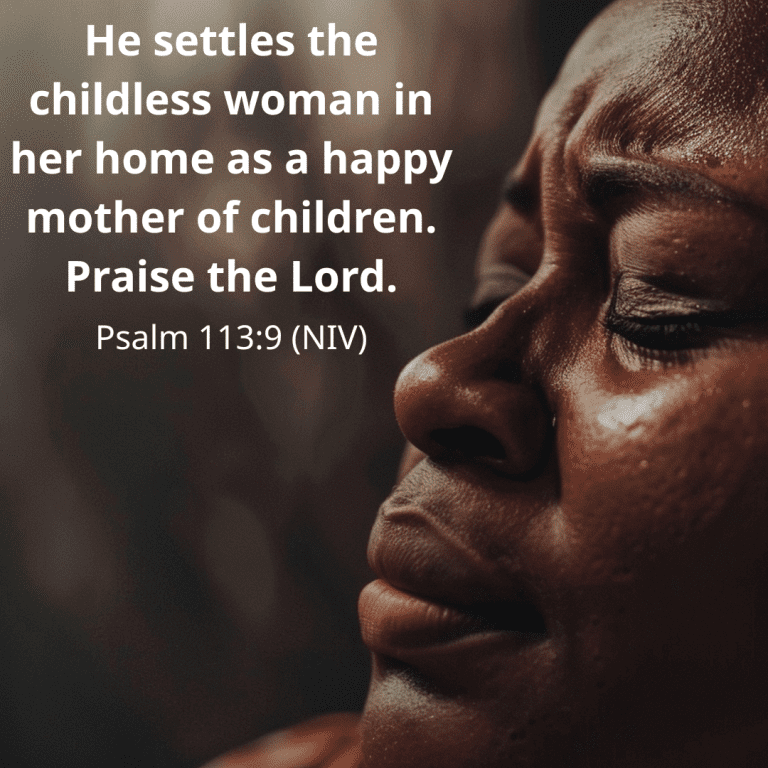
- Reading: Psalm 113:9 He settles the childless woman in her home as a happy mother of children. Praise the Lord.
This verse is a promise of hope to those longing for children: “He settles the childless woman in her home as a happy mother of children.” God sees the silent prayers of women waiting for the fruit of the womb, and His compassion reaches those who feel forgotten. Like Sarah, Hannah, and Elizabeth, many women in the Bible experienced long periods of waiting, but God’s timing brought joy.
- Reflection:
If you or someone you know is waiting for a child, take comfort in God’s faithfulness. Pray for peace, strength, and hope, believing that God’s plans are good and His timing is perfect.
6: A Mother’s Legacy of Love
- Reading: Ruth 1:16-18 Don’t urge me to leave you or to turn back from you. Where you go I will go, and where you stay I will stay. Your people will be my people and your God my God.
Naomi’s relationship with Ruth exemplifies love and loyalty beyond blood relations. Ruth’s decision to stay with Naomi despite personal loss shows that family bonds can be forged through love, commitment, and shared faith. Naomi’s guidance and Ruth’s dedication eventually led to God’s blessing in their lives.
- Reflection:
Consider the people God has placed in your life who feel like family. How can you nurture and support them with love and encouragement?
7: A Mother’s Blessing
- Reading: Luke 1:46-55 For the Mighty One has done great things for me, holy is his name.
Mary’s song of praise reflects a mother’s joy and humble gratitude. Despite the uncertainties of her calling, she glorified God for choosing her to bear the Savior. Her willingness to embrace God’s plan, even when it seemed daunting, teaches us to rejoice in the blessings we receive while remaining faithful through challenges.
- Reflection:
Take time to praise God for the gift of motherhood and the privilege of shaping lives. Pray for the grace to guide your children in love, faith, and wisdom.
Who Wrote the Bible? - Samuel, Explained
After the conquest of Canaan, Israel had no king — only judges. But who recorded their stories? Was it a single author, reforming scribes, or exilic compilers? The authorship of Judges is one of the Bible's most contested questions.
After the conquest of Canaan, Israel had no king — only judges. But who recorded their stories? Was it a single author, reforming scribes, or exilic compilers? The authorship of Judges is one of the Bible's most contested questions.
7 Powerful Bible Readings for Moms: Strength, Comfort, and Prayer
This verse is a promise of hope to those longing for children: "He settles the childless woman in her home as a happy mother of children." God sees the silent prayers of women waiting for the fruit of the womb, and His compassion reaches those who feel forgotten. Like Sarah, Hannah, and Elizabeth, many women in the Bible experienced long periods of waiting, but God’s timing brought joy.
This verse is a promise of hope to those longing for children: "He settles the childless woman in her home as a happy mother of children." God sees the silent prayers of women waiting for the fruit of the womb, and His compassion reaches those who feel forgotten. Like Sarah, Hannah, and Elizabeth, many women in the Bible experienced long periods of waiting, but God’s timing brought joy.
7 Women in the Bible Who Defied Their Labels
For most young women, labels often come through social media comments, relationship expectations, workplace pressure, or cultural stereotypes. One viral moment can define how people see you forever. But the Bible tells a different story.
For most young women, labels often come through social media comments, relationship expectations, workplace pressure, or cultural stereotypes. One viral moment can define how people see you forever. But the Bible tells a different story.