
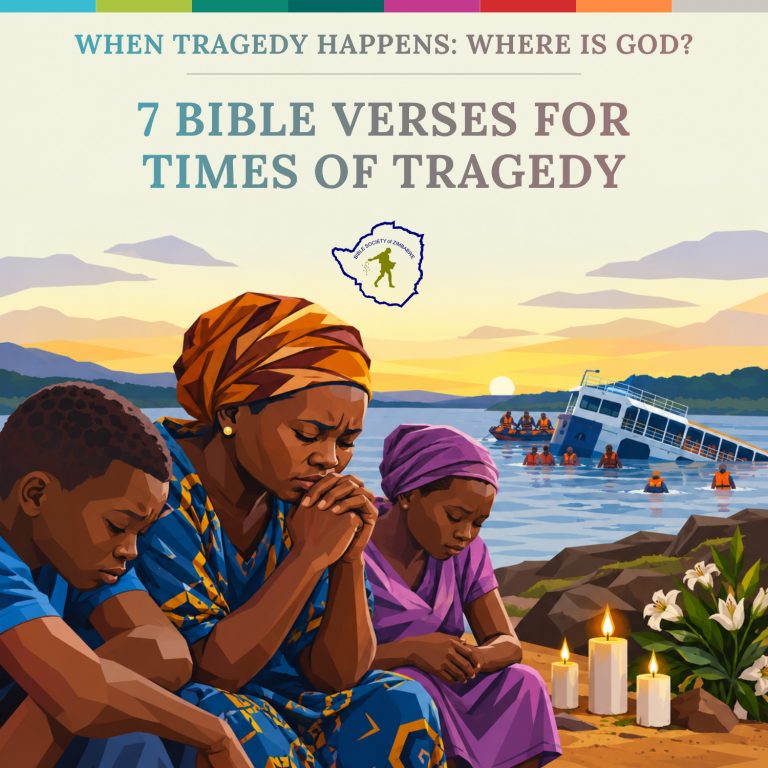
7 Bible Verses for Times of Tragedy
After the Kariba RIDA ferry tragedy, grief, questions and shaken faith can feel overwhelming. The Bible offers comfort without dismissing pain: God is near the brokenhearted, hears our questions, sees every tear, understands suffering through Jesus, holds us in His love, and promises a future without death, mourning or pain.
When tragedy strikes, one of the first questions people may ask is:
“Where was God?”
After the Kariba RIDA ferry accident, this question may be especially painful for survivors, bereaved families, families still awaiting news of their loved ones, and everyone who witnessed or was affected by the tragedy.
Some may be angry with God. Others may feel abandoned. Some may be asking why God allowed some people to survive while others did not.
These are not easy questions, and the Bible does not ask us to pretend they are.
The Bible gives us permission to lament, question, cry and bring our pain before God.
1. God is close to the brokenhearted
“The LORD is near to the brokenhearted, and saves the crushed in spirit.” — Psalm 34:18 (NIV)
When your heart is broken, God is not far away. You may not feel His presence right now, but Scripture reminds us that He draws near to those who are hurting.
For someone who has lost a loved one, there may be no words adequate enough to describe the pain. God understands the depth of that pain.
2. You are allowed to ask, “Why?”
“How long, LORD? Will you forget me forever? How long will you hide your face from me?” — Psalm 13:1 (NIV)
David asked God difficult questions.
He didn’t hide his confusion behind religious language. He brought his pain directly to God.
If you’re asking “Why did this happen?”, “Why them?”, or “Why did I survive?”, you are not a bad Christian.
Sometimes faith means bringing even our hardest questions to God.
3. God can handle your tears
“You keep track of all my sorrows. You have collected all my tears in your bottle. You have recorded each one in your book.” — Psalm 56:8 (NIV)
Your tears matter.
The tears of a mother waiting for news.
The tears of a husband who has lost his wife.
The tears of a child who no longer has a parent.
The tears of a survivor remembering what happened.
God does not dismiss those tears.
You don’t have to be strong every moment.
4. Even Jesus wept
“Jesus wept.” — John 11:35 (NIV)
This is one of the shortest verses in the Bible, but it carries a powerful message.
Jesus stood before the tomb of Lazarus and wept.
He knew Lazarus would be raised, yet He still entered into the grief of those who were mourning.
This reminds us that crying is not a failure of faith.
Grief and faith can exist in the same heart.
5. God understands suffering
“For we do not have a high priest who is unable to empathize with our weaknesses…” — Hebrews 4:15 (NIV)
Christian hope is not based on a God who watches suffering from a distance.
Jesus experienced rejection, sorrow, pain and death.
That means when you say, “God, you don’t understand what I’m going through,” Scripture points us to Jesus and says:
He understands.
6. Nothing can separate us from God’s love
“For I am convinced that neither death nor life, neither angels nor demons, neither the present nor the future… will be able to separate us from the love of God that is in Christ Jesus our Lord.” — Romans 8:38–39 (NIV)
This does not mean that tragedy doesn’t hurt.
It means that tragedy does not have the final word over God’s love.
Even in the darkest valley, God’s love remains.
For those mourning a loved one, for survivors struggling with memories, and for families still waiting for answers, this promise can become an anchor.
7. There will be a day when suffering ends
“He will wipe every tear from their eyes. There will be no more death or mourning or crying or pain, for the old order of things has passed away.” — Revelation 21:4 (NIV)
We may not have answers to every question today.
We may not understand why the Kariba tragedy happened.
We may still be waiting.
We may still be grieving.
But the Christian story ends not with death, pain and tears, but with God making all things new.
So, Where Is God When Tragedy Happens?
Sometimes we may not understand where God is in the tragedy.
But Scripture tells us where we can find Him:
He is near to the brokenhearted.
He listens to our questions.
He sees our tears.
He understands our suffering.
He holds us in His love.
And He promises a future where death and pain will be no more.
If you are a survivor, you don’t have to pretend that you’re okay.
If you have lost someone, you don’t have to rush your grief.
If you are still waiting for news about someone you love, your uncertainty and pain matter.
And if your faith is shaken, bring your questions to God.
You don’t have to have all the answers to come to Him.
Many women, especially young women, quietly wrestle with this thought:
“Is being a woman a disadvantage?”
It can feel that way when:
- your voice is overlooked
- your abilities are doubted
- your safety feels fragile
- your value is reduced to appearance
- your timeline is controlled by social pressure
- your sacrifices go unnoticed
But Scripture tells a very different story. From the beginning, God established women with dignity, authority, purpose, and spiritual strength. Let’s walk through 7 Bible verses that speak directly to seasons when being a woman feels like a disadvantage.
1. Genesis 1:27 — Your Value Was Established at Creation
“So God created mankind in his own image, in the image of God he created them; male and female he created them.” (NIV)
Before society formed opinions about women, God formed identity. Both male and female were created in His image, equal in worth, equal in dignity, equal in spiritual value.
This means your value is not cultural, it is created. Not negotiated, declared. When the world minimizes women, creation itself speaks otherwise.
2. Judges 4:4–5 — God Raises Women Leaders
“Now Deborah, a prophet, the wife of Lappidoth, was leading Israel at that time.” (NIV)
Deborah was not hidden. She was not secondary. She was a national leader, judge, and prophet.
When leadership spaces feel closed to women, Deborah’s story reminds us: God is not limited by human bias. He appoints based on calling, not gender expectations.
Your leadership is not a mistake. Your voice is not out of place.
3. Psalm 139:14 — You Are Not a Design Error
“I praise you because I am fearfully and wonderfully made.” (NIV)
When being a woman feels like a burden instead of a blessing, this verse calls you back to truth: you are not an afterthought. Not an inferior version. Not a weaker model.
You are intentional design.
Your emotions, intuition, resilience, and nurturing strength are not flaws, they are features.
4. Luke 8:1–3 — Jesus Publicly Valued Women
“…the Twelve were with him, and also some women… These women were helping to support them out of their own means.” (NIV)
In a culture where women were often excluded, Jesus welcomed them into His mission circle. He taught them, traveled with them, and honored their contributions.
Jesus did not treat women as background characters, but as partners in purpose.
If you ever feel spiritually sidelined, remember: Jesus pulled women closer, not further away.
5. Proverbs 31:25 — Strength Is Feminine Too
“She is clothed with strength and dignity; she can laugh at the days to come.” (NIV)
Biblical womanhood is not a weakness. It is strength with dignity.
This woman is not fearful of the future, she faces it with confidence. Not because life is easy, but because her foundation is secure.
Strength is not unfeminine. Strength is biblical.
6. Galatians 3:28 — Your Spiritual Standing Is Equal
“There is neither Jew nor Gentile, neither slave nor free, nor is there male and female, for you are all one in Christ Jesus.” (NIV)
Before God, your access, inheritance, and spiritual identity are not limited by gender.
You are not spiritually second-class. Not spiritually delayed. Not spiritually restricted.
In Christ, you stand fully included.
7. John 20:16–18 — A Woman First Carried the Resurrection Message
Jesus said to her, “Mary.” … Mary Magdalene went to the disciples with the news: “I have seen the Lord!” (NIV)
The first recorded witness and messenger of the resurrection was a woman.
At the most important announcement in history, Jesus chose a woman to carry the news.
When the world questions whether women should speak, lead, or proclaim truth, the resurrection story answers clearly.
Final Encouragement: When It Feels Hard to Be a Woman
Yes, challenges women face are real. Inequality, pressure, vulnerability, and misunderstanding exist. But disadvantage is not destiny.
Biblically:
- Women are image-bearers
- Leaders
- Witnesses
- Supporters of mission
- Carriers of strength
- Voices of truth
- Chosen messengers
When being a woman feels like a disadvantage, remember, in God’s story, women are never optional. They are essential.
Empires have fallen. Generations have passed. Critics have risen and faded, yet the Bible endures.
It has been burned, banned, mocked, and misunderstood, but never defeated.
Why? Because the Word of God is alive, eternal, unbreakable, and unstoppable.
Here are seven Scriptures that reveal why the Bible continues to live on, changing hearts and shaping history.
1. Isaiah 40:8
“The grass withers, the flower fades, but the Word of our God will stand forever.”
Every kingdom that once stood in pride has fallen to dust, but the Word remains.
While human voices fade, God’s voice echoes through the ages, steady, sure, and eternal.
No time, trend, or technology can erase the truth He has spoken.
2. Matthew 24:35
“Heaven and earth will pass away, but my words will never pass away.”
Even as the world changes, languages evolve, cities crumble, and cultures shift, Jesus’ words remain timeless.
His promises still comfort the broken. His truth still challenges the proud.
His voice still calls hearts to life, generation after generation.
3. Hebrews 4:12
“For the Word of God is alive and active. Sharper than any double-edged sword…”
Unlike any other book, the Bible breathes.
It confronts, heals, and cuts deep to the heart.
That’s why it cannot die, because it’s living power, not lifeless ink.
Every time someone opens it, God speaks again.
4. Psalm 119:89
“Your word, Lord, is eternal; it stands firm in the heavens.”
Long before printing presses, before scrolls and screens, God’s Word was already established, eternal in heaven.
Its authority doesn’t depend on who believes it or prints it.
The Bible stands firm because it’s built on the very character of God Himself, unchanging and true.
5. 2 Timothy 3:16-17
“All Scripture is God-breathed and is useful for teaching, rebuking, correcting and training in righteousness…”
The Bible endures because it carries God’s breath, the same breath that gave life to humanity.
It teaches us, shapes us, and equips us to live with purpose.
Every verse is proof that God still speaks today.
6. 1 Peter 1:23
“For you have been born again, not of perishable seed, but of imperishable, through the living and enduring word of God.”
The Word not only survives, it multiplies.
Each person changed by Scripture becomes a living testimony of its power.
Persecution can’t destroy it; it only spreads it further.
Every Bible printed, every verse remembered, keeps the message alive.
7. John 1:1,14
“In the beginning was the Word, and the Word was with God, and the Word was God… The Word became flesh and made his dwelling among us.”
Ultimately, the Bible endures because the Word is Jesus Himself.
He is living proof that God’s message cannot be silenced.
Crucified, yet risen. Rejected, yet reigning.
The Word lives on because the Living Word still reigns.
Final Reflection
No fire can burn it out.
No empire can crush it.
No century can age it.
Because the Bible is more than a book, it is the breath of God written for humanity.
Truly, it is the Book that refuses to die.

After the trauma of the crucifixion, the disciples were locked away, afraid, confused, and uncertain about what the future held. But on the evening of that first Easter Sunday, everything changed when Jesus stood among them and said:
“Peace be with you!” — John 20:19 (NIV)
These words were more than a greeting. They were a divine declaration: peace had triumphed over fear, and life had conquered death.
1. Peace That Calms Fear
The disciples were hiding behind locked doors, fearing for their lives. But the presence of Jesus shattered their fear.
“Then the disciples were glad when they saw the Lord.” — John 20:20 (NIV)
The Resurrection reminds us that no matter what we face—uncertainty, loss, danger—Jesus brings peace that surpasses our fear.
2. Peace That Comes from Reconciliation
The cross was not just about suffering; it was about reconciling humanity with God. Jesus’ resurrection is the seal of that reconciliation.
“Therefore, since we have been justified through faith, we have peace with God through our Lord Jesus Christ.” — Romans 5:1 (NIV)
We are no longer enemies of God. We are at peace with Him—fully forgiven and fully accepted.
3. Peace That Dwells Within
Jesus promised a peace that’s not dependent on circumstances but rooted in Him.
“Peace I leave with you; my peace I give you. I do not give to you as the world gives. Do not let your hearts be troubled and do not be afraid.” — John 14:27 (NIV)
This was a promise He fulfilled after rising from the grave. His peace becomes a permanent presence in our hearts.
4. Peace That Guards Our Minds
We are often bombarded with anxious thoughts. But resurrection peace acts like a shield.
“And the peace of God, which transcends all understanding, will guard your hearts and your minds in Christ Jesus.” — Philippians 4:7 (NIV)
God’s peace doesn’t always change our situation, but it changes us in the midst of it.
5. Peace That Leads to Purpose
In John 20:21, Jesus repeats, “Peace be with you!” and then says:
“As the Father has sent me, I am sending you.”
Peace isn’t just for comfort—it’s preparation for mission. We are sent out as ambassadors of this peace to a world that desperately needs it.
6. Peace Through the Holy Spirit
Jesus breathed on them and said:
“Receive the Holy Spirit.” — John 20:22 (NIV)
The Holy Spirit becomes the continual source of peace, power, and presence in our lives. It is the Spirit that produces peace as fruit within us:
“But the fruit of the Spirit is love, joy, peace…” — Galatians 5:22 (NIV)
7. Peace in a Troubled World
We live in a world that is anything but peaceful. But the resurrection gives us hope beyond this life.
“I have told you these things, so that in me you may have peace. In this world you will have trouble. But take heart! I have overcome the world.” — John 16:33 (NIV)
The risen Christ gives us a durable peace—one that holds even in chaos, grief, or conflict.
Final Thoughts
Jesus didn’t wait for perfect conditions to bring peace. He entered a locked room, full of fear, and filled it with His presence. Today, He still does the same.
Resurrection peace is not passive, it’s powerful, purposeful, and personal.
Will you let His peace rule in your heart today?
Unity is a fundamental principle deeply rooted in the Bible, emphasizing the strength, harmony, and spiritual growth that comes from being united in faith and purpose. Here are seven powerful Bible verses that highlight the importance of unity and the divine blessings that flow from it.
1. Psalm 133:1
“How good and pleasant it is when God’s people live together in unity!”
Unity among God’s people is seen as something good and pleasing, reflecting God’s desire for His followers to live in peace and mutual support.
2. John 17:22
I have given them the glory that you gave me, that they may be one as we are one.
Jesus emphasizes the importance of unity among His followers. He prays for believers to be united just as He is with the Father.
3. Ephesians 4:3
“Make every effort to keep the unity of the Spirit through the bond of peace.”
We are all part of one body with one hope, one Lord, one faith, and one God. We should therefore preserve this unity.
4. 1 Corinthians 1:10
“I appeal to you, brothers and sisters, in the name of our Lord Jesus Christ, that all of you agree with one another in what you say and that there be no divisions among you, but that you be perfectly united in mind and thought.”
God does not like divisions. Unity is essential for presenting a cohesive and powerful witness to the world.
5. Colossians 3:14
“And over all these virtues put on love, which binds them all together in perfect unity.”
Love is identified as the ultimate virtue that holds everything together in perfect unity.
6. Romans 12:5
So in Christ we, though many, form one body, and each member belongs to all the others.”
Unity in diversity means each one is important in their own way and we need each other in every way.
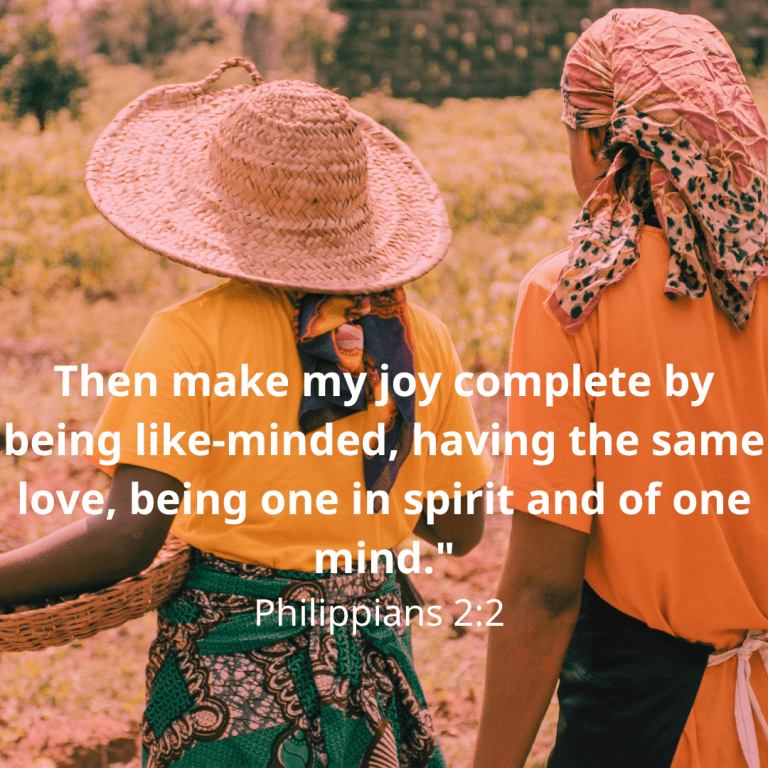
7. Philippians 2:2
Then make my joy complete by being like-minded, having the same love, being one in spirit and of one mind.”
Unity brings joy and completeness. We are all encouraged to cultivate a peaceful and loving community.
Do you know God’s grace? Here are 7 Bible verses to inspire you to understand this grace.
- Romans 3:23-24 for all have sinned and fall short of the glory of God, and are justified by his grace as a gift, through the redemption that is in Christ Jesus
To understand God’s grace, we have to acknowledge that we have done what is wrong in God’s eyes. We have sinned. We are in need of forgiveness and redemption.
- Ephesians 2:8-9 For by grace you have been saved through faith. And this is not your own doing; it is the gift of God, not a result of works, so that no one may boast.
God’s grace is a free gift that doesn’t depend on any good deeds you have done. God’s grace is for all who believe in Jesus Christ.
- James 4:6-7 But he gives more grace. Therefore it says, “God opposes the proud but gives grace to the humble.” Submit yourselves therefore to God. Resist the devil, and he will flee from you.
In humility we turn to God and confess that we have done wrong. In humility we receive God’s grace and he will lift us up.
- John 1:14 And the Word became flesh and dwelt among us, and we have seen his glory, glory as of the only Son from the Father, full of grace and truth.
God isn’t a distant God. He came to us and lived among us as one of us. Jesus is full of grace and truth.
- Hebrews 4:15-16 For we do not have a high priest who is unable to sympathize with our weaknesses, but one who in every respect has been tempted as we are, yet without sin. Let us then with confidence draw near to the throne of grace, that we may receive mercy and find grace to help in time of need.
You can come to Jesus, just as you are. He knows our weaknesses. Because of the grace of God, we are forgiven our sins.
- Titus 3:4-7 But when the goodness and loving kindness of God our Savior appeared, he saved us, not because of works done by us in righteousness, but according to his own mercy, by the washing of regeneration and renewal of the Holy Spirit, whom he poured out on us richly through Jesus Christ our Savior, so that being justified by his grace we might become heirs according to the hope of eternal life.
We don’t earn or deserve God’s grace by our good deeds, but it’s given according to God’s own mercy. By grace we are saved through our faith and even become heirs to the kingdom of God.
- Revelation 22:21 The grace of the Lord Jesus be with all. Amen.
This is the very last verse of the Bible and it reminds and expresses the wish for God’s grace be with you. “Amen” means “surely”, “truly” or “so be it.” We live by the hope and trust in God’s grace every day.

How does the Bible view women? At face value, some of its messages and examples can seem oppressive or devaluing. But when you learn more about how Jesus responded to the Bible’s historical and cultural context, you may rethink your first impressions. Christ entered into a specific time and culture that had assumptions very different from ours. How can understanding the biblical context inform our reading? How can the context help us to better understand who Jesus is—what he values, loves, and expects of his followers? Take a look, traveling all the way back to the culture Jesus entered.
How the Greeks Viewed Women
Let’s begin with the philosophers. Writers and thinkers often infuse a culture with certain beliefs—and this was especially so in the Greco-Roman world. When examined closely, some of their ideas may seem surprisingly antiquated to the modern reader.
For example, the revered philosopher Plato believed that women should be confined to the home while men tended to the business of state and commerce. Aristotle went even further, teaching that women were inferior to men, incapable of abstract thought, and emotionally volatile. Thus husbands and fathers were to rule over their wives and daughters. This thinking reflects the basic attitude toward women during the classical period.
How did these attitudes affect a woman’s life? The picture is not a pretty one. A young Greek girl is routinely married off to an older man. Her husband is free to take a concubine, and romantic love is not expected within marriage. Her role is to bear and raise children and run the household. She will rarely leave the house. Her education is limited to learning domestic tasks. She is not permitted to vote or hold property. Why would she be? As Euripides the playwright notes, “A woman is handicapped by intellect.” Thucydides helps him along by writing, “The name of a decent woman, like her person, should be shut up in the house.”
How the Jews Viewed Women
By Jesus’s time Greek ideas—including these ideas about women—had gradually crept into Jewish culture, despite Old Testament writings to the contrary. In the creation account in Genesis, God creates human beings as both male and female, giving them co-equal stewardship over the earth (Genesis 1:26-30). Throughout the Old Testament, women are given equal access to God’s law and held equally responsible to keep it.
The Old Testament record is replete with women whose great courage often surpasses that of the men around them. The stories of Miriam, Rahab, Ruth, Deborah, Hannah, Abigail, and Esther are prime examples of women whose insight and fortitude greatly influence the biblical narrative and the way God’s people understood themselves.
The Jewish understanding of women was so affected by exile, conquest, and trade that by Jesus’s time women were discouraged from studying Torah, God’s law, and encouraged to stay home to fulfill household duties. They attended synagogue assemblies seated separately from the men. The Greek-educated Jewish philosopher Philo, a contemporary of Jesus, saw women as having weak judgment and considered them unfit to learn the law. Some rabbis even went so far as to encourage men to limit their conversations with their own wives. What was the point of talking to someone with little knowledge of the law?
How Jesus Viewed Women
Into this distortion of God’s original intent for women comes a new teacher, the rabbi called Jesus of Nazareth. What do we know about Jesus’s relationships with women? Did he hold the same opinions as his culture? Let’s take a look at a few of his encounters with women.
Jesus speaks to a Samaritan woman in public (John 4:4-30)
Jesus shocks the woman at the well by asking her for a drink. Thus he steamrolls over cultural taboos against men speaking to women as well as Jewish prejudice against Samaritans. “You are a Jew and I am a Samaritan woman. How can you ask me for a drink?”
Jesus then reveals himself to her as the Messiah and the giver of the living water for which she longs.
Jesus teaches a woman one-on-one (Luke 10:38-42)
Women were not expected to study Torah, yet this renegade rabbi singles out one woman and opens Scripture to her. Mary “sat down at the feet of the Lord and listened to his teaching.” This position was that of the traditional rabbinic student.
When her sister complains about needing help, Jesus tells her that “Mary has chosen what is better, and it will not be taken away from her.”
Jesus comforts a widow and confronts death (Luke 7:11-17)
“Don’t cry,” Jesus says to a grieving widow whose son lies dead in his coffin. He touches the coffin, defying ceremonial law. Jaws drop in amazement as the young man sits up and begins to speak. Jesus gives the widow’s son back to her, alive and well.
Jesus touches an “unclean” woman (Luke 8:43-48)
Ceremonially unclean due to a chronic hemorrhage, a woman touches the hem of Jesus’ cloak. “Daughter,” Jesus speaks tenderly. “Your faith has healed you. Shalom.”
Jesus touches an infirm woman (Luke 13:10-16)
The religious leaders object to Jesus’s laying his healing hands on a crippled woman on the Sabbath.
“You hypocrites!” Jesus does not mince words. “Any one of you would untie your ox or your donkey from the stall and take it out to give it water on the Sabbath.Now here is this descendant of Abraham whom Satan has kept in bonds for eighteen years; should she not be released on the Sabbath?”
Jesus deals with a woman caught in adultery (John 8:1-11)
The woman’s accusers are silenced by Jesus’s words, “Whichever one of you has committed no sin may throw the first stone at her.” But he is gentle in his conversation with her.
Jesus allows Mary to anoint him (John 12:1-8)
When people are horrified at Mary’s extravagant outpouring of love, Jesus silences them all. Rather than rebuking her for touching him in this intimate way, he lavishes high praise on her. “Leave her alone; she’s anointing me for burial. This story will be told wherever the Gospel is preached.”
Jesus appears first to a woman after his Resurrection (John 20:11-18)
Although women were considered to be unreliable witnesses in court, Jesus assigns Mary Magdalene the task of being the first witness to the Resurrection.
Scripture’s Good News for Women
So what did Jesus really think of women? Did he touch them? Did he talk with them? Did he teach them? Did he give equal moral standing with men? Did he value them?
The record speaks for itself. First-century women in Palestine were second-class citizens. Sadly, some church leaders have still viewed and treated women in this way. But Jesus turned the tables on his culture, and his example calls us to do the same. Again and again, Jesus affirmed women’s value and dignity.
As the apostle Paul affirms in Galatians 3:26-28 (NIV): “So in Christ Jesus you are all children of God through faith, for all of you who were baptized into Christ have clothed yourselves with Christ. There is neither Jew nor Gentile, neither slave nor free, nor is there male and female, for you are all one in Christ Jesus.”

International Women’s Month Reflection — Rising With Courage, Faith, and Purpose
In a world filled with expectations, comparisons, and constant pressure to fit into certain boxes, many young women quietly learn to shrink themselves. Some shrink their voices to avoid conflict. Others shrink their dreams because they fear rejection. Many shrink their confidence because society measures worth by appearance, relationship status, or social media approval.
But Scripture tells a different story.
God never designed women to live small, hidden lives shaped by fear or insecurity. Throughout the Bible, He consistently called women to step forward, speak boldly, lead courageously, and live purposefully.
As we celebrate International Women’s Month, here are seven powerful biblical lessons reminding young women that God did not call them to shrink, He called them to rise.
1. You Are Called — Not Just Included
Jeremiah 29:11
“For I know the plans I have for you,” declares the Lord, “plans to prosper you and not to harm you, plans to give you hope and a future.”
Many young women grow up feeling like they must wait to be chosen, chosen for opportunities, relationships, leadership roles, or recognition.
But God does not treat women as afterthoughts or spectators.
Before anyone noticed you, God already designed a future filled with purpose. Your dreams, talents, compassion, intelligence, and passions are not random. They are part of His plan.
Sometimes shrinking happens quietly. You stop applying for opportunities because you doubt yourself. You silence ideas because you assume others know better. You delay obedience because fear feels safer.
God’s promise reminds you that your future is intentional.
Lesson: You are not just included in God’s story, you are called to actively shape it.
2. God Uses Ordinary Women to Do Extraordinary Things
Luke 1:38
“I am the Lord’s servant,” Mary answered. “May your word to me be fulfilled.” Then the angel left her.
When God chose Mary, mother of Jesus, she was not a queen, scholar, or public leader. She was a young woman from a small town with no social influence or power.
Yet God entrusted her with carrying the greatest promise in history.
Mary faced misunderstanding, fear, and uncertainty. Saying yes to God meant risking reputation and comfort. Still, she chose obedience over fear.
You might believe you must become “perfect,” successful, or fully confident before God can use you. But Mary’s story reminds us that God often begins with willingness, not qualifications.
You do not have to wait until you feel ready to step into purpose.
Lesson: God does extraordinary work through ordinary women who say yes to Him.
3. Courage Begins When Fear Ends
Esther 4:14
“And who knows but that you have come to your royal position for such a time as this?”
Queen Esther faced a life-threatening decision. Speaking up could cost her everything, yet silence would cost others their lives.
Today as a young woman, you face different battles: standing against injustice, resisting peer pressure, choosing integrity in relationships, or defending their faith.
Courage does not mean fear disappears. It means choosing obedience despite fear.
Lesson: The moment you feel most afraid may be the moment God wants you to stand.
4. Your Past Does Not Cancel Your Future
John 4:28–29
“Then, leaving her water jar, the woman went back to the town and said to the people, ‘Come, see a man who told me everything I ever did.’”
The Samaritan woman met Jesus carrying shame and rejection. Society avoided her, but Jesus spoke to her publicly and respectfully.
Her encounter turned her into one of the first evangelists in her community.
You might be led to believe that mistakes define you. Social media rarely shows healing journeys, only polished outcomes.
Jesus shows that restoration is stronger than reputation.
Lesson: God can turn your story into someone else’s breakthrough.
5. Faithfulness Builds Influence
Ruth 1:16
“Where you go I will go, and where you stay I will stay.”
When life collapsed around her, Ruth chose loyalty and faith.
She was a foreigner, a widow, and vulnerable, yet God used her faithfulness to place her in the lineage of Jesus Christ.
You often feel pressured to rush success or recognition. Ruth shows that quiet obedience opens extraordinary doors.
Lesson: You don’t need shortcuts when God is directing your steps.
6. Jesus Defended Women Others Judged
John 8:10–11
“Jesus straightened up and asked her, ‘Woman, where are they? Has no one condemned you?’”
When religious leaders tried to shame a woman publicly, Jesus protected her dignity and offered restoration.
In today’s culture, as a woman, you are often judged harshly, online and offline.
Jesus’ response reminds you that grace is stronger than condemnation.
Lesson: God calls you forward, not backward into shame.
7. Confidence Comes From God’s Spirit
2 Timothy 1:7
“For the Spirit God gave us does not make us timid, but gives us power, love and self-discipline.”
As a young woman, you might be battling anxiety, fear of failure, or fear of judgment.
God’s Spirit produces courage, wisdom, and self-control.
Confidence rooted in God does not become arrogance, it becomes service, compassion, and bold faith.
Lesson: You were not created to live timidly.
Final Reflection: Rise Without Apology
International Women’s Month reminds us that empowerment is not about competing with others, it is about becoming who God created you to be.
Like Deborah, you can lead.
Like Esther, you can speak courageously.
Like Ruth, you can build legacy through faithfulness.
Like the Samaritan woman, your story can inspire change.
You do not need to shrink your dreams, your faith, your gifts, or your voice.
God didn’t call you to disappear, He called you to rise.
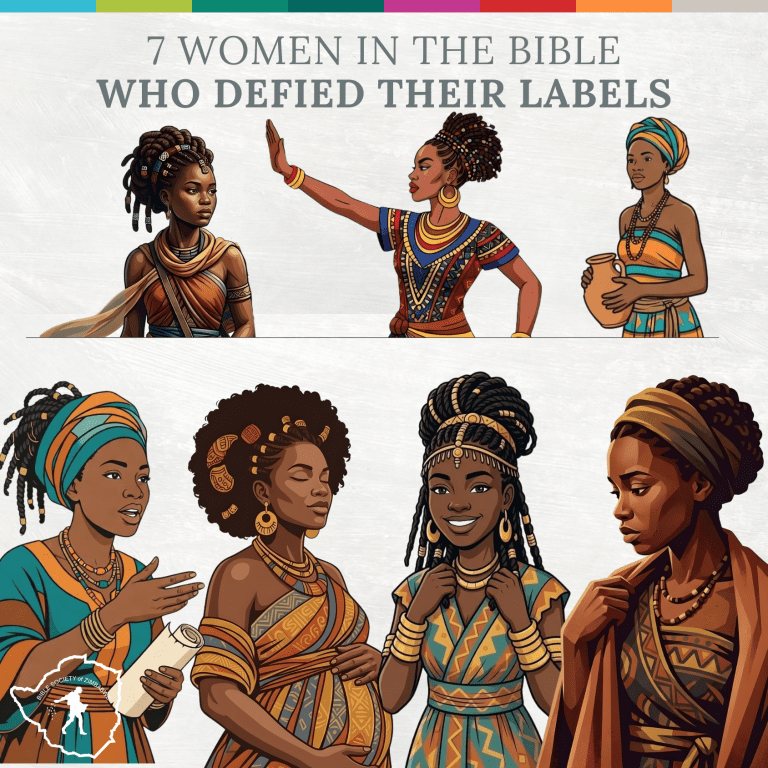
Labels are everywhere.
“Too emotional.”
“Too loud.”
“Too broken.”
“Single mother.”
“Divorced.”
“Uneducated.”
“Unwanted.”
For most young women, labels often come through social media comments, relationship expectations, workplace pressure, or cultural stereotypes. One viral moment can define how people see you forever.
But the Bible tells a different story.
Throughout Scripture, women were often defined by society’s harshest labels, yet God rewrote their identities. He didn’t see them as failures, outsiders, or problems.
He saw purpose.
If you have ever felt reduced to your mistakes or circumstances, these seven Bible moments reveal a powerful truth:
You are more than the title people gave you.
1. Rahab — From Harlot to Hero of Faith
Bible Verse — Joshua 2:11
“The Lord your God is God in heaven above and on the earth below.”
Rahab was known by one title: prostitute.
In her society, that label defined everything about her reputation and future. People would have dismissed her as morally unworthy.
Yet when Israelite spies entered Jericho, Rahab chose courage over fear. She protected them because she believed in God before many Israelites themselves showed faith.
God didn’t erase her past, He redeemed it.
She later became part of the lineage of Jesus.
Key takeaway: Your worst chapter does not cancel your future chapters.
2. Leah — The Woman Who Felt Invisible
Bible Verse — Genesis 29:31 (NIV)
“When the Lord saw that Leah was not loved, he enabled her to conceive.”
Leah lived with one painful label: unwanted.
Chosen through deception, she entered marriage knowing her husband loved someone else.
In today’s terms, Leah might have struggled with comparison culture, constantly measuring herself against someone prettier, more loved, or more successful.
But God noticed what people ignored.
Through Leah came Judah, the tribe from which Jesus would come.
Key takeaway: God sees you even when people overlook you.
3. The Woman with the Issue of Blood — From “Unclean” to Restored
Bible Verse — Mark 5:34
“Daughter, your faith has healed you. Go in peace.”
For twelve years, Woman with the Issue of Blood lived under a devastating label: unclean.
She couldn’t freely worship or socialize.
Imagine being cancelled for twelve straight years.
No invitations. No hugs. No community.
Yet she broke social rules to reach Jesus.
Instead of rebuke, Jesus gave her a new title: Daughter.
God replaced exclusion with belonging.
Lesson: Healing sometimes begins when you stop waiting for permission to approach God.
4. Mary Magdalene — From Broken Past to First Witness
Bible Verse — Luke 8:2
“Mary called Magdalene… from whom seven demons had come out.”
Many people remember Mary Magdalene only through rumours or misconceptions.
Her history included spiritual torment.
But Jesus restored her dignity.
At the resurrection, she became the first witness to the risen Christ, trusted with history’s greatest announcement.
Lesson: Your healing story can become someone else’s hope story.
5. The Samaritan Woman — From Scandal to Evangelist
Bible Verse — John 4:29
“Come, see a man who told me everything I ever did.”
Samaritan woman at the well carried multiple labels:
- Divorced repeatedly.
- Social outsider.
- Ethnic minority.
She fetched water at noon, alone and avoiding judgmental eyes.
Yet Jesus chose her for one of the longest recorded conversations in the Gospels.
She became the first evangelist to her town.
The woman everyone avoided became the woman everyone listened to.
Lesson for today: God can use the person society scrolls past.
6. Hannah — From “Barren” to Bold Prayer Warrior
Bible Verse — 1 Samuel 1:27
“I prayed for this child, and the Lord has granted me what I asked of him.”
In ancient culture, infertility defined a woman’s worth.
Hannah endured mockery and emotional pain because she could not have children.
People saw failure.
God saw faith.
Her honest prayers birthed Samuel, one of Israel’s greatest prophets.
Reminder: Delays are not denials.
7. Esther — From Orphan to Nation Saver
Bible Verse — Esther 4:14
“And who knows but that you have come to your royal position for such a time as this?”
Esther began life with another label: orphan.
No privilege. No protection.
Yet God positioned her as queen during a national crisis.
Her courage saved an entire people.
Sometimes your story’s hardest beginning prepares you for your greatest influence.
Truth: Purpose often hides inside uncomfortable seasons.
Interactive Reflection — What Labels Have You Been Given?
Maybe yours sound like:
- Failure.
- Too old.
- Too young.
- Single.
- Emotional.
- Poor.
- Not educated enough.
Now ask yourself:
What does God call you instead?
Scripture says:
- Chosen.
- Loved.
- Redeemed.
- Daughter.
- Strong.
- Called.
The Bible consistently shows that God specializes in rewriting identities.
Final Thought — God Renames Stories
If history teaches us anything, it is this:
God does not consult public opinion before calling someone.
Rahab was not only a prostitute.
Leah was not only unloved.
The bleeding woman was not only unclean.
They were daughters, leaders, witnesses, and history-makers.
And so are you.
Because in God’s story, You are always more than a title.
The season of harvest is a time of gratitude, reflection, and abundance. For farmers, it signifies the end of a season of hard work, when crops are gathered, and the fruits of labor are celebrated. Spiritually, it reminds us of God’s faithfulness and the importance of sowing seeds of righteousness in our lives. The Bible speaks of harvest not just as an agricultural event but as a symbol of spiritual growth, provision, and God’s blessings.
Here are seven Bible verses that reflect the beauty, meaning, and significance of harvest time:
1. Galatians 6:9
“Let us not become weary in doing good, for at the proper time we will reap a harvest if we do not give up.”
Just as the harvest comes after a season of hard labor, our spiritual harvest will come if we remain steadfast in our efforts to live righteously. God’s timing is perfect, and we must trust that our diligence will bear fruit.
2. Matthew 9:37-38
“Then he said to his disciples, ‘The harvest is plentiful but the workers are few. Ask the Lord of the harvest, therefore, to send out workers into his harvest field.’”
Here, Jesus calls on us to be workers in this field, sharing the good news of salvation and helping to bring others into the kingdom of God. Harvest time is not just about receiving but also giving — sharing God’s love with the world.
3. Psalm 126:5-6
“Those who sow with tears will reap with songs of joy. Those who go out weeping, carrying seed to sow, will return with songs of joy, carrying sheaves with them.”
We may endure seasons of sorrow, but God promises that those who faithfully sow, even through hardship, will one day reap a harvest of joy. There is hope in the midst of trials, and the harvest will be a time of celebration.
4. Proverbs 10:5
“He who gathers crops in summer is a prudent son, but he who sleeps during harvest is a disgraceful son.”
Just as a farmer must be attentive during the harvest to gather his crops, we must be alert and ready to seize the spiritual opportunities that God places before us. Laziness and neglect lead to missed blessings, but diligence ensures that we reap the benefits of our labor.
5. 2 Corinthians 9:10
“Now he who supplies seed to the sower and bread for food will also supply and increase your store of seed and will enlarge the harvest of your righteousness.”
God is the provider of all things, and He ensures that those who sow will have what they need to reap a harvest. Not only does He provide materially, but He also increases the harvest of righteousness in our lives, enabling us to grow in character, faith, and good works. Our trust in God’s provision is important to experiencing His abundance.
6. James 3:18
“Peacemakers who sow in peace reap a harvest of righteousness.”
When we sow seeds of peace and righteousness, we reap a harvest of goodness and integrity. Just as the farmer carefully chooses what to plant, we must be mindful of the seeds we sow in our relationships and daily actions.
7. John 4:35
“Don’t you have a saying, ‘It’s still four months until harvest’? I tell you, open your eyes and look at the fields! They are ripe for harvest.”
The time for action is now, not later. The fields are ripe, and God is calling us to step into His work, sharing His love and truth with those who are ready to receive it. There is an urgency in the harvest, and we are called to respond.
Conclusion
Harvest time is a powerful reminder of God’s faithfulness and the spiritual principles of sowing and reaping. Whether we are harvesting crops or gathering the fruits of our spiritual labor, we are called to trust in God’s provision and timing. As we reflect on these Bible verses, may we be inspired to continue sowing seeds of righteousness, peace, and faithfulness, knowing that in due season, we will reap a bountiful harvest.
7 Women in the Bible Who Defied Their Labels
For most young women, labels often come through social media comments, relationship expectations, workplace pressure, or cultural stereotypes. One viral moment can define how people see you forever. But the Bible tells a different story.
For most young women, labels often come through social media comments, relationship expectations, workplace pressure, or cultural stereotypes. One viral moment can define how people see you forever. But the Bible tells a different story.
Embracing the Season of Harvest: 7 Bible Verses for Reflection
Harvest time is a powerful reminder of God's faithfulness and the spiritual principles of sowing and reaping. Whether we are harvesting crops or gathering the fruits of our spiritual labor, we are called to trust in God’s provision and timing. As we reflect on these Bible verses, may we be inspired to continue sowing seeds of righteousness, peace, and faithfulness, knowing that in due season, we will reap a bountiful harvest.
Harvest time is a powerful reminder of God's faithfulness and the spiritual principles of sowing and reaping. Whether we are harvesting crops or gathering the fruits of our spiritual labor, we are called to trust in God’s provision and timing. As we reflect on these Bible verses, may we be inspired to continue sowing seeds of righteousness, peace, and faithfulness, knowing that in due season, we will reap a bountiful harvest.