

Not everyone will understand your boundaries, but Scripture shows you can stand firm with kindness. These seven NIV Bible verses teach you to speak truth in love, say a respectful no, pause before reacting, pursue peace, resist people pleasing, guard your heart and choose gentle words without guilt or harshness.
Have you ever said no to someone, only to be called selfish? Maybe you declined a favour, stepped back from a draining friendship or turned down another church commitment.
Suddenly, you’re questioning yourself. Am I wrong for protecting my peace?
Not everyone will understand your boundaries. But you can stand firm in your decisions while treating others with love and respect. Here’s what the Bible says.
1. Speak the Truth in Love
Ephesians 4:15 (NIV)
“Instead, speaking the truth in love…”
Being honest doesn’t mean being harsh. If someone’s behaviour hurts you, explain how you feel without attacking them.
Try this: “I value our friendship, but I need you to respect my decision.”
2. You Don’t Have to Explain Everything
Matthew 5:37 (NIV)
“All you need to say is simply ‘Yes’ or ‘No’…”
You decline an invitation, and suddenly you’re defending your decision. Remember, a respectful no is enough. You don’t need everyone’s approval to make a reasonable choice.
Try this: “Thank you for inviting me, but I won’t be able to make it.”
3. Pause Before You React
James 1:19 (NIV)
“Everyone should be quick to listen, slow to speak and slow to become angry.”
When someone calls you selfish, it’s tempting to fire back. Take a breath, listen and respond calmly. You can stand your ground without turning the conversation into an argument.
4. You Can Disagree and Still Pursue Peace
Romans 12:18 (NIV)
“If it is possible, as far as it depends on you, live at peace with everyone.”
You can communicate respectfully, but you cannot control how others respond. Do your part to make peace without abandoning your values or accepting mistreatment.
5. Stop Living for Everyone’s Approval
Galatians 1:10 (NIV)
“Am I now trying to win the approval of human beings, or of God?”
Afraid your friends will exclude you or your family will misunderstand you? It’s impossible to please everyone. Make wise, faith-centred decisions instead of letting guilt control you.
6. Protect Your Heart
Proverbs 4:23 (NIV)
“Above all else, guard your heart, for everything you do flows from it.”
If someone repeatedly ignores your boundaries, pay attention. You can forgive them while taking time to rebuild trust or creating some distance. Love doesn’t require you to accept repeated disrespect.
7. Choose Your Words Carefully
Proverbs 15:1 (NIV)
“A gentle answer turns away wrath, but a harsh word stirs up anger.”
When someone says, “You’ve changed!” you don’t have to respond with anger. Explain your decision calmly. Being gentle doesn’t mean giving in; it means standing firm without deliberately hurting others.
You Can Be Kind and Still Say No
Not everyone will agree with your boundaries, and that’s okay. Focus on communicating honestly, acting with love and remaining open to correction.
You can forgive without immediately restoring trust. You can say no without being disrespectful. And you can pursue peace without pretending everything is okay.
Reflection: Is there a difficult conversation you’ve been avoiding? How can you approach it with both courage and kindness?
Ask God for wisdom, choose your words carefully and remember: standing firm doesn’t mean you have to stop loving people.

How Families Can Receive Returnees From South Africa with Love
Returning home after being forced to leave South Africa can be an emotional and difficult experience. For some returnees, coming home may bring relief because they are reunited with family. For others, it may bring embarrassment, disappointment, financial pressure and uncertainty about what comes next.
This is where family matters.
The first few days and weeks after returning can shape how a person begins to rebuild. Families can either make the returnee feel like a failure, or remind them that home is still a place where they are loved, valued and accepted.
The Bible gives us principles that can guide families in creating that kind of welcome.
1. Welcome Them Before You Question Them
When someone returns, the natural reaction may be to ask:
“What happened?”
“Why were you sent back?”
“Where is the money you made?”
“What happened to your belongings?”
But sometimes, the person first needs to hear:
“Welcome home. We are glad you are here.”
The story can come later.
Jesus’ story of the prodigal son gives us a powerful picture of a father who saw his son returning and ran to welcome him.
“So he got up and went to his father. But while he was still a long way off, his father saw him and was filled with compassion for him; he ran to his son, threw his arms around him and kissed him.” — Luke 15:20 (NIV)
The father did not begin by interrogating his son.
He welcomed him.
Families can learn from this. Before asking what happened in South Africa, make sure the returnee knows that they are wanted at home.
2. Listen Without Turning Their Story Into a Courtroom
Some returnees may want to talk immediately. Others may need time.
Their experiences may involve difficult memories, loss, discrimination, unemployment, separation from loved ones or the sudden disruption of their lives.
Don’t force them to explain everything.
Instead, create an environment where they know:
“When you are ready to talk, I am here to listen.”
“Everyone should be quick to listen, slow to speak and slow to become angry.” — James 1:19 (NIV)
Listening does not mean agreeing with everything they say.
It means giving them enough space to tell their story without immediately judging, correcting or blaming them.
Sometimes what a returnee needs most is not advice, they simply need someone who will listen.
3. Don’t Make Them Feel Like They Failed
One of the most painful things for a returnee may be feeling that they have disappointed their family.
Perhaps they left expecting to send money home. Perhaps relatives expected them to return with a car, build a house or start a business.
Instead, they have returned with very little.
This can create enormous shame.
Families should resist statements such as:
“You were in South Africa all those years and came back with nothing?”
Instead, ask:
“What can we do to help you start again?”
“Carry each other’s burdens, and in this way you will fulfill the law of Christ.” — Galatians 6:2 (NIV)
A family should not add to someone’s burden.
4. Give Them a Safe Place to Rebuild
Coming home does not automatically mean that everything is okay.
A returnee may be wondering:
- Where will I work?
- How will I support my children?
- What can I do now?
- Will people respect me?
- Can I start a business?
- What will my friends say?
- Have I lost everything I worked for?
Family can become the safe environment from which the person begins rebuilding.
“Therefore encourage one another and build each other up, just as in fact you are doing.” — 1 Thessalonians 5:11 (NIV)
Encouragement is not pretending that everything is fine, it is helping someone believe that their current situation is not the end of their story.
5. Don’t Turn Their Return Into Family Gossip
A returnee’s story belongs to them.
Before sharing their situation with neighbours, church members, friends or extended family, consider how that might affect them.
Imagine returning home already feeling embarrassed, only to discover that everyone in the community knows what happened to you.
Families should protect the dignity of their returning loved ones.
“Love each other deeply, because love covers over a multitude of sins.” — 1 Peter 4:8 (NIV)
Love does not expose someone’s vulnerability for entertainment.
Love protects. Instead of discussing the returnee behind their back, create a culture where their dignity is respected.
6. Don’t Only Give Them Food—Help Them Find Their Future
Practical support is important.
A family may provide food, accommodation, clothing or transport. But long-term support also means helping the returnee think about what comes next.
Ask:
“What skills did you gain?”
“What kind of work would you like to do?”
“What can we help you start?”
“Who can we connect you with?”
The returnee may have skills and experiences that can be valuable back home.
“Each of you should use whatever gift you have received to serve others, as faithful stewards of God’s grace in its various forms.” — 1 Peter 4:10 (NIV)
Their journey may have been difficult, but it may also have given them skills, resilience and experience. Help them see what they still have, not only what they have lost.
7. Remind Them: They Still Belong
Perhaps the most important message a family can communicate is:
“You are still one of us.”
Circumstances may have changed.
Their finances may have changed.
Their plans may have changed.
But their value has not.
The Bible reminds us that our identity and worth ultimately come from God.
“See what great love the Father has lavished on us, that we should be called children of God!” — 1 John 3:1 (NIV)
A returnee should not be defined by deportation, unemployment, financial loss or what happened in South Africa. They are more than what happened to them. They are a person with dignity, gifts, relationships, dreams and a future.
A Final Word to Families
If someone you love has returned from South Africa, don’t make their homecoming another source of pain.
They may already be grieving a lost job, lost possessions, lost opportunities or a dream that did not work out as planned.
Let home be different.
Let it be the place where they can breathe.
Let it be the place where they are heard without judgment, supported without shame and encouraged to begin again.
They may have returned without everything they hoped for, but they have not returned without hope.
And sometimes, the first step toward rebuilding someone’s life is simply making sure they know:
“You are home. You are loved. You still belong.”

7 Bible verses that hit different when you’re navigating WhatsApp drama, campus beef, and everyday talk. Tap a verse to go deeper.
Proverbs 18:21 – “Death and life are in the power of the tongue, and those who love it will eat its fruits.”
Your words are not neutral. Every conversation you enter, you’re either planting seeds that grow life or dropping ones that rot. The fruits come back to you too — the way you speak shapes the person you’re becoming.
Hands-on tip for you
This week, catch yourself in the moment before speaking. Ask: is this seed life or death? You don’t have to say every true thing you think.
James 3:5-6 – “So also the tongue is a small member, yet it boasts of great things. How great a forest is set ablaze by such a small fire!”
One rumour on a school group chat can wreck someone’s entire year. James wrote this centuries before social media but he absolutely understood how quickly fire spreads. The tongue — or thumbs — can destroy faster than they can build.
Hands-on tip for you
Before forwarding or reposting something about another person, ask: am I the spark or the fire break? If you’re not sure, be the break.
Proverbs 12:18 – “There is one whose rash words are like sword thrusts, but the tongue of the wise brings healing.”
Rash words — stuff said in anger, jealousy, or frustration — cut deep and leave scars that last longer than the fight itself. Wise words do the opposite: they’re surgical. They go in and repair what’s broken.
Hands-on tip for you
If you’re angry, give yourself a rule: don’t speak about it (or post about it) for 24 hours. Angry words feel satisfying for about 5 minutes and cause damage for much longer.
Ephesians 4:29 – “Let no corrupting talk come out of your mouths, but only such as is good for building up… that it may give grace to those who hear.”
Paul is not saying don’t be honest or don’t confront. He’s saying: every time you open your mouth, ask what you’re building. You can give grace through hard conversations if you approach them right.
Hands-on tip for you
Practice the “build first” rule: in any difficult conversation, start with something real and positive before bringing the concern. This isn’t flattery — it’s wisdom.
Proverbs 15:4 – “A gentle tongue is a tree of life, but perverseness in it breaks the spirit.”
A tree of life gives shade, fruit, oxygen — it sustains. A gentle tongue does that for people. You literally help others breathe easier. Perverse speech — sharp, cruel, dismissive — doesn’t just hurt, it breaks something in a person.
Hands-on tip for you
Think of one person in your circle whose spirit seems low. Send them a WhatsApp today that’s a tree of life, not a stick. No agenda, just genuine care.
Matthew 12:36-37 – “On the day of judgment people will give account for every careless word they speak, for by your words you will be justified, and by your words you will be condemned.”
Jesus made this scarier than any parent ever could. “Careless” is the key word — not just hateful or deliberately cruel words, but the lazy, throwaway ones. The casual insult. The dismissive joke. Your words carry weight even when you don’t mean them to.
Hands-on tip for you
This isn’t about living in fear. It’s about raising your standard for “casual” speech. Carelessness is a habit — so is intentionality.
Proverbs 16:24 – “Gracious words are like a honeycomb, sweetness to the soul and health to the body.”
Gracious words — kind, generous, thoughtful speech — actually improve wellbeing. The people around you function better when you speak life into them. This isn’t soft; it’s one of the most powerful things you can do for your community.
Hands-on tip for you
Compliment someone publicly this week — in the group chat, in class, in front of others. Not faking it, just noticing something real and saying it out loud.
Life vs. Death – What does your speech look like?
| Situation | 🟢 Life-giving Words | 🔴 Death-dealing words |
| Friend fails an exam | “You’ve got this. What do you need?” | “Haa, I knew you’d fail that one.” |
| WhatsApp group gossip | Stay quiet or redirect the chat | Add fuel — send that screenshot |
| Campus argument | “Let me hear your side properly.” | “You’re embarrassing yourself, bro.” |
| Talking about yourself | “I’m learning and I’ll get better.” | “I’m useless, I can’t do anything.” |
| Roasting a friend (jokes) | Playful, they’re clearly fine with it | Insecurity disguised as a joke |
7 Day Tongue Challenge
| Monday | Say something specific and genuine to someone you usually take for granted — a parent, sibling, or lecturer. |
| Tuesday | Before you send that text, pause 60 seconds. Does it build up or tear down? (Ephesians 4:29) |
| Wednesday | Leave a gossip thread on read. Don’t add, don’t react. |
| Thursday | Speak something positive over yourself out loud — not cringe, just honest. (Proverbs 18:21) |
| Friday | Tell a friend exactly what you appreciate about them — not a vague “you’re cool”, something real. |
| Saturday | Audit your week. Where did your words feel like a sword? Where did they feel like honey? (Proverbs 16:24) |
| Sunday | Pray specifically about one speech habit you want to change. Write it down somewhere you’ll see it. |
Read more on 7 Bible Verses about the Power of the Tongue
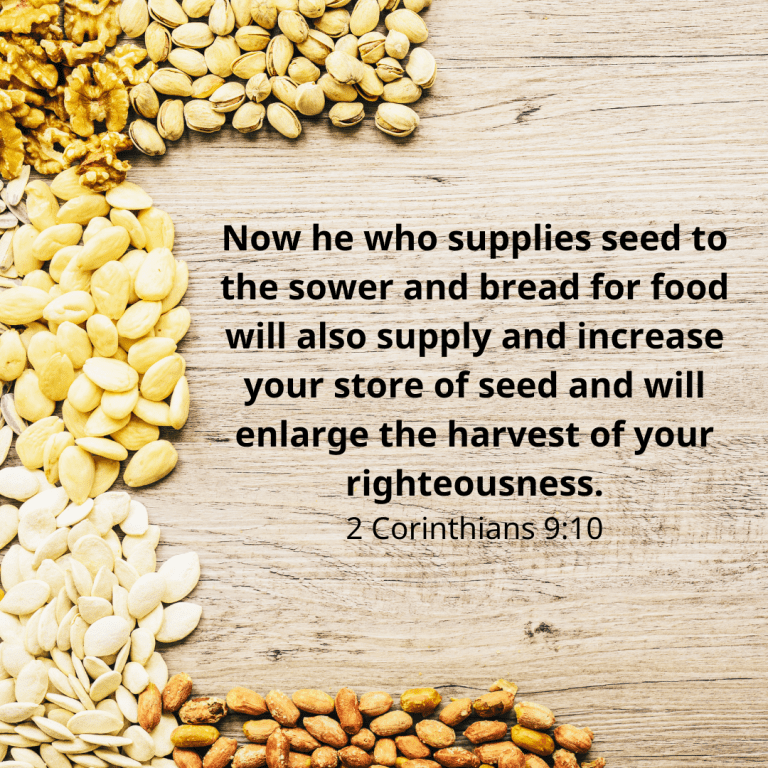
The season of harvest is a time of gratitude, reflection, and abundance. For farmers, it signifies the end of a season of hard work, when crops are gathered, and the fruits of labor are celebrated. Spiritually, it reminds us of God’s faithfulness and the importance of sowing seeds of righteousness in our lives. The Bible speaks of harvest not just as an agricultural event but as a symbol of spiritual growth, provision, and God’s blessings.
Here are seven Bible verses that reflect the beauty, meaning, and significance of harvest time:
1. Galatians 6:9
“Let us not become weary in doing good, for at the proper time we will reap a harvest if we do not give up.”
Just as the harvest comes after a season of hard labor, our spiritual harvest will come if we remain steadfast in our efforts to live righteously. God’s timing is perfect, and we must trust that our diligence will bear fruit.
2. Matthew 9:37-38
“Then he said to his disciples, ‘The harvest is plentiful but the workers are few. Ask the Lord of the harvest, therefore, to send out workers into his harvest field.’”
Here, Jesus calls on us to be workers in this field, sharing the good news of salvation and helping to bring others into the kingdom of God. Harvest time is not just about receiving but also giving — sharing God’s love with the world.
3. Psalm 126:5-6
“Those who sow with tears will reap with songs of joy. Those who go out weeping, carrying seed to sow, will return with songs of joy, carrying sheaves with them.”
We may endure seasons of sorrow, but God promises that those who faithfully sow, even through hardship, will one day reap a harvest of joy. There is hope in the midst of trials, and the harvest will be a time of celebration.
4. Proverbs 10:5
“He who gathers crops in summer is a prudent son, but he who sleeps during harvest is a disgraceful son.”
Just as a farmer must be attentive during the harvest to gather his crops, we must be alert and ready to seize the spiritual opportunities that God places before us. Laziness and neglect lead to missed blessings, but diligence ensures that we reap the benefits of our labor.
5. 2 Corinthians 9:10
“Now he who supplies seed to the sower and bread for food will also supply and increase your store of seed and will enlarge the harvest of your righteousness.”
God is the provider of all things, and He ensures that those who sow will have what they need to reap a harvest. Not only does He provide materially, but He also increases the harvest of righteousness in our lives, enabling us to grow in character, faith, and good works. Our trust in God’s provision is important to experiencing His abundance.
6. James 3:18
“Peacemakers who sow in peace reap a harvest of righteousness.”
When we sow seeds of peace and righteousness, we reap a harvest of goodness and integrity. Just as the farmer carefully chooses what to plant, we must be mindful of the seeds we sow in our relationships and daily actions.
7. John 4:35
“Don’t you have a saying, ‘It’s still four months until harvest’? I tell you, open your eyes and look at the fields! They are ripe for harvest.”
The time for action is now, not later. The fields are ripe, and God is calling us to step into His work, sharing His love and truth with those who are ready to receive it. There is an urgency in the harvest, and we are called to respond.
Conclusion
Harvest time is a powerful reminder of God’s faithfulness and the spiritual principles of sowing and reaping. Whether we are harvesting crops or gathering the fruits of our spiritual labor, we are called to trust in God’s provision and timing. As we reflect on these Bible verses, may we be inspired to continue sowing seeds of righteousness, peace, and faithfulness, knowing that in due season, we will reap a bountiful harvest.

The Bible is rich with wisdom regarding the power of our words. Throughout Scripture, we are reminded that the tongue—though small—holds the capacity to uplift, destroy, heal, or harm. The words we speak can shape destinies, mend relationships, or cause deep wounds. Let’s explore seven Bible verses that illuminate the profound power of the tongue.
1. Proverbs 18:21 – “Death and life are in the power of the tongue, and those who love it will eat its fruits.”
The words we choose to speak can bring encouragement, love, and healing, or they can cause hurt, division, and destruction. The “fruits” we reap from our words reflect their power—whether for good or ill.
2. James 3:5-6 – “So also the tongue is a small member, yet it boasts of great things. How great a forest is set ablaze by such a small fire! And the tongue is a fire, a world of unrighteousness.”
Although it is a small part of the body, the tongue can cause significant harm, much like a small spark can ignite an entire forest fire. James warns believers of the dangers of careless speech, reminding us that words can spread like wildfire, causing damage that can be difficult to undo.
3. Proverbs 12:18 – “There is one whose rash words are like sword thrusts, but the tongue of the wise brings healing.”
Words spoken in haste or anger can cut deeply, inflicting pain and damage similar to physical wounds. Conversely, wise and thoughtful words can bring comfort, peace, and restoration, highlighting the importance of controlling our speech and choosing our words carefully.
4. Ephesians 4:29 – “Let no corrupting talk come out of your mouths, but only such as is good for building up, as fits the occasion, that it may give grace to those who hear.”
We are urged to avoid corrupting or harmful talk and instead speak in ways that edify and encourage others. Words have the power to build up or tear down, and we are encouraged to use our speech to impart grace and support to those around us.
5. Proverbs 15:4 – “A gentle tongue is a tree of life, but perverseness in it breaks the spirit.”
A gentle tongue, like a tree of life, offers nourishment, strength, and growth. In contrast, perverse or harsh speech can crush a person’s spirit, leading to discouragement and despair. The verse encourages us to speak with kindness and gentleness, fostering life and growth in others.
6. Matthew 12:36-37 – “I tell you, on the day of judgment people will give account for every careless word they speak, for by your words you will be justified, and by your words you will be condemned.”
Jesus’ words in Matthew are a sobering reminder of the accountability we have for our speech. Every word we speak—careless or otherwise—will be subject to judgment. Our words reflect our hearts, and they play a role in our justification or condemnation. This verse underscores the importance of being mindful of our speech, knowing that it has eternal consequences.
7. Proverbs 16:24 – “Gracious words are like a honeycomb, sweetness to the soul and health to the body.”
Words that are kind, loving, and considerate are likened to honeycomb—sweet and nourishing, bringing joy and health to both the speaker and the listener. The verse encourages us to speak in ways that bring sweetness and well-being to others, reflecting the love and grace of God through our words.
Conclusion
The Bible consistently teaches that the tongue, though small, wields immense power. It can bring life or death, healing or harm, joy or sorrow. As followers of Christ, we are called to use our words wisely, to speak life, and to reflect God’s love through our speech. By guarding our tongues and choosing our words carefully, we can positively influence those around us and honor God with our speech.
Prayer is a vital aspect of the Christian faith, serving as a direct line of communication with God. The Bible offers numerous verses that can guide and inspire us in our prayer life. Here are seven Bible verses that can help you to pray:
1. Matthew 6:9-13
“This, then, is how you should pray: ‘Our Father in heaven, hallowed be your name, your kingdom come, your will be done, on earth as it is in heaven. Give us today our daily bread. And forgive us our debts, as we also have forgiven our debtors. And lead us not into temptation, but deliver us from the evil one.’”
The Lord’s Prayer, provides a perfect model for prayer. It includes elements of praise, submission to God’s will, requests for daily needs, forgiveness, and guidance. Using this structure can help us cover all aspects of our spiritual life in prayer.
2. Philippians 4:6
“Do not be anxious about anything, but in every situation, by prayer and petition, with thanksgiving, present your requests to God.”
You are encouraged to turn your worries into prayers. This verse emphasizes importance of approaching God with your needs and anxieties, coupled with a heart of gratitude. This verse reminds you that prayer is a means to relieve anxiety and to trust in God’s provision.
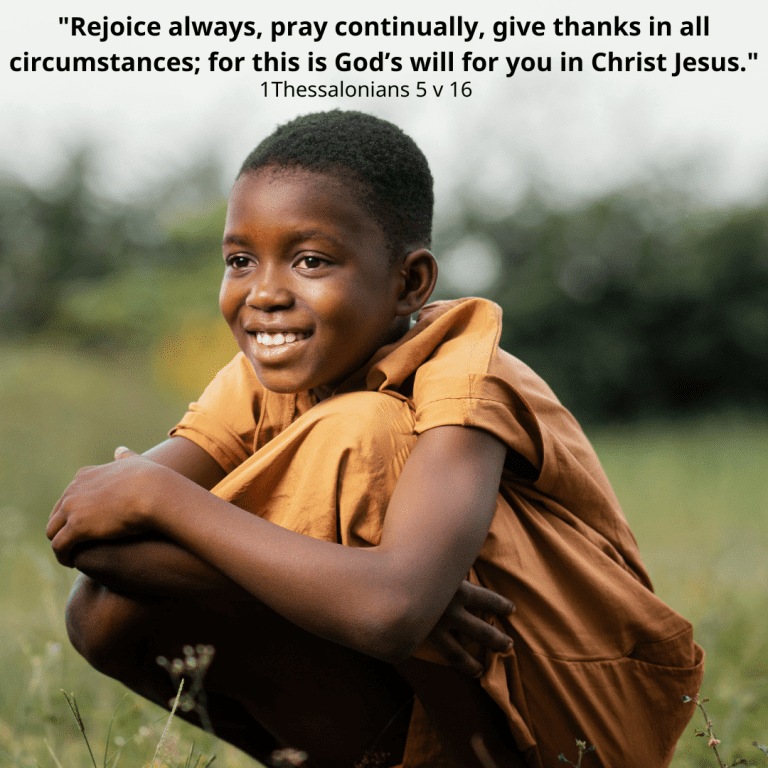
3. 1 Thessalonians 5:16
“Rejoice always, pray continually, give thanks in all circumstances; for this is God’s will for you in Christ Jesus.”
Praying continually doesn’t mean being on our knees all day but maintaining a constant awareness of God’s presence and turning to Him throughout our day. It encourages an attitude of gratitude and joy in all circumstances.
4. James 5:16
“Therefore confess your sins to each other and pray for each other so that you may be healed. The prayer of a righteous person is powerful and effective.”
James 5:16 emphasizes the power of communal prayer and confession. It encourages us to support each other through prayer and to recognize the importance of a righteous person’s prayer. You are encouraged to seek out prayer partners and to be diligent in your intercessions for others.
5. Romans 8:26
“In the same way, the Spirit helps us in our weakness. We do not know what we ought to pray for, but the Spirit himself intercedes for us through wordless groans.”
You can find comfort in knowing that the Holy Spirit assists you in your prayers, especially when you are uncertain about what to pray for. The Spirit’s intercession ensures that your prayers align with God’s will, providing a deeper connection in your communication with God.
6. Matthew 7:7-8
“Ask and it will be given to you; seek and you will find; knock and the door will be opened to you. For everyone who asks receives; the one who seeks finds; and to the one who knocks, the door will be opened.”
Jesus assures you that your earnest seeking and asking will not go unanswered. This promise can bolster your confidence in approaching God with your needs and desires, knowing that He listens and responds.
7. 1 John 5:14-15
“This is the confidence we have in approaching God: that if we ask anything according to his will, he hears us. And if we know that he hears us—whatever we ask—we know that we have what we asked of him.”
God is attentive to your prayers. It highlights the importance of aligning your requests with His will, giving you confidence that your prayers are heard and will be answered in accordance with His divine plan.
Conclusion
Prayer is a powerful and essential practice in the Christian life. These seven Bible verses offer guidance, encouragement, and assurance in our prayer journey. By meditating on and incorporating these scriptures into your prayer life, you can deepen your relationship with God, approach Him with confidence, and experience the transformative power of prayer.
Prayer is a vital aspect of the Christian faith, serving as a direct line of communication with God. The Bible offers numerous verses that can guide and inspire us in our prayer life. Here are seven Bible verses that can help you to pray:
1. Matthew 6:9-13
“This, then, is how you should pray: ‘Our Father in heaven, hallowed be your name, your kingdom come, your will be done, on earth as it is in heaven. Give us today our daily bread. And forgive us our debts, as we also have forgiven our debtors. And lead us not into temptation, but deliver us from the evil one.’”
The Lord’s Prayer, provides a perfect model for prayer. It includes elements of praise, submission to God’s will, requests for daily needs, forgiveness, and guidance. Using this structure can help us cover all aspects of our spiritual life in prayer.
2. Philippians 4:6
“Do not be anxious about anything, but in every situation, by prayer and petition, with thanksgiving, present your requests to God.”
You are encouraged to turn your worries into prayers. This verse emphasizes importance of approaching God with your needs and anxieties, coupled with a heart of gratitude. This verse reminds you that prayer is a means to relieve anxiety and to trust in God’s provision.
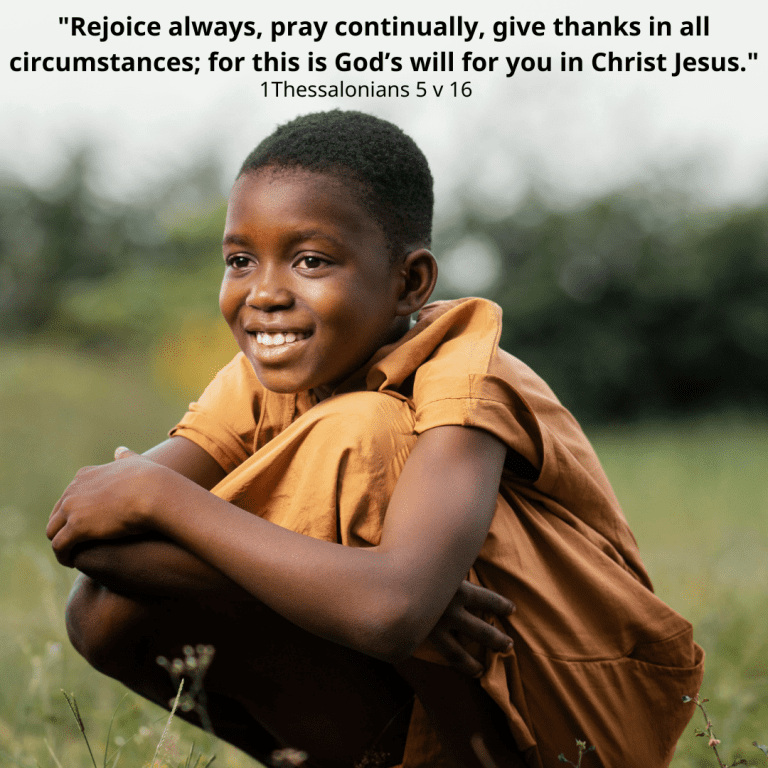
3. 1 Thessalonians 5:16
“Rejoice always, pray continually, give thanks in all circumstances; for this is God’s will for you in Christ Jesus.”
Praying continually doesn’t mean being on our knees all day but maintaining a constant awareness of God’s presence and turning to Him throughout our day. It encourages an attitude of gratitude and joy in all circumstances.
4. James 5:16
“Therefore confess your sins to each other and pray for each other so that you may be healed. The prayer of a righteous person is powerful and effective.”
James 5:16 emphasizes the power of communal prayer and confession. It encourages us to support each other through prayer and to recognize the importance of a righteous person’s prayer. You are encouraged to seek out prayer partners and to be diligent in your intercessions for others.
5. Romans 8:26
“In the same way, the Spirit helps us in our weakness. We do not know what we ought to pray for, but the Spirit himself intercedes for us through wordless groans.”
You can find comfort in knowing that the Holy Spirit assists you in your prayers, especially when you are uncertain about what to pray for. The Spirit’s intercession ensures that your prayers align with God’s will, providing a deeper connection in your communication with God.
6. Matthew 7:7-8
“Ask and it will be given to you; seek and you will find; knock and the door will be opened to you. For everyone who asks receives; the one who seeks finds; and to the one who knocks, the door will be opened.”
Jesus assures you that your earnest seeking and asking will not go unanswered. This promise can bolster your confidence in approaching God with your needs and desires, knowing that He listens and responds.
7. 1 John 5:14-15
“This is the confidence we have in approaching God: that if we ask anything according to his will, he hears us. And if we know that he hears us—whatever we ask—we know that we have what we asked of him.”
God is attentive to your prayers. It highlights the importance of aligning your requests with His will, giving you confidence that your prayers are heard and will be answered in accordance with His divine plan.
Conclusion
Prayer is a powerful and essential practice in the Christian life. These seven Bible verses offer guidance, encouragement, and assurance in our prayer journey. By meditating on and incorporating these scriptures into your prayer life, you can deepen your relationship with God, approach Him with confidence, and experience the transformative power of prayer.

Do you know God’s grace? Here are 7 Bible verses to inspire you to understand this grace.
- Romans 3:23-24 for all have sinned and fall short of the glory of God, and are justified by his grace as a gift, through the redemption that is in Christ Jesus
To understand God’s grace, we have to acknowledge that we have done what is wrong in God’s eyes. We have sinned. We are in need of forgiveness and redemption.
- Ephesians 2:8-9 For by grace you have been saved through faith. And this is not your own doing; it is the gift of God, not a result of works, so that no one may boast.
God’s grace is a free gift that doesn’t depend on any good deeds you have done. God’s grace is for all who believe in Jesus Christ.
- James 4:6-7 But he gives more grace. Therefore it says, “God opposes the proud but gives grace to the humble.” Submit yourselves therefore to God. Resist the devil, and he will flee from you.
In humility we turn to God and confess that we have done wrong. In humility we receive God’s grace and he will lift us up.
- John 1:14 And the Word became flesh and dwelt among us, and we have seen his glory, glory as of the only Son from the Father, full of grace and truth.
God isn’t a distant God. He came to us and lived among us as one of us. Jesus is full of grace and truth.
- Hebrews 4:15-16 For we do not have a high priest who is unable to sympathize with our weaknesses, but one who in every respect has been tempted as we are, yet without sin. Let us then with confidence draw near to the throne of grace, that we may receive mercy and find grace to help in time of need.
You can come to Jesus, just as you are. He knows our weaknesses. Because of the grace of God, we are forgiven our sins.
- Titus 3:4-7 But when the goodness and loving kindness of God our Savior appeared, he saved us, not because of works done by us in righteousness, but according to his own mercy, by the washing of regeneration and renewal of the Holy Spirit, whom he poured out on us richly through Jesus Christ our Savior, so that being justified by his grace we might become heirs according to the hope of eternal life.
We don’t earn or deserve God’s grace by our good deeds, but it’s given according to God’s own mercy. By grace we are saved through our faith and even become heirs to the kingdom of God.
- Revelation 22:21 The grace of the Lord Jesus be with all. Amen.
This is the very last verse of the Bible and it reminds and expresses the wish for God’s grace be with you. “Amen” means “surely”, “truly” or “so be it.” We live by the hope and trust in God’s grace every day.

We live in a world where almost everything is just a click away — opinions, substances, validation, or distractions. For the youth, the pressure to experiment, fit in, or numb out is massive. From parties to pills, vaping to pornography, hookup culture to hustler mindsets, there’s this silent rule that says, “Do what you want, no one cares.”
But you know what? God cares. And deep down, so do you. Here’s how you can stand firm and thrive in a culture that keeps telling you to let go.
1. 1 Corinthians 10:13 — “No temptation has overtaken you except what is common to mankind…”
You’re not alone in this.
Whether it’s the pressure to try drugs, get high to escape stress, or be someone you’re not just to fit in, you’re not weird or weak for struggling. Everyone faces temptation. The verse promises that God will always provide a way out. Sometimes that “way out” is a friend’s text, a parent’s question, or just that inner voice saying “Don’t do it.”
Story: Thomas tried weed at 16 because everyone at the party was doing it. He thought he’d be cooler, braver. But instead, he ended up anxious and ashamed. Years later, he discovered this verse and realized temptation didn’t define him, God had always offered a better choice.
2. Romans 12:2 — “Do not conform to the pattern of this world…”
The world screams, “Normalize it!”
God whispers, “Renew your mind.”
Peer pressure often starts with small things: music, jokes, drinks, risky DMs. But one compromise leads to another. This verse reminds us not to copy what the world says is okay. Transformation begins in the mind. What you feed your thoughts with — that’s what shapes your life.
Story: Margaret stopped following certain pages on Instagram — they weren’t evil, just misleading. After a month of feeding her mind differently, she felt lighter, freer, and more confident in who God said she was.
3. James 4:7 — “Submit yourselves, then, to God. Resist the devil, and he will flee from you.”
You have authority.
Temptation isn’t just a feeling — it’s spiritual warfare. You don’t fight it alone. Submitting to God isn’t weakness; it’s your superpower. The moment you decide to stand firm, hell trembles.
Story: Mike kept falling into late-night habits online. But once he started praying before going to bed and installing accountability apps, the grip lessened. When you resist consistently, the temptation doesn’t stick around.
4. Proverbs 1:10 — “My son, if sinful men entice you, do not give in to them.”
Not all friendships are safe.
Sometimes it’s not the drugs or the drinking — it’s the friend group behind it. God calls us to courage — to walk away from those leading us astray. It’s better to lose fake friends than to lose yourself.
Story: Jonathan left his crew after realizing they were slowly dragging him into a life he didn’t want. It hurt at first. But a few months later, he found real friends at church who uplifted him, not trapped him.
5. Galatians 5:1 — “It is for freedom that Christ has set us free…”
Jesus didn’t die for you to live in chains.
Addiction is real — whether it’s substances, screens, sex, or approval. But freedom is not just possible — it’s promised. You’re not stuck. God’s power can break cycles that feel permanent.
Story: Grace was addicted to pills. She didn’t think prayer or therapy would work — until she tried both. Healing didn’t happen overnight, but every day, she felt the chains loosen.
6. 2 Timothy 2:22 — “Flee the evil desires of youth and pursue righteousness…”
Run to something better.
Sometimes we focus too much on what to avoid and forget what we should chase: purpose, peace, community, God. You’re not just saying no to temptation — you’re saying yes to something way better.
Story: Trish stopped clubbing every weekend. Not because someone forced her, but because she found passion in leading youth worship. Her “no” gave birth to a bigger “yes.”
7. Psalm 119:9 — “How can a young person stay on the path of purity? By living according to your word.”
The Bible is your map.
In a culture where boundaries are blurred, God’s Word becomes a GPS for purity, purpose, and peace. The more you read it, the more you recognize the lies you’ve been believing. Scripture rewires your heart.
Story: Morris began with one verse a day. Just one. A month later, he felt like he was finally walking in light after years of being lost in fog.
Final Thoughts: You Were Born to Stand Out
This “anything goes” generation will try to cancel your convictions, mock your morals, and twist your truth. But God called you to be different — not to judge, but to shine.
Temptation will always knock. But with God’s Word in your heart, community by your side, and the Spirit guiding your steps, you don’t have to open that door.
You are stronger than the pressure.
You are not alone.
You are chosen.
Struggling with more than just temptation? Discover how faith can help you overcome addiction. There’s hope beyond the habit. Learn how God’s power can help you overcome addiction
7 Christian Habits to Resist Temptation in an ‘Anything Goes’ World
We live in a world where almost everything is just a click away — opinions, substances, validation, or distractions. For the youth, the pressure to experiment, fit in, or numb out is massive. From parties to pills, vaping to pornography, hookup culture to hustler mindsets, there’s this silent rule that says, “Do what you want, no one cares.”
We live in a world where almost everything is just a click away — opinions, substances, validation, or distractions. For the youth, the pressure to experiment, fit in, or numb out is massive. From parties to pills, vaping to pornography, hookup culture to hustler mindsets, there’s this silent rule that says, “Do what you want, no one cares.”