
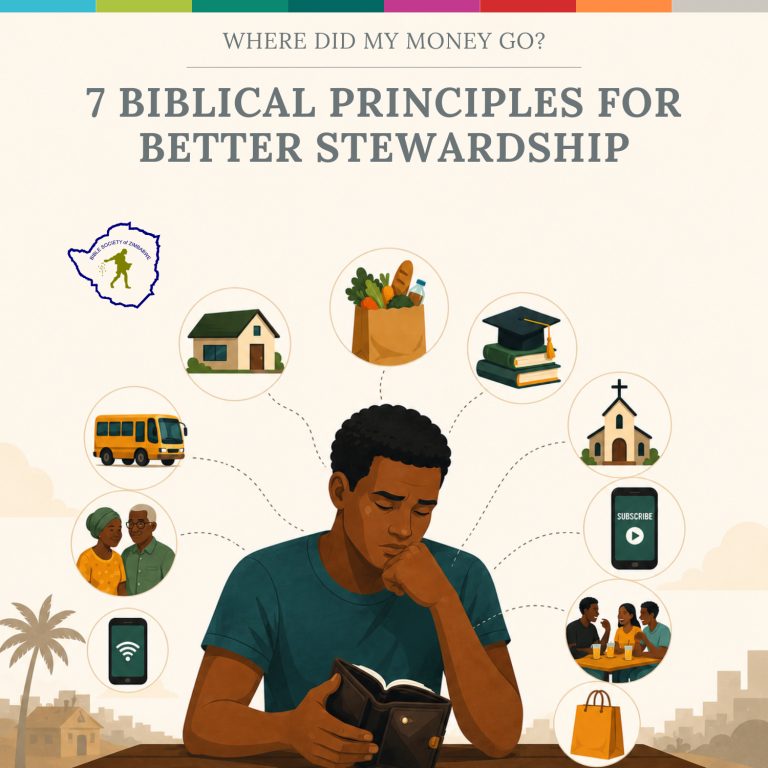
From payday excitement to “insufficient funds”, how can young Christians honour God with their finances?
The salary notification finally drops.
“Salary has been credited to your account.”
You smile.
The first thing you do? Maybe you send a screenshot to your friends, order that meal you’ve been craving, buy new sneakers you’ve been eyeing, or finally upgrade your data bundle. After all, you’ve worked hard, you deserve it.
Fast forward a week (or sometimes just three days).
You open your banking app.
Balance: $12.43.
You stare at your phone and ask the question almost every young African has asked at some point:
“Where did my money go?”
Between rent, transport, groceries, helping your parents, paying school fees, church contributions, mobile data, subscriptions, weekend plans, and those “I’ll just buy one thing” moments, it’s easy to lose track of where your salary disappeared.
The Bible may not mention debit cards, EcoCash, M-Pesa, Airtel Money, online shopping, or food delivery apps, but it has plenty to say about managing money wisely.
Here are seven biblical principles that can help you become a better steward of what God has entrusted to you.
1. Remember Whose Money It Really Is
Psalm 24:1 (NIV)
“The earth is the Lord’s, and everything in it…”
It’s easy to think, “It’s my salary. I earned it.” While it’s true that you worked for it, every opportunity, skill, and source of income ultimately comes from God.
When we see money as something God has entrusted to us, not something we own outright, we begin to spend it differently.
Instead of asking, “What do I want?” we begin asking, “How can I honour God with what He’s given me?”
Reality Check: Gratitude is a better first response to payday than a shopping spree.
2. Budget Before Your Money Budgets You
Proverbs 21:5 (NIV)
“The plans of the diligent lead to profit as surely as haste leads to poverty.”
Many young people know exactly when payday is, but not where their money is going.
Without a plan, it’s easy to spend on takeaways, online deals, or nights out, only to realise rent or transport money is running low.
A budget isn’t about restricting your life, it’s about directing your money towards what matters most.
Reality Check: If you don’t tell your money where to go, you’ll spend the month wondering where it went.
3. Don’t Let Impulse Buying Empty Your Wallet
Luke 14:28 (NIV)
“Suppose one of you wants to build a tower. Won’t you first sit down and estimate the cost…?”
A flash sale.
A “Buy Now, Pay Later” offer.
A friend says, “Let’s just go out, it’s payday!”
A notification says, “Only two hours left!”
Sound familiar?
Companies are experts at making us feel like we need something immediately. But wisdom teaches us to pause before we purchase.
Before clicking “Buy Now,” ask yourself:
- Do I actually need this?
- Can I afford it?
- Will I still be happy with this purchase next week?
Sometimes the smartest purchase is the one you don’t make.
4. Don’t Spend Your Future Paying for Today’s Wants
Proverbs 22:7 (NIV)
“The borrower is slave to the lender.”
Debt isn’t always avoidable, but unnecessary debt can become a heavy burden.
Buying things simply to keep up with friends or impress people on social media often leads to stress later.
Living within your means may not always look exciting online, but it brings peace offline.
Reality Check: Financial freedom is worth more than looking rich for a weekend.
5. Save Something—Even If It’s Small
Proverbs 6:6–8 (NIV)
“Go to the ant… it stores its provisions…”
Saving can feel impossible, especially when your salary already has so many demands.
But saving isn’t about how much you earn, it’s about developing the habit of preparing for tomorrow.
Whether it’s enough for an emergency, a business idea, further studies, or helping your family in the future, small, consistent savings can grow over time.
Reality Check: You don’t need a big income to build good financial habits.
6. Make Room for Generosity
2 Corinthians 9:7 (NIV)
“God loves a cheerful giver.”
When money is tight, generosity can seem impossible.
Yet some of the most generous people don’t have the biggest salaries, they simply have generous hearts.
Generosity isn’t only about money. It can mean buying lunch for a friend who’s struggling, supporting a community project, giving towards God’s work, or helping a neighbour in need.
Giving reminds us that our security is found in God, not in our bank balance.
Reality Check: A generous heart is never measured by the size of a salary.
7. Your Bank Balance Doesn’t Define Your Worth
Matthew 6:33 (NIV)
“But seek first his kingdom and his righteousness, and all these things will be given to you as well.”
Some readers will end this month with money left over.
Others will be counting every coin until the next payday.
Some may not even have a job right now.
Whatever your financial situation, remember this: your value isn’t determined by the number in your account.
Your identity is found in Christ.
Money comes and goes. Jobs change. Economies rise and fall. But God’s love, His faithfulness, and His purpose for your life remain constant.
Seek Him first, and trust Him to guide you in every financial season.
Final Thoughts
At the end of the month, don’t just ask:
“Where did my money go?”
Ask yourself:
- Did my spending reflect my values?
- Did I honour God with what He entrusted to me?
- Did I prepare for tomorrow while meeting today’s needs?
- Was I generous, even in small ways?
Being a good steward isn’t about having the highest salary or the latest phone. It’s about making wise decisions with whatever God places in your hands.
As your next payday approaches, remember this: Money is a tool, not a master. Spend it with wisdom, save it with purpose, give it with joy, and trust God with the rest.

Day 1: The Triumphal Entry
Scripture: Matthew 21:1-11
Reflection: Jesus enters Jerusalem as a humble king, riding on a donkey, fulfilling the prophecy in Zechariah 9:9. The people welcomed Him with palm branches, shouting “Hosanna!” meaning “Save us now!” Yet, just days later, the same crowd would demand His crucifixion. This event challenges us to examine our own hearts—do we only worship Jesus when it’s convenient, or do we truly submit to Him as King in every part of our lives?
Prayer: Lord, help me to recognize You as my King in all aspects of life. May I not be swayed by the opinions of others but remain faithful to You. Amen.
Engagement: How do you prepare your heart to welcome Jesus?
Day 2: Jesus Cleanses the Temple
Scripture: Mark 11:15-19
Reflection: Jesus enters the temple and finds it filled with merchants taking advantage of worshippers. In righteous anger, He overturns the tables, declaring, “My house will be called a house of prayer for all nations, but you have made it a den of robbers.” This moment reminds us that Jesus desires true, heartfelt worship, not empty rituals or personal gain. Just as He cleansed the temple, He calls us to examine our own hearts. What distractions or sinful habits might be hindering our relationship with Him?
Prayer: Jesus, cleanse my heart of anything that distracts me from You. May my worship be pure and my life reflect Your holiness. Amen.
Engagement: What is one thing you need to remove from your life to focus more on God?
Day 3: The Last Supper
Scripture: Luke 22:14-23
Reflection: As Jesus shares His final meal with His disciples, He breaks the bread and takes the cup, instituting the Lord’s Supper as a remembrance of His sacrifice. This moment is deeply significant—it reminds us of Christ’s suffering, His willingness to give Himself for us, and the new covenant He established in His blood. Every time we take communion, we are called to reflect on our relationship with Him. Are we truly living in gratitude and obedience to His sacrifice?
Prayer: Thank You, Jesus, for Your sacrifice. Help me to live in a way that honors Your love and grace. Amen.
Engagement: What does the Lord’s Supper mean to you?
Day 4: Praying in Gethsemane
Scripture: Matthew 26:36-46
Reflection: In the Garden of Gethsemane, Jesus prays in deep sorrow, knowing the suffering that awaits Him. His words, “Not my will, but Yours be done,” demonstrate His total surrender to the Father’s plan. This moment teaches us that even in our darkest struggles, we can bring our burdens to God. Jesus understands our pain, our fears, and our struggles, and He invites us to trust Him completely, even when we do not understand His plan.
Prayer: Lord, give me the strength to follow Your will, even when it’s difficult. Teach me to trust in Your perfect plan. Amen.
Engagement: How can you trust God more in difficult situations?
Day 5: Betrayal and Arrest
Scripture: John 18:1-14
Reflection: Judas, one of Jesus’ own disciples, betrays Him with a kiss. The soldiers seize Jesus while His disciples flee in fear. Even in this painful moment, Jesus remains calm, knowing that He is fulfilling the Father’s plan. Betrayal is one of the deepest wounds we can experience, yet Jesus shows us that God’s purpose is greater than any human failure. When we feel abandoned or betrayed, we can take comfort in knowing that Jesus has walked this path before us and understands our pain.
Prayer: Jesus, thank You for loving me despite my shortcomings. Help me remain faithful to You, even when life is difficult. Amen.
Engagement: Have you ever felt betrayed? How did you find peace in God?
Day 6: The Trial of Jesus
Scripture: Luke 23:1-25
Reflection: Jesus is falsely accused, yet He remains silent before His accusers. He does not defend Himself or retaliate, trusting in God’s justice. How often do we feel the need to defend ourselves or seek revenge when treated unfairly? Jesus’ example teaches us the power of trusting in God’s timing and justice rather than taking matters into our own hands. True strength lies in surrendering our battles to Him.
Prayer: Lord, help me trust You even when facing injustice. Teach me to respond with grace and faith. Amen.
Engagement: Have you ever been misunderstood? How did you respond?
Day 7: The Crucifixion
Scripture: Matthew 27:32-56
Reflection: Jesus endures immense physical, emotional, and spiritual suffering on the cross. He cries out, “My God, My God, why have You forsaken Me?” as He bears the weight of our sin. Yet, in His final breath, He declares, “It is finished!” The cross is the greatest display of love—the sacrifice that made salvation possible for us. Have we truly grasped the depth of what Jesus endured for us? And how are we living in response to that sacrifice?
Prayer: Thank You, Jesus, for dying in my place. May I live every day in gratitude for Your love. Amen.
Engagement: What does the cross mean to you personally?
Day 8: Jesus is Buried
Scripture: Mark 15:42-47
Reflection: Jesus’ body is laid in a tomb, and for His followers, it seems like all hope is lost. But what they do not see is that God is still at work. Often, we face seasons of waiting where it feels like nothing is happening, yet God is always preparing something greater. If you’re in a season of uncertainty, trust that resurrection is coming.
Prayer: Lord, when I face dark seasons, help me trust that You are still working. Amen.
Engagement: Have you ever experienced a season of waiting? How did God show up?
Day 9: The Empty Tomb
Scripture: Luke 24:1-12
Reflection: The greatest news in history—the tomb is empty! Jesus has conquered sin and death, offering us eternal life. This moment is the foundation of our faith. If Jesus is alive, we have hope beyond this life, and our faith is not in vain. Are we living in the power of His resurrection daily?
Prayer: Jesus, You are alive! Fill my heart with resurrection joy. Amen.
Engagement: How does the resurrection impact your faith?
Day 10: Jesus Appears to His Disciples
Scripture: John 20:19-29
Reflection: Jesus appears to His disciples, bringing peace. Thomas, who doubted, sees the risen Lord and believes. Many of us struggle with doubt, yet Jesus meets us where we are. He invites us to trust Him, even when we cannot see the full picture. Are we placing our faith in His promises, even in times of uncertainty?
Prayer: Lord, strengthen my faith and remove my doubts. Help me trust You completely. Amen.
Engagement: Have you ever struggled with doubt? How did God reveal Himself to you?
The story of Jesus is the ultimate glow-up, from a newborn in a manger to the Savior of the world. His journey isn’t just inspiring; it’s transformative for everyone who believes. Let’s unpack how Jesus’ humble beginnings and divine mission changed history forever, all rooted in Scripture.
1. A Humble Start
“And she gave birth to her firstborn, a son. She wrapped him in cloths and placed him in a manger, because there was no guest room available for them” (Luke 2:7).
Jesus’ story begins in the most unassuming way imaginable. Born in a small town and placed in a manger because there was no room for His family in the inn, His birth reflected humility and simplicity. The King of Kings arrived without the fanfare one might expect for royalty. Yet, this humble start sets the stage for a life that would redefine greatness, teaching us that our worth isn’t tied to our circumstances but to God’s purpose for our lives.
2. Announced to the Underdogs
“But the angel said to them, ‘Do not be afraid. I bring you good news that will cause great joy for all the people’” (Luke 2:10).
Imagine being a shepherd on a quiet night, and suddenly, the sky lights up with angels announcing the birth of the Savior. The first people to hear about Jesus’ birth weren’t rulers or religious leaders but shepherds, ordinary, overlooked individuals. This choice reflects God’s heart for the marginalized and forgotten. By starting with the underdogs, God showed that His kingdom is for everyone, regardless of status or position.
3. Prophesied to Change the World
“For to us a child is born, to us a son is given, and the government will be on his shoulders. And he will be called Wonderful Counselor, Mighty God, Everlasting Father, Prince of Peace” (Isaiah 9:6).
Centuries before Jesus’ birth, the prophet Isaiah foretold His arrival. This verse captures His divine mission: to bring peace, guidance, and hope to a broken world. Jesus wasn’t just another leader; He was the fulfillment of a promise, the embodiment of God’s love, and the answer to humanity’s deepest needs. His glow-up was written in the stars long before He took His first breath.
4. Growing in Wisdom and Favor
“And Jesus grew in wisdom and stature, and in favor with God and man” (Luke 2:52).
Jesus’ childhood wasn’t skipped over in His story. He grew up like us, experiencing the challenges and joys of life. From His time in the temple as a young boy, astounding scholars with His understanding, to His later years preparing for His ministry, Jesus’ growth shows that even the Savior embraced the process of learning and maturing. This reminds us that growth, both spiritual and personal, is a vital part of God’s plan for our lives.
5. The Moment of Revelation
“Then a voice came from heaven, ‘You are my Son, whom I love; with you I am well pleased’” (Mark 1:11).
At His baptism, Jesus’ identity was publicly affirmed by God Himself. The heavens opened, and God declared His love for His Son, marking the beginning of Jesus’ public ministry. This moment wasn’t just about Jesus, it was a revelation for the world, a confirmation that the Messiah had come to fulfill His divine mission. It was a turning point, transitioning Him from preparation to action.
6. Sacrificial Love for All
“But God demonstrates his own love for us in this: While we were still sinners, Christ died for us” (Romans 5:8).
Jesus’ glow-up wasn’t about personal gain or recognition. It was about love, sacrificial, selfless, and unconditional. His journey led to the cross, where He paid the ultimate price for our sins. This act of love redefined what it means to give, showing that true greatness lies in serving and sacrificing for others. Jesus’ death and resurrection opened the door for everyone to experience God’s grace.
7. Risen and Reigning
“He is not here; he has risen, just as he said. Come and see the place where he lay” (Matthew 28:6).
The ultimate glow-up: Jesus conquered death. His resurrection wasn’t just a miracle; it was the fulfillment of His promise and the foundation of our faith. By rising from the grave, Jesus proved that He has power over sin and death, offering eternal life to all who believe. His reign as the risen Savior continues to transform lives today.
The Bottom Line
Jesus’ journey from the manger to the cross and beyond is a story of transformation, humility, and redemption. His life redefined greatness and brought hope to the world. As we reflect on His glow-up, let’s remember that His story isn’t just history, it’s an invitation to experience a glow-up of our own through faith in Him.

Matthew 4:18-20 While walking by the Sea of Galilee, he saw two brothers, Simon (who is called Peter) and Andrew his brother, casting a net into the sea, for they were fishermen. And he said to them, “Follow me, and I will make you fishers of men.” Immediately they left their nets and followed him.
God can call anyone, no matter their background, for His purpose. Paul was a simple fisherman. He was originally from Betsaida, but moved to Capernaum at some point in his life. His father was Jonah, and he had a brother, Andrew. At some point he got married, because he has a mother in law. His wife is never mentioned but 1 Corinthians 9:5 points to his wife travelling with him. Peter didn’t have a high education or elevated social status. But he was chosen by Jesus to be one of the twelve disciples
Question: How would you respond if God asked you to step away from what’s comfortable to follow His calling?
The season of harvest is a time of gratitude, reflection, and abundance. For farmers, it signifies the end of a season of hard work, when crops are gathered, and the fruits of labor are celebrated. Spiritually, it reminds us of God’s faithfulness and the importance of sowing seeds of righteousness in our lives. The Bible speaks of harvest not just as an agricultural event but as a symbol of spiritual growth, provision, and God’s blessings.
Here are seven Bible verses that reflect the beauty, meaning, and significance of harvest time:
1. Galatians 6:9
“Let us not become weary in doing good, for at the proper time we will reap a harvest if we do not give up.”
Just as the harvest comes after a season of hard labor, our spiritual harvest will come if we remain steadfast in our efforts to live righteously. God’s timing is perfect, and we must trust that our diligence will bear fruit.
2. Matthew 9:37-38
“Then he said to his disciples, ‘The harvest is plentiful but the workers are few. Ask the Lord of the harvest, therefore, to send out workers into his harvest field.’”
Here, Jesus calls on us to be workers in this field, sharing the good news of salvation and helping to bring others into the kingdom of God. Harvest time is not just about receiving but also giving — sharing God’s love with the world.
3. Psalm 126:5-6
“Those who sow with tears will reap with songs of joy. Those who go out weeping, carrying seed to sow, will return with songs of joy, carrying sheaves with them.”
We may endure seasons of sorrow, but God promises that those who faithfully sow, even through hardship, will one day reap a harvest of joy. There is hope in the midst of trials, and the harvest will be a time of celebration.
4. Proverbs 10:5
“He who gathers crops in summer is a prudent son, but he who sleeps during harvest is a disgraceful son.”
Just as a farmer must be attentive during the harvest to gather his crops, we must be alert and ready to seize the spiritual opportunities that God places before us. Laziness and neglect lead to missed blessings, but diligence ensures that we reap the benefits of our labor.
5. 2 Corinthians 9:10
“Now he who supplies seed to the sower and bread for food will also supply and increase your store of seed and will enlarge the harvest of your righteousness.”
God is the provider of all things, and He ensures that those who sow will have what they need to reap a harvest. Not only does He provide materially, but He also increases the harvest of righteousness in our lives, enabling us to grow in character, faith, and good works. Our trust in God’s provision is important to experiencing His abundance.
6. James 3:18
“Peacemakers who sow in peace reap a harvest of righteousness.”
When we sow seeds of peace and righteousness, we reap a harvest of goodness and integrity. Just as the farmer carefully chooses what to plant, we must be mindful of the seeds we sow in our relationships and daily actions.
7. John 4:35
“Don’t you have a saying, ‘It’s still four months until harvest’? I tell you, open your eyes and look at the fields! They are ripe for harvest.”
The time for action is now, not later. The fields are ripe, and God is calling us to step into His work, sharing His love and truth with those who are ready to receive it. There is an urgency in the harvest, and we are called to respond.
Conclusion
Harvest time is a powerful reminder of God’s faithfulness and the spiritual principles of sowing and reaping. Whether we are harvesting crops or gathering the fruits of our spiritual labor, we are called to trust in God’s provision and timing. As we reflect on these Bible verses, may we be inspired to continue sowing seeds of righteousness, peace, and faithfulness, knowing that in due season, we will reap a bountiful harvest.
Giving is a powerful act that reflects the heart of God and His desire for us to live generously. Throughout the Bible, we find numerous teachings that emphasize the importance and impact of giving. Whether it’s through offering our time, resources, or love, the act of giving not only blesses others but also enriches our own lives. Here are seven Bible verses that highlight the power of giving and encourage us to embrace a life of generosity.
1. Acts 20:35 “In everything I did, I showed you that by this kind of hard work we must help the weak, remembering the words the Lord Jesus himself said: ‘It is more blessed to give than to receive.’”
When we give to others, especially those in need, we are not only helping them but also experiencing the joy and fulfillment that comes from generosity. It reminds us that true happiness is found in selflessness.
2. 2 Corinthians 9:6-7 “Remember this: Whoever sows sparingly will also reap sparingly, and whoever sows generously will also reap generously. Each of you should give what you have decided in your heart to give, not reluctantly or under compulsion, for God loves a cheerful giver.”
The emphasis on giving cheerfully reminds us that our attitude matters. God values a heart that gives freely and joyfully, knowing that our contributions can lead to abundant blessings.
3. Proverbs 11:25 “A generous person will prosper; whoever refreshes others will be refreshed.”
Generosity is not just about meeting the needs of others; it also brings personal renewal and prosperity. When we give, we often receive in return, not necessarily in material wealth, but in spiritual and emotional well-being. The act of giving refreshes both the giver and the recipient.
4. Luke 6:38 “Give, and it will be given to you. A good measure, pressed down, shaken together and running over, will be poured into your lap. For with the measure you use, it will be measured to you.”
Jesus emphasizes the abundance that comes from giving. The imagery of a generous measure being returned to us illustrates that our giving will not go unnoticed or unrewarded. When we give with an open heart, we can expect God’s blessings to overflow in our lives.
5. Matthew 6:3-4 “But when you give to the needy, do not let your left hand know what your right hand is doing, so that your giving may be in secret. Then your Father, who sees what is done in secret, will reward you.”
We should give quietly and humbly, without seeking recognition or praise. The focus is on the sincerity and purity of our giving. God sees our acts of kindness, even when they are done in secret, and He will reward us accordingly. It reminds us that true giving is done for the benefit of others, not for personal glory.
6. Hebrews 13:16 “And do not forget to do good and to share with others, for with such sacrifices God is pleased.”
Sharing what we have with others is a sacrifice that pleases God. This verse highlights the importance of being mindful of others’ needs and taking action to meet them. It serves as a reminder that our acts of generosity are not just good deeds; they are expressions of our faith and love for God.
7. James 1:17 “Every good and perfect gift is from above, coming down from the Father of the heavenly lights, who does not change like shifting shadows.”
All we have comes from God. Recognizing that every gift we receive is from Him encourages us to be generous in sharing those gifts with others. When we give, we are participating in God’s work, distributing His blessings to those around us.
Conclusion
The Bible teaches that giving is a powerful way to express our faith, love, and gratitude. These verses reveal that generosity not only impacts those we help but also enriches our own lives, bringing us closer to God and His purposes. Whether through our resources, time, or compassion, giving allows us to reflect God’s love in a tangible way, creating a ripple effect of blessings that extend far beyond what we can see. By embracing a spirit of generosity, we open ourselves up to experience the fullness of life that God desires for us.