

7 Biblical Principles for Zimbabwean Returnees Starting Over
Walking back into your family home after years away can feel… awkward. The children who once called you “Uncle” or “Auntie” are now adults. Your younger siblings have families of their own. Your parents have grown older. Your cousins have built lives you know very little about. And now, because of the xenophobic attacks in South Africa, you’re living under someone else’s roof again.
You may be grateful to be safe.
But you may also feel like you’re an inconvenience.
You might wonder:
“Will they get tired of me?”
“How long can I stay here?”
“What if they think I’ve failed?”
These feelings are normal.
Starting over isn’t just about finding a job or starting a business, it’s also about rebuilding relationships. The good news is this: every strong future begins with strong foundations, and family can become part of that foundation if we choose humility, gratitude, and wisdom.
1. Start with Gratitude, Not Expectations
Colossians 3:15 (NIV)
“And be thankful.”
Your relatives didn’t have to open their home to you. Many families are already carrying financial pressures of their own. A simple “thank you” goes further than you think.
Don’t assume hospitality.
Appreciate it.
Small acts matter.
Wash the dishes.
Sweep the yard.
Cook a meal.
Help with the children.
Run errands.
Gratitude isn’t just something you say. It’s something you demonstrate. People may forget your words, but they’ll remember how you made life easier for them.
2. Don’t Try to Pick Up Where You Left Off
Romans 12:18 (NIV)
“If it is possible, as far as it depends on you, live at peace with everyone.”
Years have passed, people have changed, family dynamics have changed. Don’t expect relationships to feel exactly as they did before you left.
Instead of saying,
“You’ve changed.”
Ask questions, listen, get to know your relatives again. Celebrate their milestones. Learn their routines. Rebuilding trust takes time, but every meaningful conversation lays another brick in the relationship.
3. Choose Humility Over Pride
Philippians 2:3-4 (NIV)
“Do nothing out of selfish ambition or vain conceit. Rather, in humility value others above yourselves, not looking to your own interests but each of you to the interests of the others.”
Living with relatives means adjusting to their way of doing things.
Their house has its own rules.
Respect them.
If they eat dinner at a certain time, join them.
If they have household responsibilities, ask where you can help.
Humility isn’t weakness.
It’s maturity.
People are more likely to support someone who is willing to learn than someone who acts entitled.
4. Be a Contributor, Not Just a Guest
Acts 20:35 (NIV)
“It is more blessed to give than to receive.”
Even if you don’t have money yet, you still have something to offer.
Your time.
Your skills.
Your energy.
Can you repair a broken gate?
Help a child with homework?
Fix a leaking tap?
Start a vegetable garden?
Teach someone a skill you learned while living in South Africa?
Contribution changes how people see you, and how you see yourself.
You stop feeling like a burden and start becoming part of the solution.
5. Let Go of Shame and Ask for Wise Advice
Proverbs 15:22 (NIV)
“Plans fail for lack of counsel, but with many advisers they succeed.”
You don’t have to figure everything out alone. Your relatives may know people who are hiring. They may know someone looking for a business partner. They may have advice about your community that you don’t have yet. Don’t let pride stop you from learning. Asking for guidance isn’t admitting defeat. It’s taking the first step toward rebuilding.
6. Build Trust Before You Build a Business
Luke 16:10 (NIV)
“Whoever can be trusted with very little can also be trusted with much…”
Before people invest in your dream, they’ll watch your character.
Are you dependable?
Do you keep your word?
Do you respect other people’s property?
Do you show up when you say you will?
Trust is one of the greatest forms of capital you’ll ever have.
Strong relationships often open doors that qualifications alone cannot.
7. Leave the House Better Than You Found It
Matthew 5:16 (NIV)
“Let your light shine before others, that they may see your good deeds and glorify your Father in heaven.”
One day you’ll move into your own place.
When that day comes, what will your relatives remember?
Will they remember someone who complained?
Or someone who brought peace?
Will they remember someone who only received?
Or someone who gave back?
Your season of staying with family is temporary.
But the relationships you build can last a lifetime.
Leave behind gratitude, kindness, and respect, not tension and resentment.
Your Family Is Not Your Finish Line
The goal isn’t to depend on your relatives forever. The goal is to use this season wisely. Reconnect.
Heal.
Save.
Learn.
Work.
Plan.
Then take the next step toward independence. There is no shame in receiving help for a season. The key is not to settle into dependency when God is calling you toward growth.
Final Thoughts
If you’re a returnee, remember this:
Coming home doesn’t make you less valuable. Living with relatives doesn’t mean you’ve failed. This season is not your identity. It’s your starting point. Use it to rebuild trust. Reconnect with family. Serve where you can. Learn from those around you.
And prepare for the day when you’ll be able to open your own door, not only for yourself, but for someone else who needs a safe place to begin again, because that’s what builders do. They remember the people who helped them stand, and when their own foundation is strong, they help others build too.
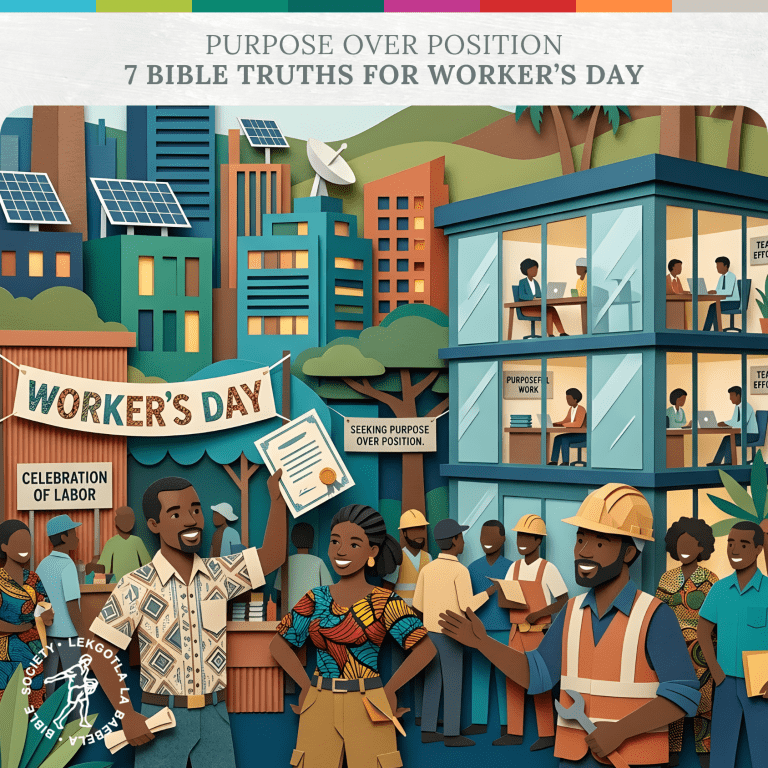
If you’re an employee, you’ve probably felt it.
The pressure to have the right job title.
The pressure to “announce something big.”
The pressure to look successful online, even when you feel lost offline.
Worker’s Day forces an honest question:
Is success about position… or purpose?
According to Scripture, God defines success very differently from LinkedIn, Instagram, or corporate culture.
Here are 7 powerful Bible verses about work, purpose, and true success, written directly to you, the student, intern, entrepreneur, unemployed graduate, creative, side-hustler, or 9–5 professional trying to figure it out.
- Your Work Is Worship — Even When No One Sees It
Colossians 3:23
“Whatever you do, work at it with all your heart, as working for the Lord, not for human masters.”
You may feel overlooked.
Underpaid.
Underqualified.
Or stuck in a job that doesn’t match your degree.
But God is not evaluating your job title. He is evaluating your heart.
When you answer emails with integrity, show up on time, or serve customers kindly, you are not just working for a boss, you are working for God.
Success is not visibility.
Success is faithfulness.
- Greatness in God’s Kingdom Looks Like Service
Matthew 20:26–28
“Whoever wants to become great among you must be your servant, and whoever wants to be first must be your slave — just as the Son of Man did not come to be served, but to serve…”
The world says:
Climb higher. Be known. Build status.
Jesus says:
Serve lower. Build people. Stay humble.
Real influence isn’t about being impressive, it’s about being impactful.
If you are mentoring someone, helping your team succeed, or supporting others quietly, you are living God’s definition of greatness.
Purpose is about contribution, not competition.
- Small Assignments Are Big Tests
Luke 16:10
“Whoever can be trusted with very little can also be trusted with much…”
You often want acceleration. Fast growth. Quick breakthroughs.
But God often builds success slowly.
That internship.
That volunteer role.
That side hustle with 5 customers.
These are not insignificant. They are character-building seasons.
Before God elevates position, He develops integrity.
- Skills Are God-Given — Not Random
Exodus 35:35
“He has filled them with skill to do all kinds of work… and all sorts of craftsmen to perform all kinds of work and to invent artistic designs.”
Your creativity?
Your coding ability?
Your business ideas?
Your communication skills?
They are not accidental.
God filled people with skill long before modern job descriptions existed.
If you are a creative, entrepreneur, designer, teacher, technician, or content creator, your talent is part of your calling.
Purpose is about stewarding what God has already placed in you.
- Promotion Comes From God
Psalm 75:6–7
“No one from the east or the west or from the desert can exalt themselves. It is God who judges: He brings one down, he exalts another.”
In a world obsessed with self-promotion, this is freeing.
You do not have to manipulate your way up.
You do not have to fake success.
God sees effort, character, and humility.
If you feel behind compared to your peers, remember:
Position is seasonal.
Purpose is eternal.
- Success Without Character Is Empty
1 Timothy 6:17–19
“Command those who are rich in this present world not to be arrogant nor to put their hope in wealth… but to do good, to be rich in good deeds…”
Money is not evil.
Ambition is not wrong.
But when your identity is tied to income or title, anxiety follows.
God defines success as being “rich in good deeds.”
Ask yourself:
- Am I growing in character?
- Am I helping others?
- Am I honouring God with my work?
That is lasting success.
- The Ultimate Promotion Is God Saying “Well Done”
Matthew 25:21
“Well done, good and faithful servant! You have been faithful with a few things; I will put you in charge of many things…”
Notice what the master praises.
Not popularity.
Not position.
Not public applause.
Faithfulness.
One day, the success that will matter most is not what your followers said, but what God says.
And He celebrates consistency, integrity, and obedience.
Worker’s Day Reflection
You are more than:
- Your job title
- Your unemployment status
- Your salary bracket
- Your LinkedIn headline
God’s definition of success is:
✔ Faithfulness
✔ Service
✔ Integrity
✔ Stewardship
✔ Impact
Position may change.
Purpose remains.
This Worker’s Day, choose purpose over pressure.
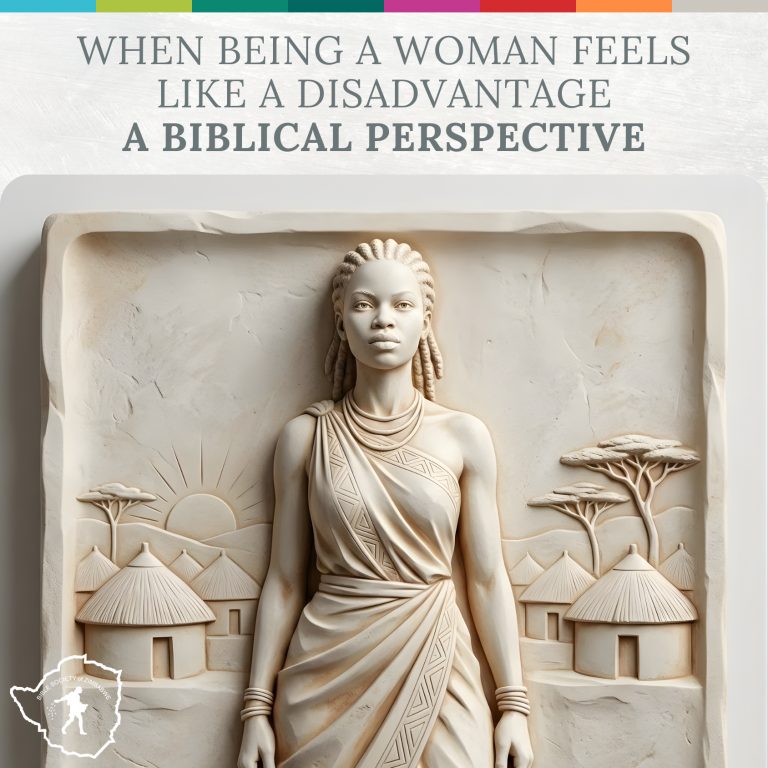
Many women, especially young women, quietly wrestle with this thought:
“Is being a woman a disadvantage?”
It can feel that way when:
- your voice is overlooked
- your abilities are doubted
- your safety feels fragile
- your value is reduced to appearance
- your timeline is controlled by social pressure
- your sacrifices go unnoticed
But Scripture tells a very different story. From the beginning, God established women with dignity, authority, purpose, and spiritual strength. Let’s walk through 7 Bible verses that speak directly to seasons when being a woman feels like a disadvantage.
1. Genesis 1:27 — Your Value Was Established at Creation
“So God created mankind in his own image, in the image of God he created them; male and female he created them.” (NIV)
Before society formed opinions about women, God formed identity. Both male and female were created in His image, equal in worth, equal in dignity, equal in spiritual value.
This means your value is not cultural, it is created. Not negotiated, declared. When the world minimizes women, creation itself speaks otherwise.
2. Judges 4:4–5 — God Raises Women Leaders
“Now Deborah, a prophet, the wife of Lappidoth, was leading Israel at that time.” (NIV)
Deborah was not hidden. She was not secondary. She was a national leader, judge, and prophet.
When leadership spaces feel closed to women, Deborah’s story reminds us: God is not limited by human bias. He appoints based on calling, not gender expectations.
Your leadership is not a mistake. Your voice is not out of place.
3. Psalm 139:14 — You Are Not a Design Error
“I praise you because I am fearfully and wonderfully made.” (NIV)
When being a woman feels like a burden instead of a blessing, this verse calls you back to truth: you are not an afterthought. Not an inferior version. Not a weaker model.
You are intentional design.
Your emotions, intuition, resilience, and nurturing strength are not flaws, they are features.
4. Luke 8:1–3 — Jesus Publicly Valued Women
“…the Twelve were with him, and also some women… These women were helping to support them out of their own means.” (NIV)
In a culture where women were often excluded, Jesus welcomed them into His mission circle. He taught them, traveled with them, and honored their contributions.
Jesus did not treat women as background characters, but as partners in purpose.
If you ever feel spiritually sidelined, remember: Jesus pulled women closer, not further away.
5. Proverbs 31:25 — Strength Is Feminine Too
“She is clothed with strength and dignity; she can laugh at the days to come.” (NIV)
Biblical womanhood is not a weakness. It is strength with dignity.
This woman is not fearful of the future, she faces it with confidence. Not because life is easy, but because her foundation is secure.
Strength is not unfeminine. Strength is biblical.
6. Galatians 3:28 — Your Spiritual Standing Is Equal
“There is neither Jew nor Gentile, neither slave nor free, nor is there male and female, for you are all one in Christ Jesus.” (NIV)
Before God, your access, inheritance, and spiritual identity are not limited by gender.
You are not spiritually second-class. Not spiritually delayed. Not spiritually restricted.
In Christ, you stand fully included.
7. John 20:16–18 — A Woman First Carried the Resurrection Message
Jesus said to her, “Mary.” … Mary Magdalene went to the disciples with the news: “I have seen the Lord!” (NIV)
The first recorded witness and messenger of the resurrection was a woman.
At the most important announcement in history, Jesus chose a woman to carry the news.
When the world questions whether women should speak, lead, or proclaim truth, the resurrection story answers clearly.
Final Encouragement: When It Feels Hard to Be a Woman
Yes, challenges women face are real. Inequality, pressure, vulnerability, and misunderstanding exist. But disadvantage is not destiny.
Biblically:
- Women are image-bearers
- Leaders
- Witnesses
- Supporters of mission
- Carriers of strength
- Voices of truth
- Chosen messengers
When being a woman feels like a disadvantage, remember, in God’s story, women are never optional. They are essential.

Day 1: The Triumphal Entry
Scripture: Matthew 21:1-11
Reflection: Jesus enters Jerusalem as a humble king, riding on a donkey, fulfilling the prophecy in Zechariah 9:9. The people welcomed Him with palm branches, shouting “Hosanna!” meaning “Save us now!” Yet, just days later, the same crowd would demand His crucifixion. This event challenges us to examine our own hearts—do we only worship Jesus when it’s convenient, or do we truly submit to Him as King in every part of our lives?
Prayer: Lord, help me to recognize You as my King in all aspects of life. May I not be swayed by the opinions of others but remain faithful to You. Amen.
Engagement: How do you prepare your heart to welcome Jesus?
Day 2: Jesus Cleanses the Temple
Scripture: Mark 11:15-19
Reflection: Jesus enters the temple and finds it filled with merchants taking advantage of worshippers. In righteous anger, He overturns the tables, declaring, “My house will be called a house of prayer for all nations, but you have made it a den of robbers.” This moment reminds us that Jesus desires true, heartfelt worship, not empty rituals or personal gain. Just as He cleansed the temple, He calls us to examine our own hearts. What distractions or sinful habits might be hindering our relationship with Him?
Prayer: Jesus, cleanse my heart of anything that distracts me from You. May my worship be pure and my life reflect Your holiness. Amen.
Engagement: What is one thing you need to remove from your life to focus more on God?
Day 3: The Last Supper
Scripture: Luke 22:14-23
Reflection: As Jesus shares His final meal with His disciples, He breaks the bread and takes the cup, instituting the Lord’s Supper as a remembrance of His sacrifice. This moment is deeply significant—it reminds us of Christ’s suffering, His willingness to give Himself for us, and the new covenant He established in His blood. Every time we take communion, we are called to reflect on our relationship with Him. Are we truly living in gratitude and obedience to His sacrifice?
Prayer: Thank You, Jesus, for Your sacrifice. Help me to live in a way that honors Your love and grace. Amen.
Engagement: What does the Lord’s Supper mean to you?
Day 4: Praying in Gethsemane
Scripture: Matthew 26:36-46
Reflection: In the Garden of Gethsemane, Jesus prays in deep sorrow, knowing the suffering that awaits Him. His words, “Not my will, but Yours be done,” demonstrate His total surrender to the Father’s plan. This moment teaches us that even in our darkest struggles, we can bring our burdens to God. Jesus understands our pain, our fears, and our struggles, and He invites us to trust Him completely, even when we do not understand His plan.
Prayer: Lord, give me the strength to follow Your will, even when it’s difficult. Teach me to trust in Your perfect plan. Amen.
Engagement: How can you trust God more in difficult situations?
Day 5: Betrayal and Arrest
Scripture: John 18:1-14
Reflection: Judas, one of Jesus’ own disciples, betrays Him with a kiss. The soldiers seize Jesus while His disciples flee in fear. Even in this painful moment, Jesus remains calm, knowing that He is fulfilling the Father’s plan. Betrayal is one of the deepest wounds we can experience, yet Jesus shows us that God’s purpose is greater than any human failure. When we feel abandoned or betrayed, we can take comfort in knowing that Jesus has walked this path before us and understands our pain.
Prayer: Jesus, thank You for loving me despite my shortcomings. Help me remain faithful to You, even when life is difficult. Amen.
Engagement: Have you ever felt betrayed? How did you find peace in God?
Day 6: The Trial of Jesus
Scripture: Luke 23:1-25
Reflection: Jesus is falsely accused, yet He remains silent before His accusers. He does not defend Himself or retaliate, trusting in God’s justice. How often do we feel the need to defend ourselves or seek revenge when treated unfairly? Jesus’ example teaches us the power of trusting in God’s timing and justice rather than taking matters into our own hands. True strength lies in surrendering our battles to Him.
Prayer: Lord, help me trust You even when facing injustice. Teach me to respond with grace and faith. Amen.
Engagement: Have you ever been misunderstood? How did you respond?
Day 7: The Crucifixion
Scripture: Matthew 27:32-56
Reflection: Jesus endures immense physical, emotional, and spiritual suffering on the cross. He cries out, “My God, My God, why have You forsaken Me?” as He bears the weight of our sin. Yet, in His final breath, He declares, “It is finished!” The cross is the greatest display of love—the sacrifice that made salvation possible for us. Have we truly grasped the depth of what Jesus endured for us? And how are we living in response to that sacrifice?
Prayer: Thank You, Jesus, for dying in my place. May I live every day in gratitude for Your love. Amen.
Engagement: What does the cross mean to you personally?
Day 8: Jesus is Buried
Scripture: Mark 15:42-47
Reflection: Jesus’ body is laid in a tomb, and for His followers, it seems like all hope is lost. But what they do not see is that God is still at work. Often, we face seasons of waiting where it feels like nothing is happening, yet God is always preparing something greater. If you’re in a season of uncertainty, trust that resurrection is coming.
Prayer: Lord, when I face dark seasons, help me trust that You are still working. Amen.
Engagement: Have you ever experienced a season of waiting? How did God show up?
Day 9: The Empty Tomb
Scripture: Luke 24:1-12
Reflection: The greatest news in history—the tomb is empty! Jesus has conquered sin and death, offering us eternal life. This moment is the foundation of our faith. If Jesus is alive, we have hope beyond this life, and our faith is not in vain. Are we living in the power of His resurrection daily?
Prayer: Jesus, You are alive! Fill my heart with resurrection joy. Amen.
Engagement: How does the resurrection impact your faith?
Day 10: Jesus Appears to His Disciples
Scripture: John 20:19-29
Reflection: Jesus appears to His disciples, bringing peace. Thomas, who doubted, sees the risen Lord and believes. Many of us struggle with doubt, yet Jesus meets us where we are. He invites us to trust Him, even when we cannot see the full picture. Are we placing our faith in His promises, even in times of uncertainty?
Prayer: Lord, strengthen my faith and remove my doubts. Help me trust You completely. Amen.
Engagement: Have you ever struggled with doubt? How did God reveal Himself to you?

Giving is a powerful act that reflects the heart of God and His desire for us to live generously. Throughout the Bible, we find numerous teachings that emphasize the importance and impact of giving. Whether it’s through offering our time, resources, or love, the act of giving not only blesses others but also enriches our own lives. Here are seven Bible verses that highlight the power of giving and encourage us to embrace a life of generosity.
1. Acts 20:35 “In everything I did, I showed you that by this kind of hard work we must help the weak, remembering the words the Lord Jesus himself said: ‘It is more blessed to give than to receive.’”
When we give to others, especially those in need, we are not only helping them but also experiencing the joy and fulfillment that comes from generosity. It reminds us that true happiness is found in selflessness.
2. 2 Corinthians 9:6-7 “Remember this: Whoever sows sparingly will also reap sparingly, and whoever sows generously will also reap generously. Each of you should give what you have decided in your heart to give, not reluctantly or under compulsion, for God loves a cheerful giver.”
The emphasis on giving cheerfully reminds us that our attitude matters. God values a heart that gives freely and joyfully, knowing that our contributions can lead to abundant blessings.
3. Proverbs 11:25 “A generous person will prosper; whoever refreshes others will be refreshed.”
Generosity is not just about meeting the needs of others; it also brings personal renewal and prosperity. When we give, we often receive in return, not necessarily in material wealth, but in spiritual and emotional well-being. The act of giving refreshes both the giver and the recipient.
4. Luke 6:38 “Give, and it will be given to you. A good measure, pressed down, shaken together and running over, will be poured into your lap. For with the measure you use, it will be measured to you.”
Jesus emphasizes the abundance that comes from giving. The imagery of a generous measure being returned to us illustrates that our giving will not go unnoticed or unrewarded. When we give with an open heart, we can expect God’s blessings to overflow in our lives.
5. Matthew 6:3-4 “But when you give to the needy, do not let your left hand know what your right hand is doing, so that your giving may be in secret. Then your Father, who sees what is done in secret, will reward you.”
We should give quietly and humbly, without seeking recognition or praise. The focus is on the sincerity and purity of our giving. God sees our acts of kindness, even when they are done in secret, and He will reward us accordingly. It reminds us that true giving is done for the benefit of others, not for personal glory.
6. Hebrews 13:16 “And do not forget to do good and to share with others, for with such sacrifices God is pleased.”
Sharing what we have with others is a sacrifice that pleases God. This verse highlights the importance of being mindful of others’ needs and taking action to meet them. It serves as a reminder that our acts of generosity are not just good deeds; they are expressions of our faith and love for God.
7. James 1:17 “Every good and perfect gift is from above, coming down from the Father of the heavenly lights, who does not change like shifting shadows.”
All we have comes from God. Recognizing that every gift we receive is from Him encourages us to be generous in sharing those gifts with others. When we give, we are participating in God’s work, distributing His blessings to those around us.
Conclusion
The Bible teaches that giving is a powerful way to express our faith, love, and gratitude. These verses reveal that generosity not only impacts those we help but also enriches our own lives, bringing us closer to God and His purposes. Whether through our resources, time, or compassion, giving allows us to reflect God’s love in a tangible way, creating a ripple effect of blessings that extend far beyond what we can see. By embracing a spirit of generosity, we open ourselves up to experience the fullness of life that God desires for us.

How does the Bible view women? At face value, some of its messages and examples can seem oppressive or devaluing. But when you learn more about how Jesus responded to the Bible’s historical and cultural context, you may rethink your first impressions. Christ entered into a specific time and culture that had assumptions very different from ours. How can understanding the biblical context inform our reading? How can the context help us to better understand who Jesus is—what he values, loves, and expects of his followers? Take a look, traveling all the way back to the culture Jesus entered.
How the Greeks Viewed Women
Let’s begin with the philosophers. Writers and thinkers often infuse a culture with certain beliefs—and this was especially so in the Greco-Roman world. When examined closely, some of their ideas may seem surprisingly antiquated to the modern reader.
For example, the revered philosopher Plato believed that women should be confined to the home while men tended to the business of state and commerce. Aristotle went even further, teaching that women were inferior to men, incapable of abstract thought, and emotionally volatile. Thus husbands and fathers were to rule over their wives and daughters. This thinking reflects the basic attitude toward women during the classical period.
How did these attitudes affect a woman’s life? The picture is not a pretty one. A young Greek girl is routinely married off to an older man. Her husband is free to take a concubine, and romantic love is not expected within marriage. Her role is to bear and raise children and run the household. She will rarely leave the house. Her education is limited to learning domestic tasks. She is not permitted to vote or hold property. Why would she be? As Euripides the playwright notes, “A woman is handicapped by intellect.” Thucydides helps him along by writing, “The name of a decent woman, like her person, should be shut up in the house.”
How the Jews Viewed Women
By Jesus’s time Greek ideas—including these ideas about women—had gradually crept into Jewish culture, despite Old Testament writings to the contrary. In the creation account in Genesis, God creates human beings as both male and female, giving them co-equal stewardship over the earth (Genesis 1:26-30). Throughout the Old Testament, women are given equal access to God’s law and held equally responsible to keep it.
The Old Testament record is replete with women whose great courage often surpasses that of the men around them. The stories of Miriam, Rahab, Ruth, Deborah, Hannah, Abigail, and Esther are prime examples of women whose insight and fortitude greatly influence the biblical narrative and the way God’s people understood themselves.
The Jewish understanding of women was so affected by exile, conquest, and trade that by Jesus’s time women were discouraged from studying Torah, God’s law, and encouraged to stay home to fulfill household duties. They attended synagogue assemblies seated separately from the men. The Greek-educated Jewish philosopher Philo, a contemporary of Jesus, saw women as having weak judgment and considered them unfit to learn the law. Some rabbis even went so far as to encourage men to limit their conversations with their own wives. What was the point of talking to someone with little knowledge of the law?
How Jesus Viewed Women
Into this distortion of God’s original intent for women comes a new teacher, the rabbi called Jesus of Nazareth. What do we know about Jesus’s relationships with women? Did he hold the same opinions as his culture? Let’s take a look at a few of his encounters with women.
Jesus speaks to a Samaritan woman in public (John 4:4-30)
Jesus shocks the woman at the well by asking her for a drink. Thus he steamrolls over cultural taboos against men speaking to women as well as Jewish prejudice against Samaritans. “You are a Jew and I am a Samaritan woman. How can you ask me for a drink?”
Jesus then reveals himself to her as the Messiah and the giver of the living water for which she longs.
Jesus teaches a woman one-on-one (Luke 10:38-42)
Women were not expected to study Torah, yet this renegade rabbi singles out one woman and opens Scripture to her. Mary “sat down at the feet of the Lord and listened to his teaching.” This position was that of the traditional rabbinic student.
When her sister complains about needing help, Jesus tells her that “Mary has chosen what is better, and it will not be taken away from her.”
Jesus comforts a widow and confronts death (Luke 7:11-17)
“Don’t cry,” Jesus says to a grieving widow whose son lies dead in his coffin. He touches the coffin, defying ceremonial law. Jaws drop in amazement as the young man sits up and begins to speak. Jesus gives the widow’s son back to her, alive and well.
Jesus touches an “unclean” woman (Luke 8:43-48)
Ceremonially unclean due to a chronic hemorrhage, a woman touches the hem of Jesus’ cloak. “Daughter,” Jesus speaks tenderly. “Your faith has healed you. Shalom.”
Jesus touches an infirm woman (Luke 13:10-16)
The religious leaders object to Jesus’s laying his healing hands on a crippled woman on the Sabbath.
“You hypocrites!” Jesus does not mince words. “Any one of you would untie your ox or your donkey from the stall and take it out to give it water on the Sabbath.Now here is this descendant of Abraham whom Satan has kept in bonds for eighteen years; should she not be released on the Sabbath?”
Jesus deals with a woman caught in adultery (John 8:1-11)
The woman’s accusers are silenced by Jesus’s words, “Whichever one of you has committed no sin may throw the first stone at her.” But he is gentle in his conversation with her.
Jesus allows Mary to anoint him (John 12:1-8)
When people are horrified at Mary’s extravagant outpouring of love, Jesus silences them all. Rather than rebuking her for touching him in this intimate way, he lavishes high praise on her. “Leave her alone; she’s anointing me for burial. This story will be told wherever the Gospel is preached.”
Jesus appears first to a woman after his Resurrection (John 20:11-18)
Although women were considered to be unreliable witnesses in court, Jesus assigns Mary Magdalene the task of being the first witness to the Resurrection.
Scripture’s Good News for Women
So what did Jesus really think of women? Did he touch them? Did he talk with them? Did he teach them? Did he give equal moral standing with men? Did he value them?
The record speaks for itself. First-century women in Palestine were second-class citizens. Sadly, some church leaders have still viewed and treated women in this way. But Jesus turned the tables on his culture, and his example calls us to do the same. Again and again, Jesus affirmed women’s value and dignity.
As the apostle Paul affirms in Galatians 3:26-28 (NIV): “So in Christ Jesus you are all children of God through faith, for all of you who were baptized into Christ have clothed yourselves with Christ. There is neither Jew nor Gentile, neither slave nor free, nor is there male and female, for you are all one in Christ Jesus.”