
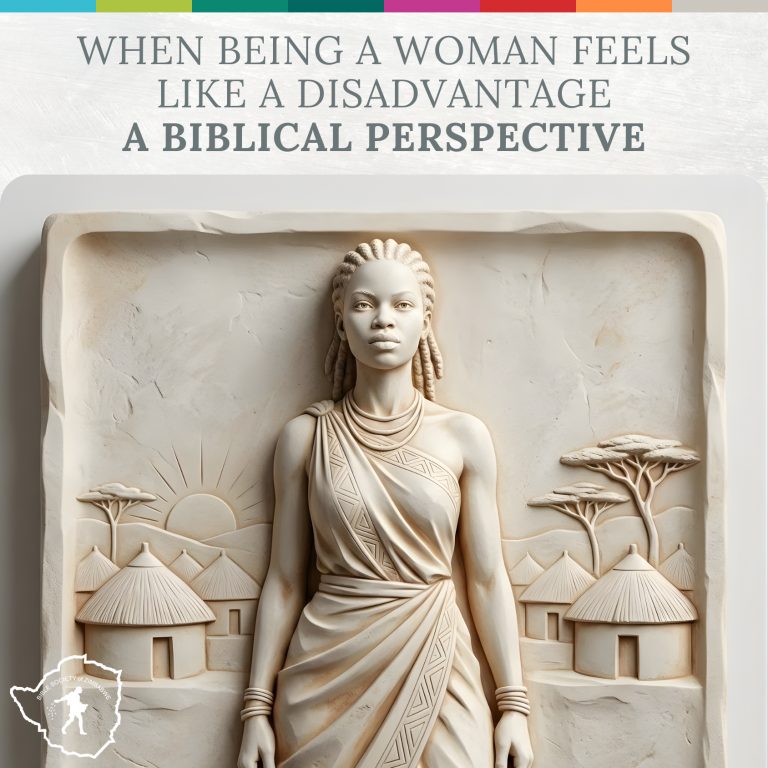
Many women, especially young women, quietly wrestle with this thought:
“Is being a woman a disadvantage?”
It can feel that way when:
- your voice is overlooked
- your abilities are doubted
- your safety feels fragile
- your value is reduced to appearance
- your timeline is controlled by social pressure
- your sacrifices go unnoticed
But Scripture tells a very different story. From the beginning, God established women with dignity, authority, purpose, and spiritual strength. Let’s walk through 7 Bible verses that speak directly to seasons when being a woman feels like a disadvantage.
1. Genesis 1:27 — Your Value Was Established at Creation
“So God created mankind in his own image, in the image of God he created them; male and female he created them.” (NIV)
Before society formed opinions about women, God formed identity. Both male and female were created in His image, equal in worth, equal in dignity, equal in spiritual value.
This means your value is not cultural, it is created. Not negotiated, declared. When the world minimizes women, creation itself speaks otherwise.
2. Judges 4:4–5 — God Raises Women Leaders
“Now Deborah, a prophet, the wife of Lappidoth, was leading Israel at that time.” (NIV)
Deborah was not hidden. She was not secondary. She was a national leader, judge, and prophet.
When leadership spaces feel closed to women, Deborah’s story reminds us: God is not limited by human bias. He appoints based on calling, not gender expectations.
Your leadership is not a mistake. Your voice is not out of place.
3. Psalm 139:14 — You Are Not a Design Error
“I praise you because I am fearfully and wonderfully made.” (NIV)
When being a woman feels like a burden instead of a blessing, this verse calls you back to truth: you are not an afterthought. Not an inferior version. Not a weaker model.
You are intentional design.
Your emotions, intuition, resilience, and nurturing strength are not flaws, they are features.
4. Luke 8:1–3 — Jesus Publicly Valued Women
“…the Twelve were with him, and also some women… These women were helping to support them out of their own means.” (NIV)
In a culture where women were often excluded, Jesus welcomed them into His mission circle. He taught them, traveled with them, and honored their contributions.
Jesus did not treat women as background characters, but as partners in purpose.
If you ever feel spiritually sidelined, remember: Jesus pulled women closer, not further away.
5. Proverbs 31:25 — Strength Is Feminine Too
“She is clothed with strength and dignity; she can laugh at the days to come.” (NIV)
Biblical womanhood is not a weakness. It is strength with dignity.
This woman is not fearful of the future, she faces it with confidence. Not because life is easy, but because her foundation is secure.
Strength is not unfeminine. Strength is biblical.
6. Galatians 3:28 — Your Spiritual Standing Is Equal
“There is neither Jew nor Gentile, neither slave nor free, nor is there male and female, for you are all one in Christ Jesus.” (NIV)
Before God, your access, inheritance, and spiritual identity are not limited by gender.
You are not spiritually second-class. Not spiritually delayed. Not spiritually restricted.
In Christ, you stand fully included.
7. John 20:16–18 — A Woman First Carried the Resurrection Message
Jesus said to her, “Mary.” … Mary Magdalene went to the disciples with the news: “I have seen the Lord!” (NIV)
The first recorded witness and messenger of the resurrection was a woman.
At the most important announcement in history, Jesus chose a woman to carry the news.
When the world questions whether women should speak, lead, or proclaim truth, the resurrection story answers clearly.
Final Encouragement: When It Feels Hard to Be a Woman
Yes, challenges women face are real. Inequality, pressure, vulnerability, and misunderstanding exist. But disadvantage is not destiny.
Biblically:
- Women are image-bearers
- Leaders
- Witnesses
- Supporters of mission
- Carriers of strength
- Voices of truth
- Chosen messengers
When being a woman feels like a disadvantage, remember, in God’s story, women are never optional. They are essential.

After the trauma of the crucifixion, the disciples were locked away, afraid, confused, and uncertain about what the future held. But on the evening of that first Easter Sunday, everything changed when Jesus stood among them and said:
“Peace be with you!” — John 20:19 (NIV)
These words were more than a greeting. They were a divine declaration: peace had triumphed over fear, and life had conquered death.
1. Peace That Calms Fear
The disciples were hiding behind locked doors, fearing for their lives. But the presence of Jesus shattered their fear.
“Then the disciples were glad when they saw the Lord.” — John 20:20 (NIV)
The Resurrection reminds us that no matter what we face—uncertainty, loss, danger—Jesus brings peace that surpasses our fear.
2. Peace That Comes from Reconciliation
The cross was not just about suffering; it was about reconciling humanity with God. Jesus’ resurrection is the seal of that reconciliation.
“Therefore, since we have been justified through faith, we have peace with God through our Lord Jesus Christ.” — Romans 5:1 (NIV)
We are no longer enemies of God. We are at peace with Him—fully forgiven and fully accepted.
3. Peace That Dwells Within
Jesus promised a peace that’s not dependent on circumstances but rooted in Him.
“Peace I leave with you; my peace I give you. I do not give to you as the world gives. Do not let your hearts be troubled and do not be afraid.” — John 14:27 (NIV)
This was a promise He fulfilled after rising from the grave. His peace becomes a permanent presence in our hearts.
4. Peace That Guards Our Minds
We are often bombarded with anxious thoughts. But resurrection peace acts like a shield.
“And the peace of God, which transcends all understanding, will guard your hearts and your minds in Christ Jesus.” — Philippians 4:7 (NIV)
God’s peace doesn’t always change our situation, but it changes us in the midst of it.
5. Peace That Leads to Purpose
In John 20:21, Jesus repeats, “Peace be with you!” and then says:
“As the Father has sent me, I am sending you.”
Peace isn’t just for comfort—it’s preparation for mission. We are sent out as ambassadors of this peace to a world that desperately needs it.
6. Peace Through the Holy Spirit
Jesus breathed on them and said:
“Receive the Holy Spirit.” — John 20:22 (NIV)
The Holy Spirit becomes the continual source of peace, power, and presence in our lives. It is the Spirit that produces peace as fruit within us:
“But the fruit of the Spirit is love, joy, peace…” — Galatians 5:22 (NIV)
7. Peace in a Troubled World
We live in a world that is anything but peaceful. But the resurrection gives us hope beyond this life.
“I have told you these things, so that in me you may have peace. In this world you will have trouble. But take heart! I have overcome the world.” — John 16:33 (NIV)
The risen Christ gives us a durable peace—one that holds even in chaos, grief, or conflict.
Final Thoughts
Jesus didn’t wait for perfect conditions to bring peace. He entered a locked room, full of fear, and filled it with His presence. Today, He still does the same.
Resurrection peace is not passive, it’s powerful, purposeful, and personal.
Will you let His peace rule in your heart today?

Day 1: The Triumphal Entry
Scripture: Matthew 21:1-11
Reflection: Jesus enters Jerusalem as a humble king, riding on a donkey, fulfilling the prophecy in Zechariah 9:9. The people welcomed Him with palm branches, shouting “Hosanna!” meaning “Save us now!” Yet, just days later, the same crowd would demand His crucifixion. This event challenges us to examine our own hearts—do we only worship Jesus when it’s convenient, or do we truly submit to Him as King in every part of our lives?
Prayer: Lord, help me to recognize You as my King in all aspects of life. May I not be swayed by the opinions of others but remain faithful to You. Amen.
Engagement: How do you prepare your heart to welcome Jesus?
Day 2: Jesus Cleanses the Temple
Scripture: Mark 11:15-19
Reflection: Jesus enters the temple and finds it filled with merchants taking advantage of worshippers. In righteous anger, He overturns the tables, declaring, “My house will be called a house of prayer for all nations, but you have made it a den of robbers.” This moment reminds us that Jesus desires true, heartfelt worship, not empty rituals or personal gain. Just as He cleansed the temple, He calls us to examine our own hearts. What distractions or sinful habits might be hindering our relationship with Him?
Prayer: Jesus, cleanse my heart of anything that distracts me from You. May my worship be pure and my life reflect Your holiness. Amen.
Engagement: What is one thing you need to remove from your life to focus more on God?
Day 3: The Last Supper
Scripture: Luke 22:14-23
Reflection: As Jesus shares His final meal with His disciples, He breaks the bread and takes the cup, instituting the Lord’s Supper as a remembrance of His sacrifice. This moment is deeply significant—it reminds us of Christ’s suffering, His willingness to give Himself for us, and the new covenant He established in His blood. Every time we take communion, we are called to reflect on our relationship with Him. Are we truly living in gratitude and obedience to His sacrifice?
Prayer: Thank You, Jesus, for Your sacrifice. Help me to live in a way that honors Your love and grace. Amen.
Engagement: What does the Lord’s Supper mean to you?
Day 4: Praying in Gethsemane
Scripture: Matthew 26:36-46
Reflection: In the Garden of Gethsemane, Jesus prays in deep sorrow, knowing the suffering that awaits Him. His words, “Not my will, but Yours be done,” demonstrate His total surrender to the Father’s plan. This moment teaches us that even in our darkest struggles, we can bring our burdens to God. Jesus understands our pain, our fears, and our struggles, and He invites us to trust Him completely, even when we do not understand His plan.
Prayer: Lord, give me the strength to follow Your will, even when it’s difficult. Teach me to trust in Your perfect plan. Amen.
Engagement: How can you trust God more in difficult situations?
Day 5: Betrayal and Arrest
Scripture: John 18:1-14
Reflection: Judas, one of Jesus’ own disciples, betrays Him with a kiss. The soldiers seize Jesus while His disciples flee in fear. Even in this painful moment, Jesus remains calm, knowing that He is fulfilling the Father’s plan. Betrayal is one of the deepest wounds we can experience, yet Jesus shows us that God’s purpose is greater than any human failure. When we feel abandoned or betrayed, we can take comfort in knowing that Jesus has walked this path before us and understands our pain.
Prayer: Jesus, thank You for loving me despite my shortcomings. Help me remain faithful to You, even when life is difficult. Amen.
Engagement: Have you ever felt betrayed? How did you find peace in God?
Day 6: The Trial of Jesus
Scripture: Luke 23:1-25
Reflection: Jesus is falsely accused, yet He remains silent before His accusers. He does not defend Himself or retaliate, trusting in God’s justice. How often do we feel the need to defend ourselves or seek revenge when treated unfairly? Jesus’ example teaches us the power of trusting in God’s timing and justice rather than taking matters into our own hands. True strength lies in surrendering our battles to Him.
Prayer: Lord, help me trust You even when facing injustice. Teach me to respond with grace and faith. Amen.
Engagement: Have you ever been misunderstood? How did you respond?
Day 7: The Crucifixion
Scripture: Matthew 27:32-56
Reflection: Jesus endures immense physical, emotional, and spiritual suffering on the cross. He cries out, “My God, My God, why have You forsaken Me?” as He bears the weight of our sin. Yet, in His final breath, He declares, “It is finished!” The cross is the greatest display of love—the sacrifice that made salvation possible for us. Have we truly grasped the depth of what Jesus endured for us? And how are we living in response to that sacrifice?
Prayer: Thank You, Jesus, for dying in my place. May I live every day in gratitude for Your love. Amen.
Engagement: What does the cross mean to you personally?
Day 8: Jesus is Buried
Scripture: Mark 15:42-47
Reflection: Jesus’ body is laid in a tomb, and for His followers, it seems like all hope is lost. But what they do not see is that God is still at work. Often, we face seasons of waiting where it feels like nothing is happening, yet God is always preparing something greater. If you’re in a season of uncertainty, trust that resurrection is coming.
Prayer: Lord, when I face dark seasons, help me trust that You are still working. Amen.
Engagement: Have you ever experienced a season of waiting? How did God show up?
Day 9: The Empty Tomb
Scripture: Luke 24:1-12
Reflection: The greatest news in history—the tomb is empty! Jesus has conquered sin and death, offering us eternal life. This moment is the foundation of our faith. If Jesus is alive, we have hope beyond this life, and our faith is not in vain. Are we living in the power of His resurrection daily?
Prayer: Jesus, You are alive! Fill my heart with resurrection joy. Amen.
Engagement: How does the resurrection impact your faith?
Day 10: Jesus Appears to His Disciples
Scripture: John 20:19-29
Reflection: Jesus appears to His disciples, bringing peace. Thomas, who doubted, sees the risen Lord and believes. Many of us struggle with doubt, yet Jesus meets us where we are. He invites us to trust Him, even when we cannot see the full picture. Are we placing our faith in His promises, even in times of uncertainty?
Prayer: Lord, strengthen my faith and remove my doubts. Help me trust You completely. Amen.
Engagement: Have you ever struggled with doubt? How did God reveal Himself to you?

How does the Bible view women? At face value, some of its messages and examples can seem oppressive or devaluing. But when you learn more about how Jesus responded to the Bible’s historical and cultural context, you may rethink your first impressions. Christ entered into a specific time and culture that had assumptions very different from ours. How can understanding the biblical context inform our reading? How can the context help us to better understand who Jesus is—what he values, loves, and expects of his followers? Take a look, traveling all the way back to the culture Jesus entered.
How the Greeks Viewed Women
Let’s begin with the philosophers. Writers and thinkers often infuse a culture with certain beliefs—and this was especially so in the Greco-Roman world. When examined closely, some of their ideas may seem surprisingly antiquated to the modern reader.
For example, the revered philosopher Plato believed that women should be confined to the home while men tended to the business of state and commerce. Aristotle went even further, teaching that women were inferior to men, incapable of abstract thought, and emotionally volatile. Thus husbands and fathers were to rule over their wives and daughters. This thinking reflects the basic attitude toward women during the classical period.
How did these attitudes affect a woman’s life? The picture is not a pretty one. A young Greek girl is routinely married off to an older man. Her husband is free to take a concubine, and romantic love is not expected within marriage. Her role is to bear and raise children and run the household. She will rarely leave the house. Her education is limited to learning domestic tasks. She is not permitted to vote or hold property. Why would she be? As Euripides the playwright notes, “A woman is handicapped by intellect.” Thucydides helps him along by writing, “The name of a decent woman, like her person, should be shut up in the house.”
How the Jews Viewed Women
By Jesus’s time Greek ideas—including these ideas about women—had gradually crept into Jewish culture, despite Old Testament writings to the contrary. In the creation account in Genesis, God creates human beings as both male and female, giving them co-equal stewardship over the earth (Genesis 1:26-30). Throughout the Old Testament, women are given equal access to God’s law and held equally responsible to keep it.
The Old Testament record is replete with women whose great courage often surpasses that of the men around them. The stories of Miriam, Rahab, Ruth, Deborah, Hannah, Abigail, and Esther are prime examples of women whose insight and fortitude greatly influence the biblical narrative and the way God’s people understood themselves.
The Jewish understanding of women was so affected by exile, conquest, and trade that by Jesus’s time women were discouraged from studying Torah, God’s law, and encouraged to stay home to fulfill household duties. They attended synagogue assemblies seated separately from the men. The Greek-educated Jewish philosopher Philo, a contemporary of Jesus, saw women as having weak judgment and considered them unfit to learn the law. Some rabbis even went so far as to encourage men to limit their conversations with their own wives. What was the point of talking to someone with little knowledge of the law?
How Jesus Viewed Women
Into this distortion of God’s original intent for women comes a new teacher, the rabbi called Jesus of Nazareth. What do we know about Jesus’s relationships with women? Did he hold the same opinions as his culture? Let’s take a look at a few of his encounters with women.
Jesus speaks to a Samaritan woman in public (John 4:4-30)
Jesus shocks the woman at the well by asking her for a drink. Thus he steamrolls over cultural taboos against men speaking to women as well as Jewish prejudice against Samaritans. “You are a Jew and I am a Samaritan woman. How can you ask me for a drink?”
Jesus then reveals himself to her as the Messiah and the giver of the living water for which she longs.
Jesus teaches a woman one-on-one (Luke 10:38-42)
Women were not expected to study Torah, yet this renegade rabbi singles out one woman and opens Scripture to her. Mary “sat down at the feet of the Lord and listened to his teaching.” This position was that of the traditional rabbinic student.
When her sister complains about needing help, Jesus tells her that “Mary has chosen what is better, and it will not be taken away from her.”
Jesus comforts a widow and confronts death (Luke 7:11-17)
“Don’t cry,” Jesus says to a grieving widow whose son lies dead in his coffin. He touches the coffin, defying ceremonial law. Jaws drop in amazement as the young man sits up and begins to speak. Jesus gives the widow’s son back to her, alive and well.
Jesus touches an “unclean” woman (Luke 8:43-48)
Ceremonially unclean due to a chronic hemorrhage, a woman touches the hem of Jesus’ cloak. “Daughter,” Jesus speaks tenderly. “Your faith has healed you. Shalom.”
Jesus touches an infirm woman (Luke 13:10-16)
The religious leaders object to Jesus’s laying his healing hands on a crippled woman on the Sabbath.
“You hypocrites!” Jesus does not mince words. “Any one of you would untie your ox or your donkey from the stall and take it out to give it water on the Sabbath.Now here is this descendant of Abraham whom Satan has kept in bonds for eighteen years; should she not be released on the Sabbath?”
Jesus deals with a woman caught in adultery (John 8:1-11)
The woman’s accusers are silenced by Jesus’s words, “Whichever one of you has committed no sin may throw the first stone at her.” But he is gentle in his conversation with her.
Jesus allows Mary to anoint him (John 12:1-8)
When people are horrified at Mary’s extravagant outpouring of love, Jesus silences them all. Rather than rebuking her for touching him in this intimate way, he lavishes high praise on her. “Leave her alone; she’s anointing me for burial. This story will be told wherever the Gospel is preached.”
Jesus appears first to a woman after his Resurrection (John 20:11-18)
Although women were considered to be unreliable witnesses in court, Jesus assigns Mary Magdalene the task of being the first witness to the Resurrection.
Scripture’s Good News for Women
So what did Jesus really think of women? Did he touch them? Did he talk with them? Did he teach them? Did he give equal moral standing with men? Did he value them?
The record speaks for itself. First-century women in Palestine were second-class citizens. Sadly, some church leaders have still viewed and treated women in this way. But Jesus turned the tables on his culture, and his example calls us to do the same. Again and again, Jesus affirmed women’s value and dignity.
As the apostle Paul affirms in Galatians 3:26-28 (NIV): “So in Christ Jesus you are all children of God through faith, for all of you who were baptized into Christ have clothed yourselves with Christ. There is neither Jew nor Gentile, neither slave nor free, nor is there male and female, for you are all one in Christ Jesus.”
Easter Devotional Series: Jesus journey to the Cross and Resurrection
Often, we face seasons of waiting where it feels like nothing is happening, yet God is always preparing something greater. If you’re in a season of uncertainty, trust that resurrection is coming.
Locked Doors, Open Hearts: 7 Bible Verses on Peace in the Resurrection
After the trauma of the crucifixion, the disciples were locked away, afraid, confused, and uncertain about what the future held. But on the evening of that first Easter Sunday, everything changed when Jesus stood among them and said:
Often, we face seasons of waiting where it feels like nothing is happening, yet God is always preparing something greater. If you’re in a season of uncertainty, trust that resurrection is coming.
After the trauma of the crucifixion, the disciples were locked away, afraid, confused, and uncertain about what the future held. But on the evening of that first Easter Sunday, everything changed when Jesus stood among them and said: