
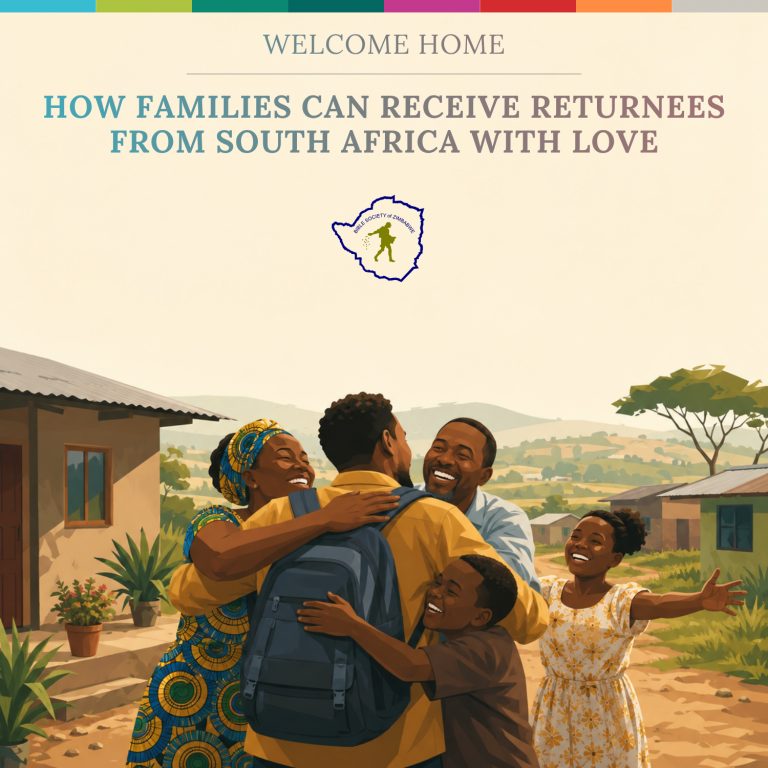
How Families Can Receive Returnees From South Africa with Love
Returning home after being forced to leave South Africa can be an emotional and difficult experience. For some returnees, coming home may bring relief because they are reunited with family. For others, it may bring embarrassment, disappointment, financial pressure and uncertainty about what comes next.
This is where family matters.
The first few days and weeks after returning can shape how a person begins to rebuild. Families can either make the returnee feel like a failure, or remind them that home is still a place where they are loved, valued and accepted.
The Bible gives us principles that can guide families in creating that kind of welcome.
1. Welcome Them Before You Question Them
When someone returns, the natural reaction may be to ask:
“What happened?”
“Why were you sent back?”
“Where is the money you made?”
“What happened to your belongings?”
But sometimes, the person first needs to hear:
“Welcome home. We are glad you are here.”
The story can come later.
Jesus’ story of the prodigal son gives us a powerful picture of a father who saw his son returning and ran to welcome him.
“So he got up and went to his father. But while he was still a long way off, his father saw him and was filled with compassion for him; he ran to his son, threw his arms around him and kissed him.” — Luke 15:20 (NIV)
The father did not begin by interrogating his son.
He welcomed him.
Families can learn from this. Before asking what happened in South Africa, make sure the returnee knows that they are wanted at home.
2. Listen Without Turning Their Story Into a Courtroom
Some returnees may want to talk immediately. Others may need time.
Their experiences may involve difficult memories, loss, discrimination, unemployment, separation from loved ones or the sudden disruption of their lives.
Don’t force them to explain everything.
Instead, create an environment where they know:
“When you are ready to talk, I am here to listen.”
“Everyone should be quick to listen, slow to speak and slow to become angry.” — James 1:19 (NIV)
Listening does not mean agreeing with everything they say.
It means giving them enough space to tell their story without immediately judging, correcting or blaming them.
Sometimes what a returnee needs most is not advice, they simply need someone who will listen.
3. Don’t Make Them Feel Like They Failed
One of the most painful things for a returnee may be feeling that they have disappointed their family.
Perhaps they left expecting to send money home. Perhaps relatives expected them to return with a car, build a house or start a business.
Instead, they have returned with very little.
This can create enormous shame.
Families should resist statements such as:
“You were in South Africa all those years and came back with nothing?”
Instead, ask:
“What can we do to help you start again?”
“Carry each other’s burdens, and in this way you will fulfill the law of Christ.” — Galatians 6:2 (NIV)
A family should not add to someone’s burden.
4. Give Them a Safe Place to Rebuild
Coming home does not automatically mean that everything is okay.
A returnee may be wondering:
- Where will I work?
- How will I support my children?
- What can I do now?
- Will people respect me?
- Can I start a business?
- What will my friends say?
- Have I lost everything I worked for?
Family can become the safe environment from which the person begins rebuilding.
“Therefore encourage one another and build each other up, just as in fact you are doing.” — 1 Thessalonians 5:11 (NIV)
Encouragement is not pretending that everything is fine, it is helping someone believe that their current situation is not the end of their story.
5. Don’t Turn Their Return Into Family Gossip
A returnee’s story belongs to them.
Before sharing their situation with neighbours, church members, friends or extended family, consider how that might affect them.
Imagine returning home already feeling embarrassed, only to discover that everyone in the community knows what happened to you.
Families should protect the dignity of their returning loved ones.
“Love each other deeply, because love covers over a multitude of sins.” — 1 Peter 4:8 (NIV)
Love does not expose someone’s vulnerability for entertainment.
Love protects. Instead of discussing the returnee behind their back, create a culture where their dignity is respected.
6. Don’t Only Give Them Food—Help Them Find Their Future
Practical support is important.
A family may provide food, accommodation, clothing or transport. But long-term support also means helping the returnee think about what comes next.
Ask:
“What skills did you gain?”
“What kind of work would you like to do?”
“What can we help you start?”
“Who can we connect you with?”
The returnee may have skills and experiences that can be valuable back home.
“Each of you should use whatever gift you have received to serve others, as faithful stewards of God’s grace in its various forms.” — 1 Peter 4:10 (NIV)
Their journey may have been difficult, but it may also have given them skills, resilience and experience. Help them see what they still have, not only what they have lost.
7. Remind Them: They Still Belong
Perhaps the most important message a family can communicate is:
“You are still one of us.”
Circumstances may have changed.
Their finances may have changed.
Their plans may have changed.
But their value has not.
The Bible reminds us that our identity and worth ultimately come from God.
“See what great love the Father has lavished on us, that we should be called children of God!” — 1 John 3:1 (NIV)
A returnee should not be defined by deportation, unemployment, financial loss or what happened in South Africa. They are more than what happened to them. They are a person with dignity, gifts, relationships, dreams and a future.
A Final Word to Families
If someone you love has returned from South Africa, don’t make their homecoming another source of pain.
They may already be grieving a lost job, lost possessions, lost opportunities or a dream that did not work out as planned.
Let home be different.
Let it be the place where they can breathe.
Let it be the place where they are heard without judgment, supported without shame and encouraged to begin again.
They may have returned without everything they hoped for, but they have not returned without hope.
And sometimes, the first step toward rebuilding someone’s life is simply making sure they know:
“You are home. You are loved. You still belong.”
Empires have fallen. Generations have passed. Critics have risen and faded, yet the Bible endures.
It has been burned, banned, mocked, and misunderstood, but never defeated.
Why? Because the Word of God is alive, eternal, unbreakable, and unstoppable.
Here are seven Scriptures that reveal why the Bible continues to live on, changing hearts and shaping history.
1. Isaiah 40:8
“The grass withers, the flower fades, but the Word of our God will stand forever.”
Every kingdom that once stood in pride has fallen to dust, but the Word remains.
While human voices fade, God’s voice echoes through the ages, steady, sure, and eternal.
No time, trend, or technology can erase the truth He has spoken.
2. Matthew 24:35
“Heaven and earth will pass away, but my words will never pass away.”
Even as the world changes, languages evolve, cities crumble, and cultures shift, Jesus’ words remain timeless.
His promises still comfort the broken. His truth still challenges the proud.
His voice still calls hearts to life, generation after generation.
3. Hebrews 4:12
“For the Word of God is alive and active. Sharper than any double-edged sword…”
Unlike any other book, the Bible breathes.
It confronts, heals, and cuts deep to the heart.
That’s why it cannot die, because it’s living power, not lifeless ink.
Every time someone opens it, God speaks again.
4. Psalm 119:89
“Your word, Lord, is eternal; it stands firm in the heavens.”
Long before printing presses, before scrolls and screens, God’s Word was already established, eternal in heaven.
Its authority doesn’t depend on who believes it or prints it.
The Bible stands firm because it’s built on the very character of God Himself, unchanging and true.
5. 2 Timothy 3:16-17
“All Scripture is God-breathed and is useful for teaching, rebuking, correcting and training in righteousness…”
The Bible endures because it carries God’s breath, the same breath that gave life to humanity.
It teaches us, shapes us, and equips us to live with purpose.
Every verse is proof that God still speaks today.
6. 1 Peter 1:23
“For you have been born again, not of perishable seed, but of imperishable, through the living and enduring word of God.”
The Word not only survives, it multiplies.
Each person changed by Scripture becomes a living testimony of its power.
Persecution can’t destroy it; it only spreads it further.
Every Bible printed, every verse remembered, keeps the message alive.
7. John 1:1,14
“In the beginning was the Word, and the Word was with God, and the Word was God… The Word became flesh and made his dwelling among us.”
Ultimately, the Bible endures because the Word is Jesus Himself.
He is living proof that God’s message cannot be silenced.
Crucified, yet risen. Rejected, yet reigning.
The Word lives on because the Living Word still reigns.
Final Reflection
No fire can burn it out.
No empire can crush it.
No century can age it.
Because the Bible is more than a book, it is the breath of God written for humanity.
Truly, it is the Book that refuses to die.
A Fresh Look for a Generation Seeking Real Faith
You’ve probably seen the list on a church wall, a t-shirt, or a Pinterest post:
Love. Joy. Peace. Patience. Kindness. Goodness. Faithfulness. Gentleness. Self-Control.
That’s the fruit of the Spirit (Galatians 5:22–23).
But here’s the thing: these aren’t just “nice Christian traits” you try to copy. They’re evidence that something supernatural is growing inside you, something the Holy Spirit is actively forming. Let’s break them down one by one in a way that speaks to real life.
1. LOVE
“Dear children, let us not love with words or speech but with actions and in truth.” – 1 John 3:18
We live in a world where love is often performative. It’s in captions and emojis, but not always in action. The Holy Spirit teaches us to love people even when they’re difficult, unlovable, or don’t benefit us.
Real love:
- Listens before speaking
- Forgives even when it hurts
- Stays when it’s easier to walk away
2. JOY
“Though you have not seen him, you love him… you are filled with an inexpressible and glorious joy.” – 1 Peter 1:8
Joy is different from happiness. It’s not tied to a vibe, a relationship, or a goal. Joy is deep and steady.
You can be battling anxiety and still carry joy. You can be broke and still feel joy. Why? Because joy is rooted in who God is, not what life looks like.
3. PEACE
“You will keep in perfect peace those whose minds are steadfast, because they trust in you.” – Isaiah 26:3
Peace isn’t passive. It’s fierce trust in the middle of chaos.
For young people constantly hit with bad news, mental pressure, and overthinking, peace feels rare. But the Holy Spirit anchors us when the world spins. Peace shows up in how we handle pressure, stay grounded in prayer, and choose surrender over control.
4. PATIENCE
“Be completely humble and gentle; be patient, bearing with one another in love.” – Ephesians 4:2
We’re an instant generation, streaming, deliveries, dating apps. We’re wired for now.
But spiritual maturity grows in the slow seasons. Patience is learning to:
- Wait without whining
- Love people who don’t “get it” yet
- Trust God’s timeline, not your own
It’s not natural, but it’s powerful and deeply needed in a culture obsessed with speed.
5. KINDNESS
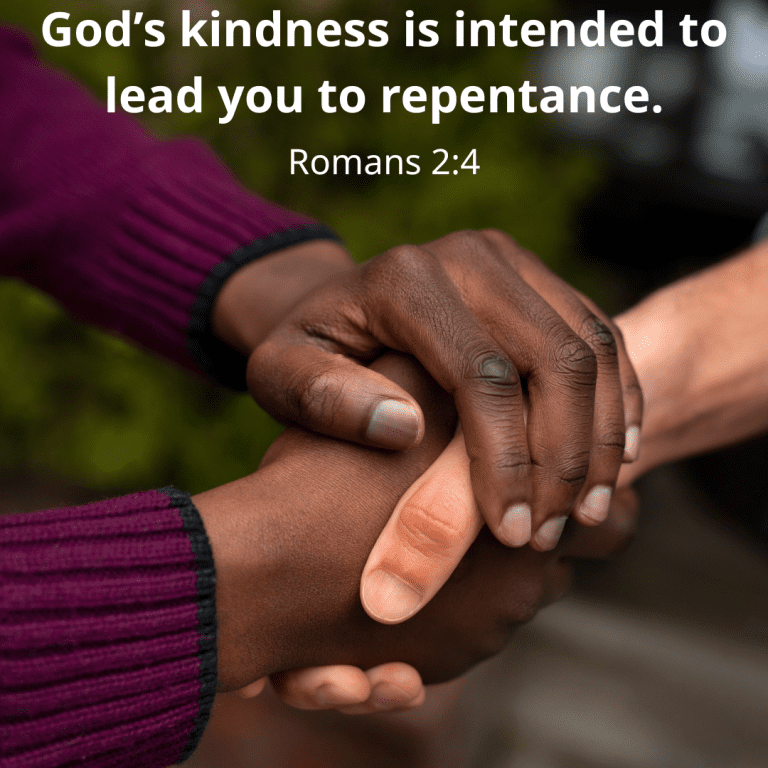
“God’s kindness is intended to lead you to repentance.” – Romans 2:4
Kindness isn’t just random acts. It’s intentional compassion.
It’s DM-ing someone just to check in.
It’s being gentle when you have every reason to be cold.
It’s choosing not to clap back even when you could go viral.
Kindness is powerful because it reflects the kindness God showed us.
6. GOODNESS
“Do not be overcome by evil, but overcome evil with good.” – Romans 12:21
Goodness is about integrity when no one’s watching.
It’s not about being a “good person”, it’s about choosing what’s right, even when it costs you.
It’s:
- Being honest when you could cut corners
- Calling out injustice, even if it’s unpopular
- Living with purity in a world that celebrates compromise
7. FAITHFULNESS
“His master replied, ‘Well done, good and faithful servant!’” – Matthew 25:21
This one’s about showing up in relationships, in responsibilities, and in your walk with God.
Faithfulness says:
- “I’ll keep praying, even when I feel nothing.”
- “I’ll show up for my friends when it’s not convenient.”
- “I’ll follow through on what I said.”
In a culture that glorifies jumping ship, faithfulness is countercultural—and deeply beautiful.
8. GENTLENESS
“Let your gentleness be evident to all.” – Philippians 4:5
Gentleness isn’t weakness. It’s controlled strength.
In a world where loud = power, the Spirit teaches us a quieter strength.
Gentleness shows up when:
- You disagree without disrespecting
- You lead without dominating
- You correct without crushing
Jesus was gentle with the broken and we’re called to be like Him.
9. SELF-CONTROL
“Like a city whose walls are broken through is a person who lacks self-control.” – Proverbs 25:28
Without self-control, everything else crumbles.
It’s the Spirit saying:
- “Don’t send that text.”
- “Pause before you scroll.”
- “Say no when you know it’s not worth it.”
This fruit guards your peace, protects your witness, and empowers you to make decisions that align with your purpose not your impulse.
Final Thoughts: Fruit Takes Time
You don’t become a walking, talking Fruit Basket overnight.
But if you stay rooted in Jesus, the Holy Spirit will grow this fruit in you gradually, powerfully, and authentically.
You might not see it every day. But others will.
And in a world craving something real, the Spirit’s fruit is the loudest quiet message you’ll ever carry.
Ask Yourself:
- Which fruit comes easiest for me?
- Which one is God stretching in me right now?
- How can I lean into the Spirit more today?
Next Step:
If you’re serious about growth, start a “Fruit Check” journal every week, reflect on one fruit and ask:
“How did I live this out or not this week?”
Spiritual growth isn’t about perfection. It’s about progress. And you don’t walk it alone, the Spirit walks with you.

In a world that often leaves us searching for belonging and questioning our identity, the Bible offers profound insights into who we are and where we truly belong. These seven Bible verses about belonging highlight the unshakable foundation of our identity in Christ and the sense of belonging we find in God’s family.
1. Ephesians 2:19
“Consequently, you are no longer foreigners and strangers, but fellow citizens with God’s people and also members of his household.”
Through Christ, you are no longer outsiders. Instead, you are integrated into God’s family as full members.
2. 1 Peter 2:9
“But you are a chosen people, a royal priesthood, a holy nation, God’s special possession, that you may declare the praises of him who called you out of darkness into his wonderful light.”
You are God’s own people, set apart to reflect His light in the world. It’s a compelling reminder of our unique identity and purpose.
3. Romans 8:16
“The Spirit himself testifies with our spirit that we are God’s children.”
The familial connection between you and God not only affirms your identity but also assures of your inheritance and future glory with Christ.
4. Galatians 3:28
There is neither Jew nor Gentile, neither slave nor free, nor is there male and female, for you are all one in Christ Jesus.”
Regardless of your backgrounds or social status, you all belong to God’s family through faith in Jesus.
5. 1 John 3:1
“See what great love the Father has lavished on us, that we should be called children of God! And that is what we are! The reason the world does not know us is that it did not know him.”
God has shown His love by calling you His children. You therefore belong to Him.
6. Colossians 3:3
“For you died, and your life is now hidden with Christ in God.”
Your old identity is gone, and your new life is secure in Christ. This hidden life in God provides a stable and eternal sense of belonging and identity, rooted in Christ.
7. Jeremiah 1:5
“Before I formed you in the womb I knew you, before you were born I set you apart; I appointed you as a prophet to the nations.”
Your identity and purpose are known to God even before birth. It’s a powerful reminder that you belong to Him and are created with intention and love.
Read more about our identity in Christ.